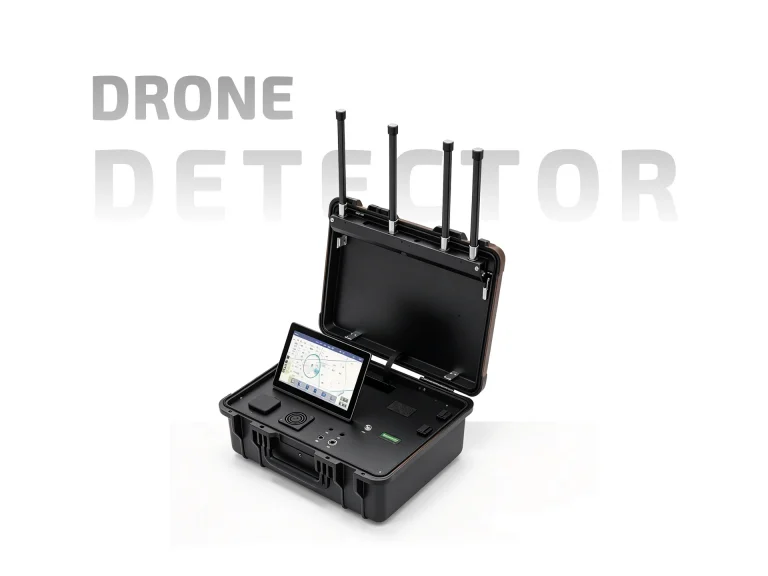
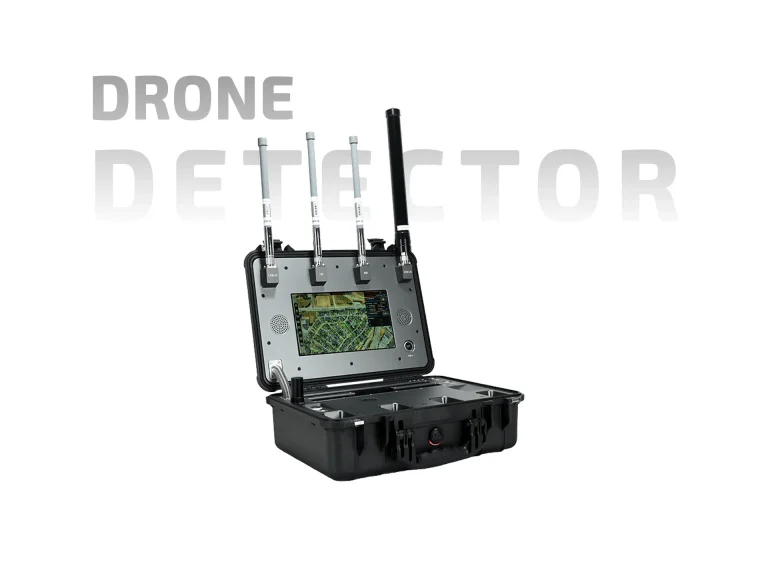
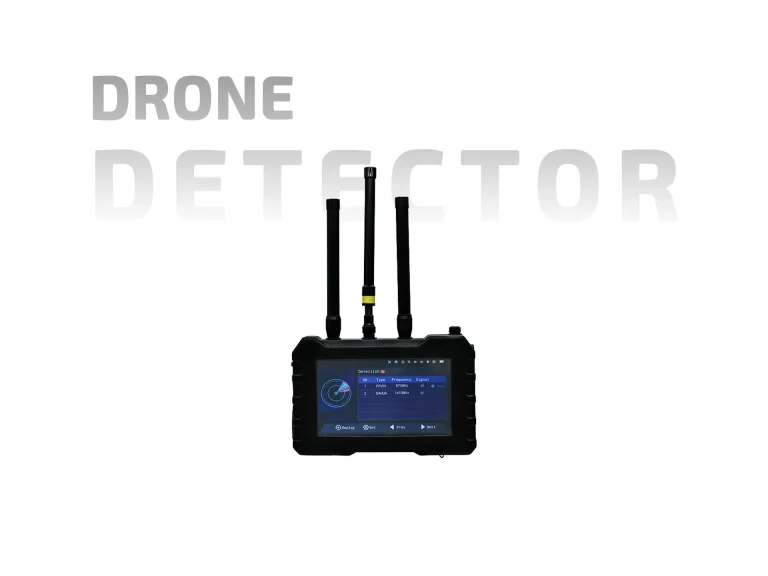
Searching for the best portable drone detection system usually starts with a reasonable question: which one should we buy? The honest answer is that “best” depends on the mission. A handheld RF detector that excels on foot patrols may be the wrong tool for temporary event coverage. A transportable radar that performs well in open terrain may struggle near buildings and dense Wi-Fi.
Instead of ranking products in a vacuum, this guide compares portable detection options by scenario, then outlines the criteria that separate a capable system from a genuinely reliable one.

Why “best” is a mission question
Portable detection equipment is used in at least four distinct ways: close-range patrols, temporary site coverage, gap-filling around fixed sensors, and rapid incident response. Each use case places different demands on weight, setup time, power, and detection range.
If you are still deciding between fixed and portable deployment, our guide to portable drone detection equipment explains where portable systems fit and where a fixed installation is more cost-effective. For buyers sourcing from Chinese suppliers, the China portable drone detector sourcing guide covers OEM verification and export compliance.
Scenario-based comparison
The table below maps common missions to the portable option that typically performs best, along with the trade-off buyers should accept.
| Mission scenario | Likely best fit | Why it performs well | Trade-off to accept |
|---|---|---|---|
| Foot patrol and close-range alert verification | Handheld RF detector | Lightweight, fast to deploy, good at locating common control links | Limited coverage; may miss autonomous flights |
| Temporary event or VIP coverage | Transportable RF unit or integrated kit | Better range than handheld; can be tripod-mounted and redeployed | Requires power, setup time, and operator training |
| Open-area early warning | Portable radar | Detects moving targets and provides track data | Higher weight and power demand; clutter can create false tracks |
| Visual confirmation and evidence capture | Portable EO/IR kit | Useful for identification and recording | Narrow field of view; performance drops in poor visibility |
| Rapid response to an alert | Integrated portable kit | Combines sensors and software in one transportable package | Higher cost; setup and calibration still required |
No single row wins everywhere. Many security teams combine a handheld RF unit for patrols with a transportable sensor for temporary coverage. The “best” configuration is often a small kit, not a single device.
Criteria that separate good from best
Once the scenario is clear, evaluate candidates against a consistent set of criteria. The table below focuses on factors that affect field performance rather than brochure specifications.
| Criterion | What to test | Why it matters |
|---|---|---|
| Setup time | Time from unpacking to first alert | Slow setup defeats the purpose of portable deployment |
| Power endurance | Battery life under realistic load | Determines how long coverage can last without a generator |
| False-alert behavior | Alert volume in a realistic RF environment | High false alarms erode operator trust |
| Classification quality | Ability to distinguish drone types and control links | Helps operators decide how to respond |
| Integration | API support and data export | Portable alerts often need to feed a wider security platform |
| Environmental rating | IP rating, temperature range, wind stability | Temporary positions rarely have hardened enclosures |
| Support model | Firmware updates, spare parts, training | Protects uptime after the initial purchase |
A system that scores well on detection range but poorly on setup time or false alerts is not the best choice for most field teams. The best system is the one operators can actually use under pressure.
Where buyers get misled
Three claims deserve extra scrutiny. First, “detection range” figures are often measured in open, low-noise conditions. Ask for test conditions and expected performance in urban or cluttered RF environments. Second, “integration-ready” can mean anything from a published API to a custom project. Request documentation and a demonstration. Third, “military-grade” is a marketing phrase without a standard definition. Ask for specific environmental and EMC test reports.
Budget comparisons also mislead when they focus only on the unit price. Accessories, spare batteries, transport cases, training, and service tiers can change the total significantly.
Test before you commit
A practical trial should mirror the intended deployment. Set up the unit in a realistic location, run it for several hours, and record setup time, battery drain, alert volume, and classification accuracy. Test the reporting workflow: can the unit export logs, and does it integrate with your existing platform?
Final thought
The best portable drone detection system is not the one with the highest detection range or the lowest price. It is the one that fits a defined mission, survives field conditions, and gives operators actionable alerts. Start with the scenario, test the workflow, and compare total ownership cost. That approach turns a crowded product category into a manageable shortlist.