Detection frequency
700–6000MHz
Jamming frequency
4000–6000MHz
Detection range
0–3000m
Jamming range
0–2000m
Channels
≥12
Battery
4 × removable
A Backpack That Detects First, Then Jams
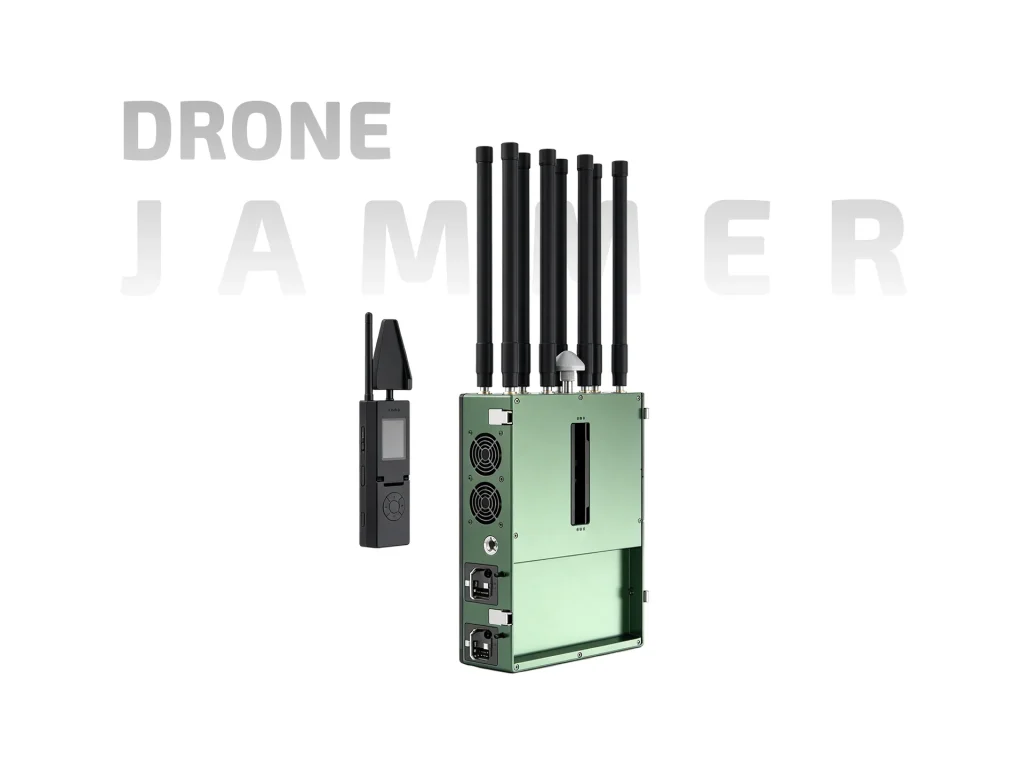
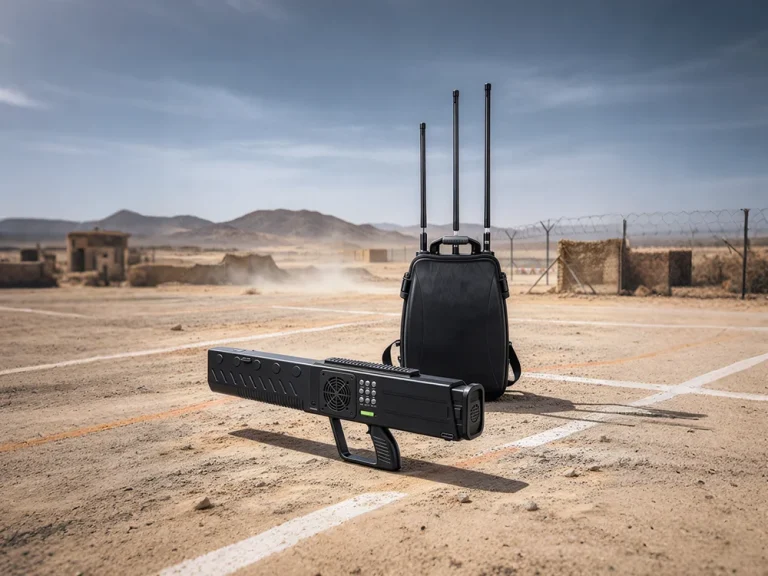
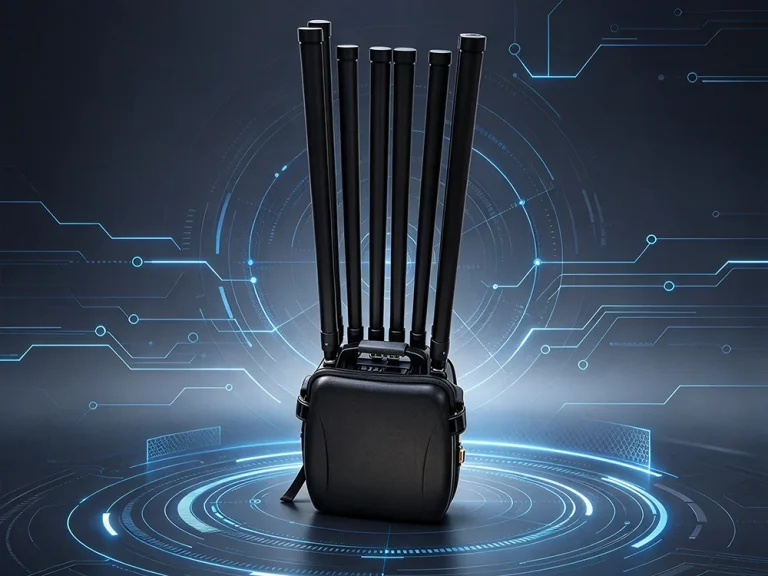
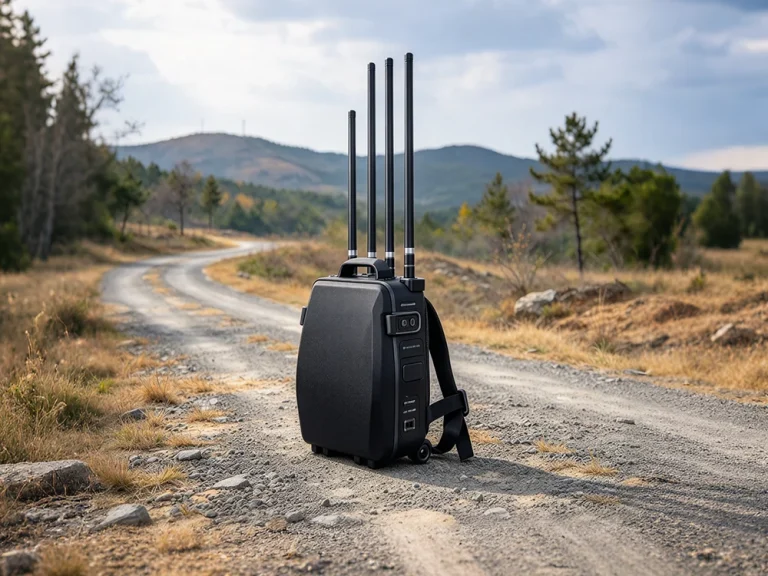
Most portable counter-drone tools are jammers first. The ETLD-BJ05B works the other way round: it detects, finds the bearing, locks the signal, then applies SDR-based digital jamming. The whole chain sits in a backpack, with a 3-inch screen on the unit and four removable batteries in the kit. That order matters in the field, because it lets the operator decide before transmitting.

Detection Across 700–6000MHz
The receiver covers 700MHz to 6GHz, which takes in the usual control, video and telemetry links. Detection range is quoted at 0–3000m. In practice, that figure depends on the drone’s RF output, antenna height and what sits between you and the target. A clear line over open ground is the best case; buildings and hills shorten it quickly.
Direction Finding and Lock
Detection alone tells you a drone is nearby. The direction-finding function narrows down where it is, and the lock feature holds the signal so the operator can track changes. This is the part that separates the unit from a plain detector: you get a bearing, not just an alarm. The screen shows the working state without pulling attention away for long.
Digital Jamming, 4–6GHz
Jamming is handled digitally via SDR, covering 4000–6000MHz. Digital generation lets the unit shape its output rather than simply blasting noise across a wide window. The jamming range is listed as 0–2000m. Because the jamming band sits above the detection band, the unit can watch a broad spectrum and then act on the higher links.
Bands Do Not Fully Overlap
This is worth stating plainly: detection runs from 700MHz to 6GHz, while jamming is concentrated in 4–6GHz. A signal seen at 2.4GHz can be identified and located, but it is not necessarily a jamming target for this configuration. Operators should know which links they can act on before deployment.
Twelve or More Channels
The system provides at least 12 channels. For the operator this means several signals can be handled at once, and the channel count gives room to separate bands rather than lumping everything together. The exact channel map should be confirmed against the configuration ordered.
Screen and Control
The 3-inch LCD is the main interface. It is small by design — this is a field unit, not a console. The display confirms detection, bearing and jamming state, and the controls are laid out for one-handed use while the pack is worn. Nothing requires a laptop or phone.
Batteries and Field Time
Four removable batteries come with the set. They can be swapped in the field, so a long watch does not end when the first cell runs down. Keep the spares charged and rotate them; the unit stays on the operator’s back throughout. The LCD gives a quick status check during a battery change.
How It Fits a Patrol
The detect–direction–lock–jam sequence suits a moving patrol. The operator can scan while walking, check the bearing on the screen, decide whether the contact is hostile, and only then transmit. That order reduces unnecessary jamming and keeps the operator’s own communications clearer for longer. It also makes the unit easier to justify on sites where blanket jamming is not allowed.
Limits Worth Knowing
Range figures are best-case. Buildings, hills and wet weather cut them. Jamming affects any device in the band, including friendly links, so local rules and site coordination matter. Detection is not identification: a contact still needs a human decision. The unit is a field tool, not a fixed tower and not a silent observer.
Bottom Line
The ETLD-BJ05B backpack drone detector & jammer is for teams that want detection and direction finding before jamming, in a package one person can carry. It suits patrols, temporary sites and events where a fixed installation is impractical.