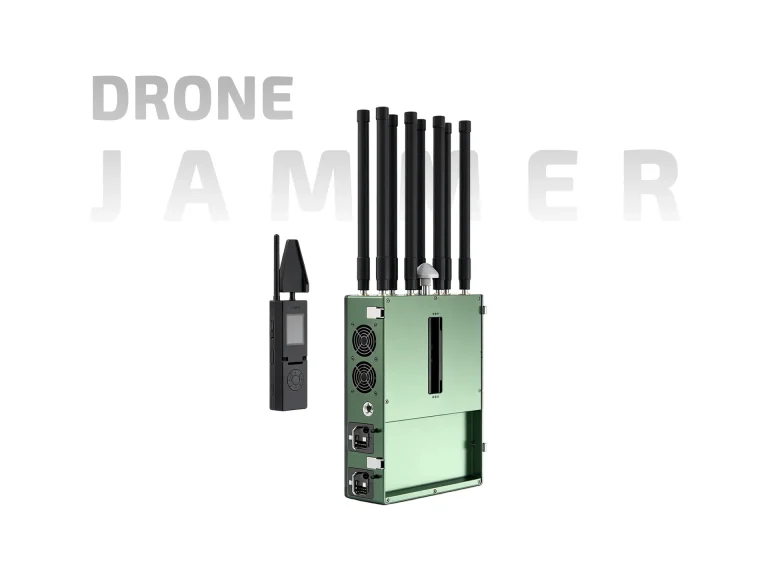
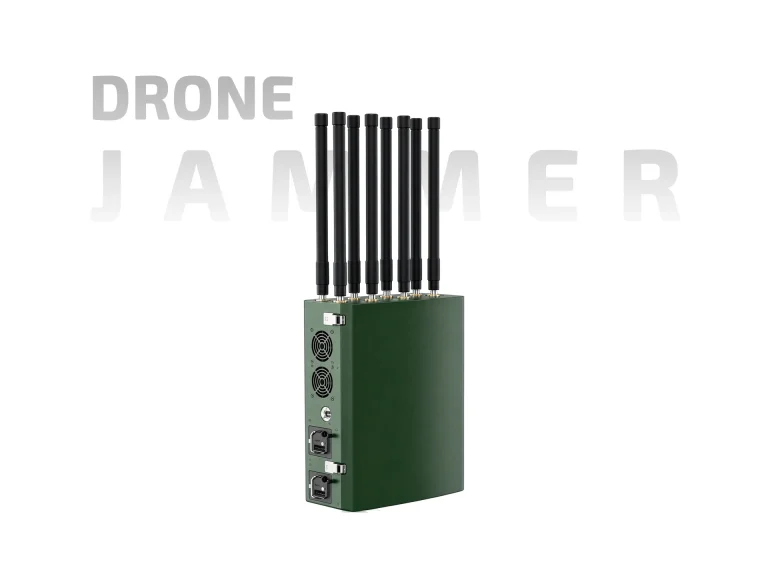
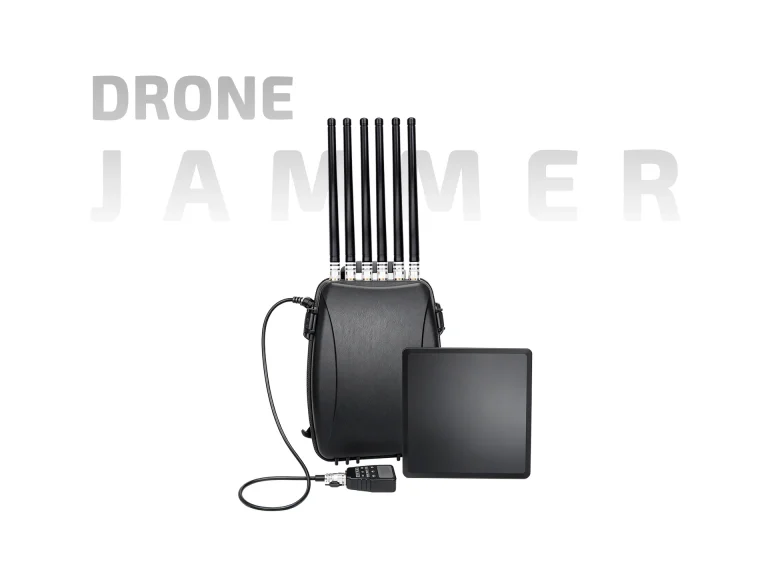
When choosing a portable counter-drone solution, the backpack vs handheld drone jammer comparison is the first decision security teams must make. Both formats serve the same fundamental purpose—disrupting unauthorized UAV communications—but they differ sharply in power, coverage, mobility, and operational cost. This guide breaks down seven critical factors to help you select the right system for your mission profile.

Power Output and Effective Range
The most visible difference in the backpack vs handheld drone jammer debate is raw power. Handheld units typically output between 10W and 30W, while backpack systems range from 100W to 400W or more.
Higher power translates directly to greater range. A handheld jammer usually creates a protective cone of 200–500 meters. A backpack unit can push that distance to 1–3 kilometers, depending on antenna configuration and terrain.
| Specification | Handheld Jammer | Backpack Jammer |
|---|---|---|
| Typical output power | 10W – 30W | 100W – 400W |
| Effective range (open field) | 200m – 500m | 1km – 3km |
| Beam type | Directional (Yagi or panel) | Omnidirectional or sector |
| Primary use | Point defense | Area denial |
Why Range Matters
A drone approaching at 15 m/s covers 500 meters in about 33 seconds. A handheld jammer gives the operator less than half a minute to react. A backpack system extends that window to over three minutes—enough time to identify, confirm, and neutralize the threat.
Coverage Pattern: Omni vs Directional
Handheld jammers almost always use directional antennas. The operator must aim the device at the target. This is effective for a single drone but leaves the user vulnerable to threats from other directions.
Backpack jammers typically employ omnidirectional antennas, creating a 360-degree protective bubble. This is critical for moving convoys, VIP protection details, and perimeter defense where threats can emerge from any angle.
Field note: Some backpack systems allow switching between omni and directional modes, combining broad coverage with the ability to focus power on a specific threat.
Weight, Ergonomics, and Mobility
Handheld jammers weigh 1–3 kg and can be carried in one hand or mounted on a small tripod. Backpack units weigh 8–12 kg and distribute that load across the operator’s shoulders and waist.
| Metric | Handheld | Backpack |
|---|---|---|
| Weight | 1 – 3 kg | 8 – 12 kg |
| Setup time | Under 10 seconds | 30 – 60 seconds |
| Operator fatigue (1 hour) | Low | Moderate to high |
| Best mobility profile | Foot patrol, quick response | Sustained operations, convoy escort |
For short-duration interventions—such as securing a single building entrance—a handheld jammer is more practical. For all-day operations or mobile escort missions, the backpack format is preferable despite the extra weight.
Battery Life and Thermal Management
Handheld jammers run cool because they produce little heat. Most use passive cooling and achieve 3–5 hours of runtime on a single charge.
Backpack jammers generate significant heat from high-power amplifiers. They require active cooling—fans, heat sinks, or both—and typically run for 1.5–2.5 hours per battery pack. Hot-swappable batteries are common on professional-grade units.
Runtime Comparison
| Scenario | Handheld runtime | Backpack runtime |
|---|---|---|
| Continuous jamming | 3 – 5 hours | 1.5 – 2.5 hours |
| Intermittent use (30% duty cycle) | 8 – 12 hours | 4 – 6 hours |
| Battery swap time | 30 seconds | 30 – 60 seconds |
Internal link: For a deeper look at thermal design in high-power units, see our guide to the 400W backpack drone jammer.
Frequency Band Flexibility
Handheld jammers often cover only the two most common bands: 2.4 GHz and 5.8 GHz. That is sufficient for consumer drones but leaves gaps against custom or frequency-hopping models.
Backpack jammers frequently offer 4, 6, or 8 bands, including GPS L1/L2, 900 MHz, and 1.2 GHz. For a detailed breakdown of multi-band coverage, read our article on the 8-band backpack drone jammer.
| Band coverage | Handheld | Backpack |
|---|---|---|
| 2.4 GHz / 5.8 GHz | Yes (standard) | Yes |
| 900 MHz | Rarely | Common |
| 1.2 GHz | Rarely | Common |
| GPS L1 / L2 | Optional | Common on 6+ band units |
| Maximum bands available | 2 – 3 | 4 – 8 |
Cost and Total Ownership
Handheld jammers cost less upfront—typically $2,000–$8,000 depending on power and band count. Backpack systems range from $15,000 to $60,000 or more for military-grade units.
However, total ownership includes batteries, replacement antennas, training, and maintenance. Backpack units require more frequent battery replacement and more careful thermal management.
| Cost category | Handheld | Backpack |
|---|---|---|
| Unit purchase price | $2k – $8k | $15k – $60k |
| Spare battery cost | $200 – $500 | $1,000 – $3,000 |
| Annual maintenance | Low | Moderate |
| Training requirement | 1–2 hours | 1–2 days |
Deployment Scenarios: When to Choose Each
The backpack vs handheld drone jammer choice often comes down to the mission.
Choose a Handheld Jammer When:
-
You need to protect a single entry point or vehicle.
-
Rapid deployment is more important than coverage area.
-
Operators will carry the device for short periods.
-
Budget is a primary constraint.
Choose a Backpack Jammer When:
-
You are escorting a convoy or protecting a moving VIP.
-
The threat can approach from multiple directions.
-
You need to jam GPS or less common frequency bands.
-
Sustained area denial is required.
External resource: For regulatory guidance on RF jamming in the United States, review the FCC enforcement advisory on jammer use.
Final Recommendation
There is no universal winner in the backpack vs handheld drone jammer comparison. Handheld units excel at speed, simplicity, and low cost. Backpack units dominate in range, coverage, and multi-band capability.
A practical approach for many security teams is to equip patrol officers with handheld jammers for immediate response, while keeping backpack units on standby for sustained operations or high-value assets. This layered strategy balances cost, mobility, and protection.
Evaluate your threat profile, operating duration, and legal authority before committing to either format. The right choice is the one that matches your mission—not the one with the highest specifications on paper.