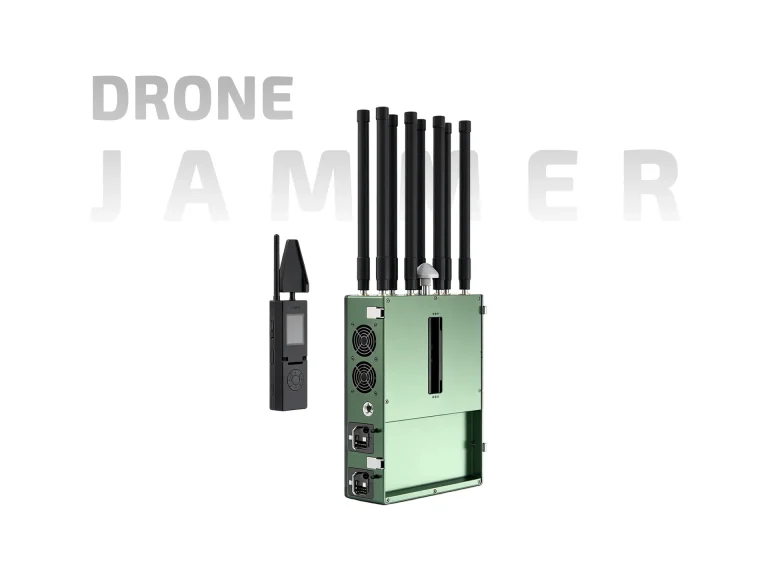
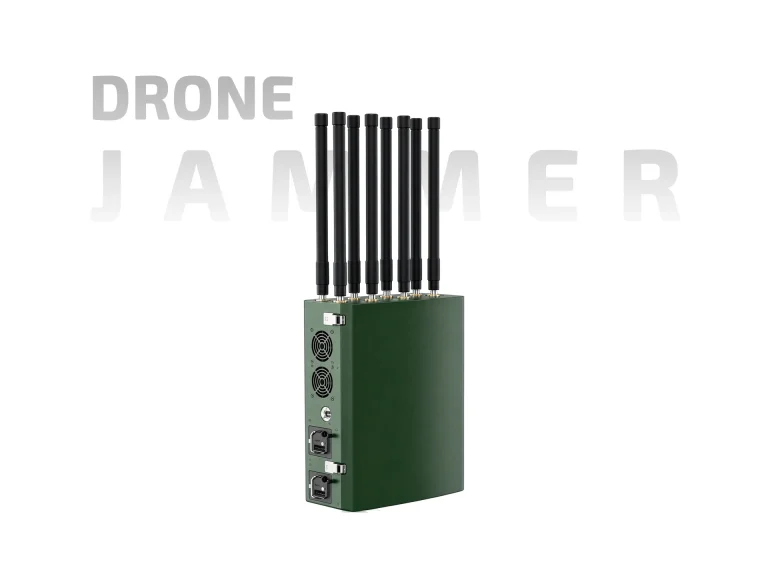
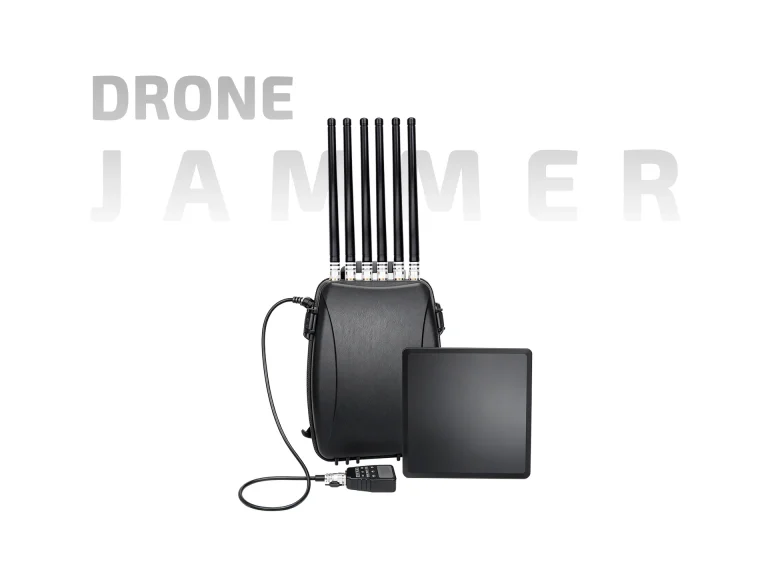
In the rapidly evolving world of counter-drone technology, the 400W backpack drone jammer stands out as a critical asset for mobile security operations. As unauthorized unmanned aerial vehicles (UAVs) become more sophisticated, the need for high-power, portable countermeasures has never been greater. This article dives deep into the technical specifications, operational advantages, and deployment strategies for high-output portable jamming systems.

Why Power Matters: The 400W Threshold
The 400W backpack drone jammer represents a sweet spot between portability and effective range. Unlike lower-power handheld units that typically offer only directional, short-range interference, a 400W system generates enough RF power to create a substantial protective bubble.
When we talk about 400W output, we are referring to the total power distributed across multiple frequency bands (usually 433MHz, 900MHz, 1.2GHz, 2.4GHz, and 5.8GHz). This power level is sufficient to overcome the signal strength of most commercial and customized UAVs, effectively severing the command and control (C2) link and the video transmission feed.
The Physics of Jamming
To effectively jam a drone, the noise signal must be stronger than the drone’s control signal at the receiver’s location. A 400W backpack drone jammer provides the necessary “link margin” to ensure that even if a drone is flying in a high-noise RF environment, the jammer can still force a fail-safe protocol (typically Return-to-Home or hover-and-land).
Note: High-power jamming requires strict adherence to local regulations. Always ensure you are operating within legal frequency boundaries.
Comparing Portable Jamming Solutions
To understand the value proposition of a 400W system, it is helpful to compare it with other common portable options.
| Feature | Handheld Jammer (Low Power) | 400W Backpack Drone Jammer | Vehicle-Mounted System |
|---|---|---|---|
| Output Power | 10W – 30W | 400W | 1000W+ |
| Range | 200m – 500m | 1km – 3km | 5km+ |
| Antenna Type | Directional (Yagi/Panel) | Omni or Sector | High-Gain Directional |
| Mobility | High (Pocketable) | High (Man-Portable) | Low (Fixed to Vehicle) |
| Cooling | Passive | Active (Fan/Heatsink) | Liquid/Active |
| Best Use Case | Personal Defense | Tactical Teams/Convoys | Base Defense |
Technical Specifications and Bands
A typical 400W backpack drone jammer is designed to disrupt the most common drone frequency bands. The table below outlines a standard configuration for such a device.
| Band | Frequency Range | Target | Function |
|---|---|---|---|
| 1 | 400MHz – 470MHz | Remote Control | UHF C2 Link |
| 2 | 840MHz – 930MHz | Remote Control | ISM Band C2 |
| 3 | 1.1GHz – 1.3GHz | Video/Telemetry | L-Band Video |
| 4 | 2.4GHz – 2.5GHz | RC & Video | WiFi/Bluetooth/RC |
| 5 | 5.7GHz – 5.9GHz | Video | FPV Video Downlink |
Key Technical Considerations
-
Antenna Configuration: Most backpack units utilize omnidirectional “whip” antennas to provide 360-degree coverage. This is crucial for moving convoys where threats can come from any direction.
-
Spectrum Analysis: Many modern units integrate a spectrum analyzer that allows the operator to see which frequencies are active, ensuring they only jam the necessary bands and conserve battery.
Thermal Management and Battery Life
One of the biggest challenges in engineering a 400W backpack drone jammer is managing heat. Pushing 400 watts of RF energy generates significant heat, which can damage the internal amplifiers if not dissipated properly.
Cooling Systems
-
Aluminum Alloy Housing: Acts as a massive heatsink.
-
Internal Fans: High-speed brushless fans force air through the heatsink fins.
-
Thermal Shutdown: Quality units feature sensors that automatically reduce power or shut down if temperatures exceed safe limits.
Power Supply
Most 400W systems run on high-capacity Lithium-Ion or LiFePO4 battery packs.
-
Typical Runtime: 1.5 to 2.5 hours of continuous jamming.
-
Hot-Swap Capability: Essential for tactical teams to maintain a continuous shield without powering down the system.
Operational Deployment and Tactics
Deploying a 400W backpack drone jammer requires a shift in tactical thinking. It is not just a “point and shoot” device; it is an area-denial tool.
1. Convoy Protection
The most common use case. The jammer operator moves with the convoy. When a drone is spotted, the operator powers the unit to create a “safe zone” around the vehicles, forcing the drone to retreat or land.
2. VIP Protection
When protecting high-value individuals, the jammer acts as a mobile exclusion zone. It ensures that no unauthorized drones can get close enough to gather intelligence or deploy a payload.
3. Internal Link: Integration with Detection
-
Learn More: Read about how to integrate jammers with RF detection systems for automated response capabilities.
4. External Link: Regulatory Compliance
-
Important: Before deploying any jammer, consult the FCC regulations on signal jamming (or your local governing body) to ensure legal operation.
Conclusion
The 400W backpack drone jammer is a powerful tool that bridges the gap between the limited range of handheld devices and the immobility of vehicle-mounted systems. By understanding its technical capabilities, managing its thermal constraints, and employing smart tactical deployment, security teams can effectively neutralize aerial threats while maintaining their mobility on the ground.
As drone technology advances, investing in robust, high-power RF jamming solutions will remain a cornerstone of modern security strategies.