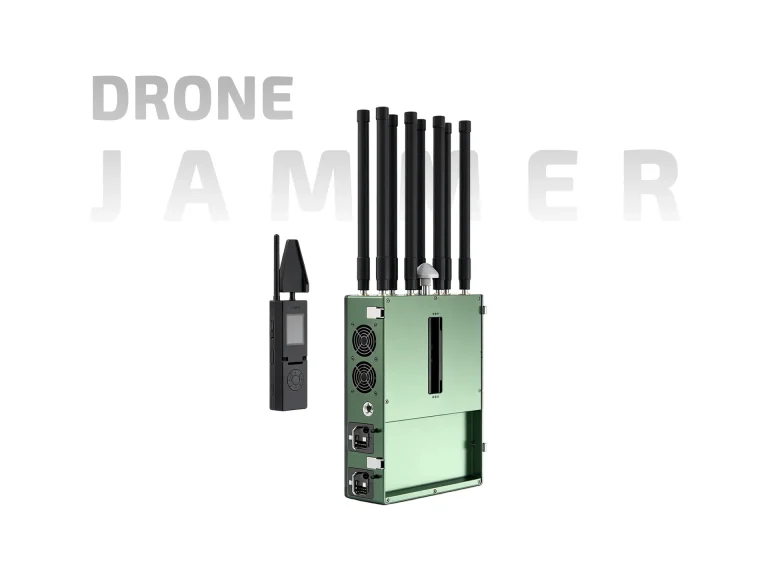
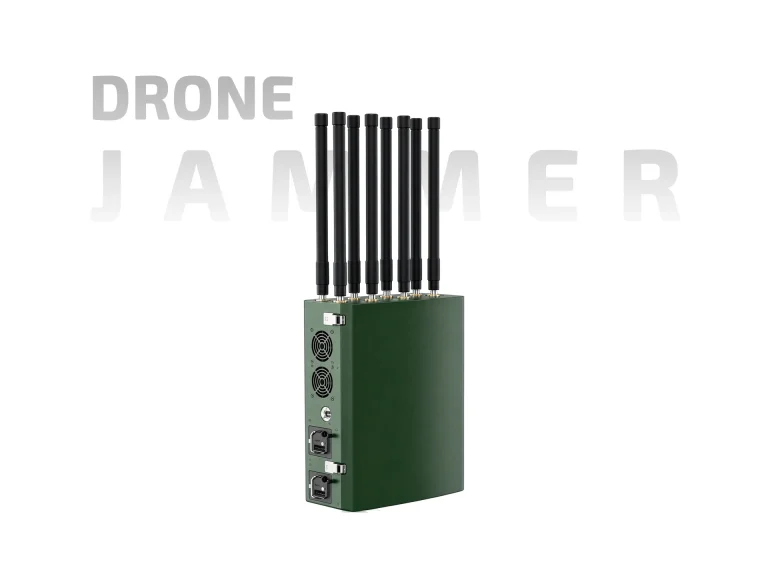
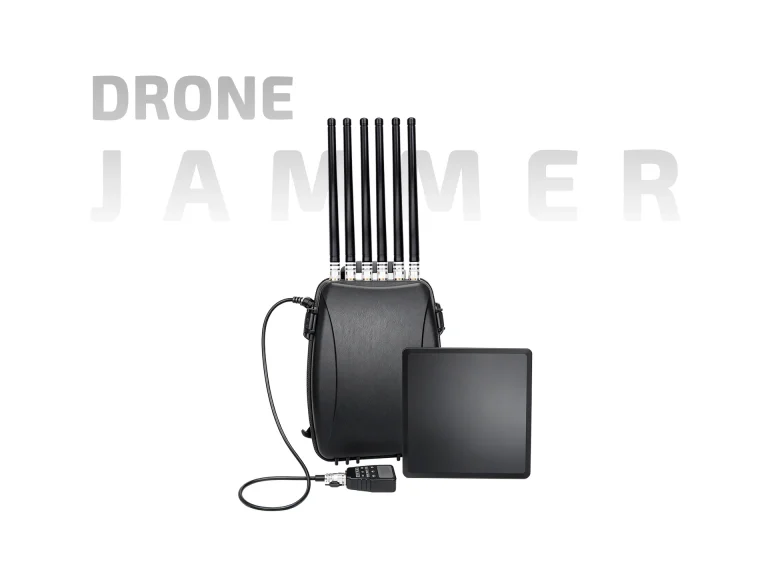
The modern threat landscape demands countermeasures that can adapt to a wide spectrum of drone technologies. An 8-band backpack drone jammer offers precisely that flexibility. Unlike single or dual-band units that target only the most common frequencies, an 8-band system provides broad-spectrum coverage, ensuring that security teams can neutralize threats across multiple communication protocols simultaneously.
This guide explores the operational advantages of multi-band jamming, examines the specific frequency ranges involved, and outlines best practices for field deployment.

What Defines an 8-Band System?
An 8-band backpack drone jammer is a portable electronic warfare device designed to disrupt radio frequency signals across eight distinct frequency ranges. The core principle is simple: drones rely on specific frequencies for control, video transmission, and telemetry. By covering all known bands simultaneously, the jammer ensures no communication channel remains open.
Why Eight Bands?
-
Redundancy: If a drone switches to a backup frequency, the jammer is already covering it.
-
Versatility: Different drones use different protocols. An 8-band unit handles commercial quadcopters, fixed-wing UAVs, and custom-built FPV racing drones.
-
Future-Proofing: As manufacturers introduce new models that operate on less common frequencies, the 8-band system remains effective.
The 8 Critical Frequency Bands Explained
The following table breaks down the eight frequency ranges typically found in a professional-grade 8-band backpack drone jammer. Note that exact specifications vary by manufacturer.
| Band | Frequency Range | Primary Target | Typical Drone Application |
|---|---|---|---|
| 1 | 400MHz – 450MHz | Remote Control | Long-range UHF C2 links |
| 2 | 840MHz – 930MHz | Remote Control | ISM band telemetry |
| 3 | 1.1GHz – 1.3GHz | Video / Telemetry | L-band video downlinks |
| 4 | 1.4GHz – 1.5GHz | GPS / Navigation | GNSS disruption (L1 band) |
| 5 | 1.5GHz – 1.6GHz | GPS / Navigation | GNSS disruption (L2 band) |
| 6 | 2.4GHz – 2.5GHz | RC / Video | WiFi, Bluetooth, standard RC |
| 7 | 5.1GHz – 5.5GHz | Video | High-definition video feeds |
| 8 | 5.7GHz – 5.9GHz | Video | FPV and analog video |
Understanding Band Overlap
Some manufacturers combine adjacent bands to reduce component count, but true 8-band systems maintain independent amplifiers for each range. This design ensures that jamming one band does not compromise the power output of another.
The Importance of GPS Bands
Bands 4 and 5 target satellite navigation signals. By disrupting GPS reception, the drone cannot determine its location, which often forces it to hover in place or execute a predetermined emergency landing. This is particularly useful in crowded urban environments where a drone might otherwise navigate autonomously.
Comparing 2-Band, 4-Band, and 8-Band Systems
Choosing the right configuration depends on the operational environment and threat profile. The table below compares three common portable jammer configurations.
| Feature | 2-Band System | 4-Band System | 8-Band Backpack Drone Jammer |
|---|---|---|---|
| Frequency Coverage | 2.4GHz and 5.8GHz only | Adds 900MHz and 1.2GHz | All major drone bands |
| Effective Range | 300m – 800m | 800m – 1.5km | 1.5km – 3km |
| Drone Compatibility | Basic consumer models | Most commercial drones | Commercial, custom, FPV |
| Battery Runtime | 3 – 4 hours | 2 – 3 hours | 1.5 – 2 hours |
| Weight | 2 – 4 kg | 5 – 7 kg | 8 – 12 kg |
| Best For | Personal use, event security | Asset protection, convoys | Military, critical infrastructure |
Key Takeaway
While lower-band systems offer longer battery life and lighter weight, the 8-band backpack drone jammer provides unmatched coverage. For high-stakes missions where failure is not an option, the extra weight and reduced runtime are acceptable trade-offs.
Battery and Power Considerations for Multi-Band Units
Powering eight independent amplifiers places significant demand on the battery system. Most 8-band backpack drone jammer units utilize lithium-ion or lithium iron phosphate (LiFePO4) battery packs.
Managing Heat and Power
-
Thermal Design: Eight amplifiers generate considerable heat. Look for units with aluminum heat sinks and active cooling fans.
-
Smart Power Distribution: Some advanced models allow operators to selectively activate bands, conserving battery for extended missions.
-
Hot-Swap Batteries: Critical for continuous operations. A spare battery pack can be swapped in under 30 seconds without powering down the device.
Tactical Applications in the Field
An 8-band backpack drone jammer is not a one-size-fits-all solution. Different scenarios require different deployment strategies.
1. Critical Infrastructure Protection
Power plants, water treatment facilities, and government buildings require wide-area denial. The 8-band system creates a persistent bubble of protection that prevents aerial surveillance and payload delivery.
2. Border Security and Perimeter Defense
When mounted on a mobile patrol or deployed on foot, the jammer provides a flexible response to incursions. The wide frequency coverage ensures that even if smugglers use modified drones with custom frequencies, the system can still disrupt their control.
3. Internal Link: Integration with Detection Networks
-
Related Reading: Learn how to pair your jammer with long-range RF detection systems for automated threat response.
4. External Link: RF Safety Guidelines
-
Safety First: Operators should review the IEEE guidelines on human exposure to RF fields to ensure safe operating distances.
Regulatory and Operational Safety
Operating any radio frequency jammer carries legal responsibilities. In the United States, the Federal Communications Commission (FCC) prohibits the use of jammers except by authorized government agencies. Similar restrictions apply in most countries.
Operational Best Practices
-
Verify Your Authority: Only deploy jamming equipment if you have explicit legal authorization.
-
Maintain a Log: Record the time, duration, and location of each deployment.
-
Monitor for Interference: Jammers can affect nearby WiFi networks and cellular service. Be aware of unintended disruptions.
Final Thoughts
The 8-band backpack drone jammer represents the upper tier of portable counter-drone technology. It offers comprehensive coverage, redundancy against frequency hopping, and the versatility to handle almost any aerial threat. While it requires careful thermal management and legal compliance, the tactical advantage it provides is undeniable.
For security professionals tasked with protecting lives and assets, an 8-band system is an investment in resilience. As drone technology continues to evolve, so too must our defenses. The 8-band backpack drone jammer ensures that security teams remain one step ahead.