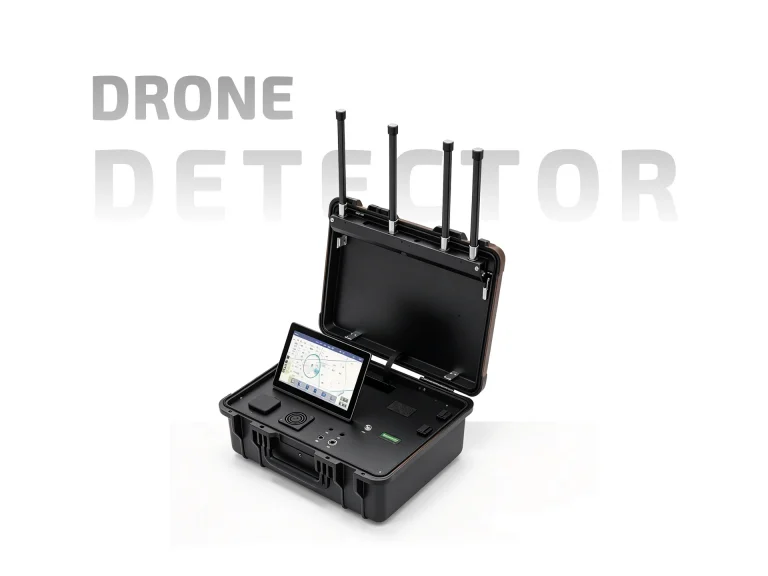
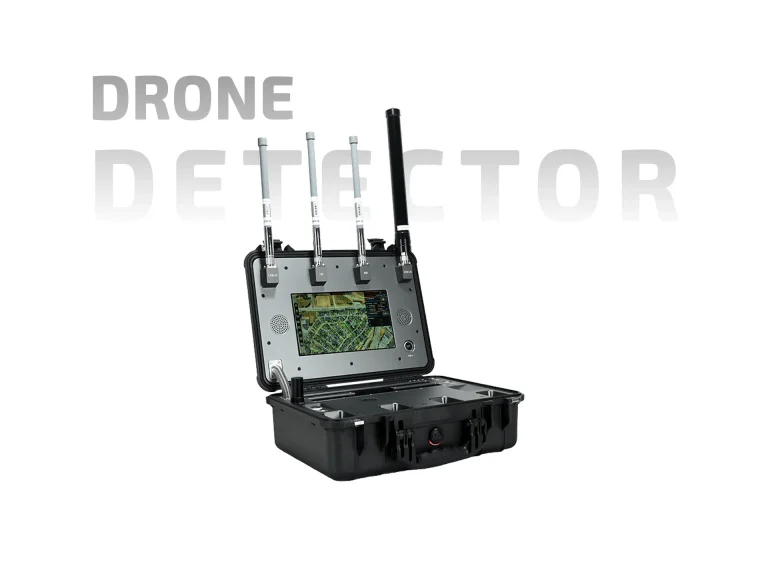
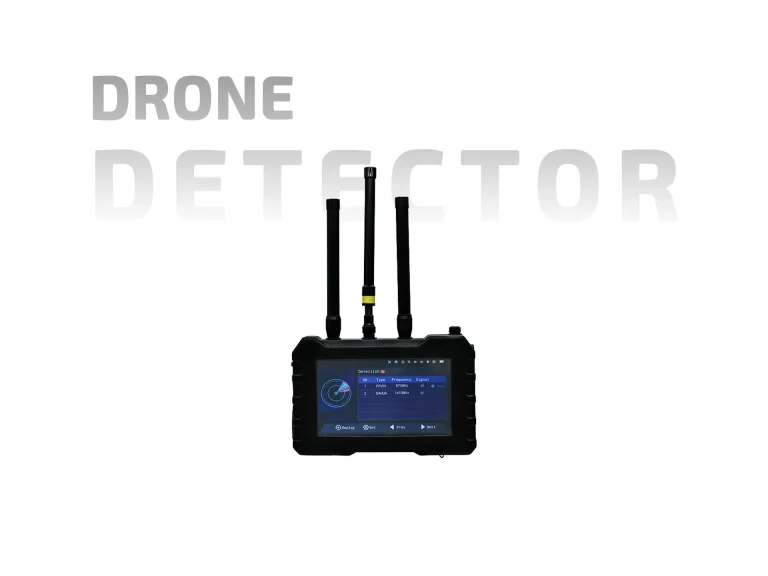
A China portable drone detector can be a cost-effective way to add mobile counter-UAS coverage, but the sourcing process rewards buyers who look past the product photo and the headline detection range. The same country that produces mature RF, radar, and optical modules also has a wide range of suppliers—from original manufacturers with in-house engineering to trading companies that resell assembled kits.
The difference rarely shows up in a quotation. It shows up in calibration consistency, firmware support, documentation, and whether the unit survives a real field deployment. This guide outlines a sourcing approach for security integrators, event operators, and procurement teams evaluating Chinese portable drone detectors.

What the label “China portable drone detector” hides
Portable detectors are not a single product type. A handheld RF unit, a tripod-mounted RF sensor, a portable radar, and an integrated EO/IR kit all address different operational needs. Chinese suppliers may offer any of these, and some offer several under one brand.
Before comparing suppliers, define the deployment scenario: foot patrol, temporary event coverage, perimeter gap-filling, or rapid incident response. If you are still weighing form factors, our field guide to portable drone detection equipment compares handheld RF, transportable radar, and EO/IR trade-offs. That operational context makes supplier evaluation more focused.
Supplier types and what they mean for buyers
Chinese suppliers fall into several categories. The table below maps common supplier profiles to the risks buyers should verify.
| Supplier profile | Typical strength | Common risk | Verification approach |
|---|---|---|---|
| OEM with in-house RF/radar design | Tighter control over detection performance and firmware | Less flexibility on third-party integrations | Factory audit, calibration records, firmware roadmap |
| Assembler using third-party modules | Broad product range and faster customization | Performance depends on upstream module quality | Module traceability, sample testing, change-notification policy |
| Trading company with OEM partnerships | Convenient communication and export paperwork | Limited technical depth; support depends on the factory | Identify the actual manufacturer, request factory introduction |
| Software-focused integrator | Strong command platform and API capabilities | Hardware sourcing may be less mature | Test API documentation, integration demo, cyber hardening |
| Low-cost kit supplier | Attractive entry price | Weak documentation, limited spare parts, unclear firmware support | Ask for test reports, warranty terms, and spare-part list |
A trading company is not automatically a poor choice, but the buyer should know where the hardware and firmware actually come from. Ask for the manufacturer’s name, production location, and quality documentation. If the supplier cannot answer, treat that as a signal.
A verification sequence that reduces risk
A practical evaluation moves from documents to samples to field conditions. Start with a written product specification, calibration process, and firmware update policy. Then request a sample unit and test it in a representative RF environment—not a quiet office. Record setup time, battery endurance, false-alert behavior, and how easily the unit identifies common drone control links.
Next, test the reporting workflow. Can the unit export logs? Does it integrate with an existing VMS or command platform? If the supplier claims API support, ask for documentation and a live demonstration. Finally, confirm spare-part availability and warranty turnaround before placing a volume order.
Compliance is part of the product
Portable detection equipment involves radio frequency, encryption, and sometimes optical recording. Buyers should confirm destination-country requirements for radio equipment, cybersecurity, and data retention. On the export side, clarify whether the supplier handles the necessary export documentation and whether the product includes controlled encryption or other regulated components.
Battery transport is another practical issue. Portable units often ship with lithium batteries, which require UN38.3 test documentation and compliant packaging. Ask the supplier to confirm shipping terms and documentation before the order is finalized.
Commercial terms that protect the deployment
Price should be compared on a total-cost basis, including accessories, spare batteries, transport cases, training, and support. Ask whether firmware updates are included, how long spare parts remain available, and what response time applies to warranty claims. For multi-unit orders, request a factory acceptance test and a pre-shipment inspection.
Language support matters more than some buyers expect. Confirm whether manuals, software interfaces, and technical support are available in the operating language. A capable detector with poor documentation can become a shelf item.
A short sourcing checklist
Before committing to a China portable drone detector supplier, confirm:
-
The actual manufacturer and production site are identified.
-
Sample testing is done in a realistic RF environment.
-
Firmware update and change-notification policies are documented.
-
Export, radio, and battery-shipping requirements are addressed.
-
Spare parts, warranty, and training are included in the quote.
-
API or integration claims are demonstrated, not just listed.
Closing note
Sourcing from China can give buyers access to capable portable detection hardware and flexible customization. The key is to treat supplier selection as a technical and commercial verification process, not a catalog purchase. Define the deployment, test the workflow, and confirm lifecycle support. That is how a China portable drone detector becomes a reliable field tool rather than an uncertain line item.