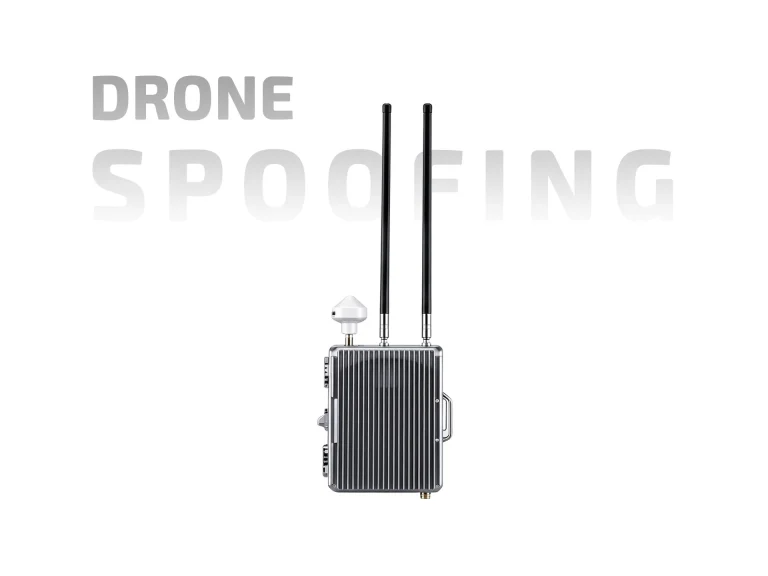
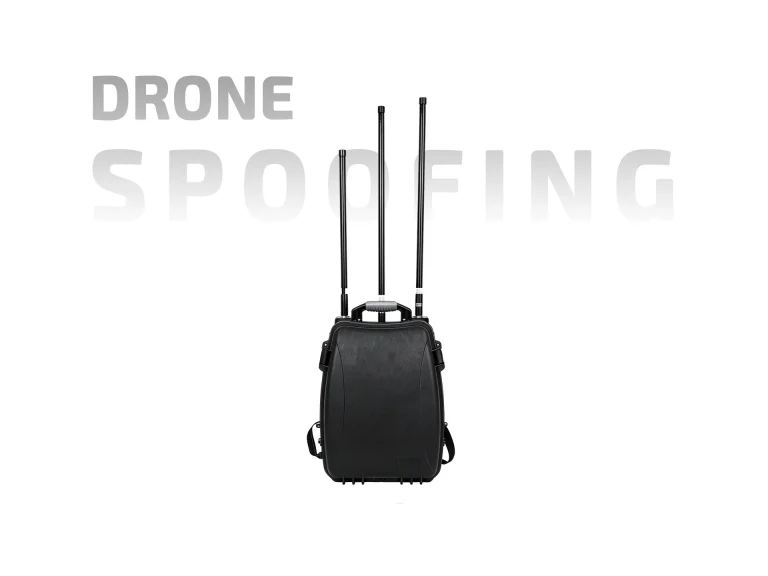
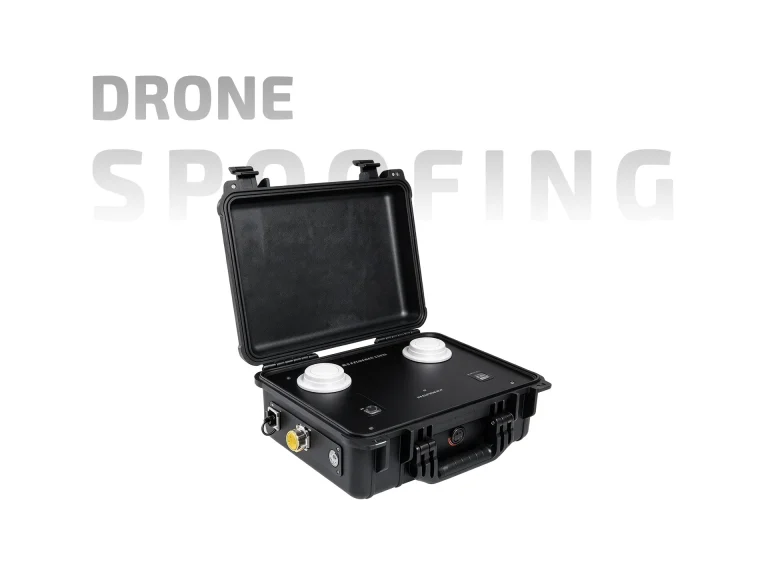
Do drone spoofers work? Sometimes, yes. But not always, and not against every drone. A drone spoofer sends fake GNSS/GPS signals to a drone’s receiver. If the drone trusts those signals, it may calculate the wrong position, drift off course, or trigger a false return-to-home command.
That sounds simple. In the field, it is not.
Modern drones use multiple sensors, encrypted signals, and anomaly detection. A spoofer that works on a cheap GPS-only quadcopter may do nothing to a professional drone with RTK, visual navigation, and inertial backup.
This guide explains when drone spoofers work, when they fail, and what security teams should know before treating spoofing as a reliable counter-drone tool.

Do Drone Spoofers Work by Design?
A drone spoofer works by mimicking legitimate satellite navigation signals. The drone’s GNSS receiver locks onto the fake signal and reports a false location or time.
For a drone that depends on GPS for hovering, navigation, and return-to-home, this can be effective. The drone may:
-
Drift from its intended flight path
-
Hover in the wrong place
-
Land unexpectedly
-
Trigger a false geofence breach
-
Return to a false home point
But spoofing is not the same as jamming. Jamming blocks or overwhelms GNSS signals. Spoofing deceives the receiver. That distinction matters.
Spoofing vs. Jamming: Not the Same Thing
| Technique | What It Does | Typical Drone Response | Effectiveness |
|---|---|---|---|
| Spoofing | Sends fake GNSS signals | Wrong position, drift, false RTH | Conditional |
| Jamming | Overwhelms GNSS bands with noise | Loss of GPS lock, hover, land, or RTH | Often immediate but detectable |
| Meaconing | Replays delayed GNSS signals | Confused navigation | Limited in modern systems |
| Control-link attack | Targets command and control | Hijack or loss of control | Depends on encryption |
A drone spoofer may work in a controlled test, but real-world performance changes with distance, terrain, signal strength, and receiver quality.
When Do Drone Spoofers Work Best?
Drone spoofers are most effective against drones that rely heavily on unencrypted GNSS.
1. Consumer Drones With GPS-Only Navigation
Many consumer drones use GPS for position hold, waypoints, and return-to-home. If the GPS signal is spoofed and no strong backup sensor disagrees, the drone may follow the fake position.
2. Drones Flying in Open Sky
Open sky offers clear line of sight. That makes it easier for a spoofer to reach the drone’s GNSS antenna. Buildings, trees, and RF noise can reduce effectiveness.
3. Drones With Weak Receiver Filtering
Low-cost receivers may not detect inconsistent signals. They may accept a spoofed signal without warning.
4. Drones Without Inertial or Visual Backup
If the drone has no reliable IMU, optical flow, or visual odometry, it has fewer ways to notice that GPS is lying.
These conditions are common in older or low-cost drones. They are less common in enterprise and military systems.
When Do Drone Spoofers Fail?
Do drone spoofers work against every drone? No. Many modern drones are designed to resist GNSS interference.
Multi-Constellation and Encrypted GNSS
A drone receiving GPS, Galileo, GLONASS, and BeiDou can compare signals. If one constellation looks false, it may reject it. Encrypted or authenticated GNSS makes spoofing even harder.
Inertial and Visual Navigation
Drones with inertial measurement units, visual odometry, and lidar can cross-check GPS. If GPS says “move east” but every other sensor says “stay still,” the flight controller may ignore GPS.
RTK and Moving Baseline
RTK drones use correction data for centimeter-level accuracy. A simple spoofer may struggle to produce consistent corrections that match the drone’s expected movement.
RF Detection and Anomaly Monitoring
Advanced drone detection systems can flag unusual GNSS power levels, timing errors, and signal inconsistencies. Once detected, the drone can switch to a safe mode.
| Drone Type | Navigation Backup | Spoofer Effectiveness | Why |
|---|---|---|---|
| Consumer GPS drone | Minimal | Moderate to high | Trusts GPS for position hold |
| Enterprise drone with RTK | RTK + IMU | Low to moderate | Cross-checks corrections |
| Autonomous drone with VIO | Visual + inertial | Low | Multiple sensors disagree |
| Military encrypted GNSS | Encrypted + anti-jam | Very low | Authentication and filtering |
| DIY FPV drone without GPS | None | Not applicable | No GNSS to spoof |
Do Drone Spoofers Work Legally?
In most countries, transmitting GNSS spoofing signals is illegal outside authorized government or defense testing. The risks are not just legal. They can affect aircraft, emergency services, shipping, and telecommunications.
| Region | General Rule | Practical Impact |
|---|---|---|
| United States | FCC rules prohibit jamming and spoofing | Civilian use is highly restricted |
| United Kingdom | Wireless Telegraphy Act controls interference | Unauthorized transmission is illegal |
| European Union | National regulators enforce spectrum rules | Testing requires authorization |
| Most countries | GNSS interference is treated seriously | Liability can be severe |
This article is for education and defense planning. It is not legal advice. If you need counter-drone capability, work with authorized vendors and legal advisors.
How Defenders Detect and Counter Spoofing
Instead of relying on spoofing, security teams should combine detection, verification, and response.
RF Spectrum Monitoring
RF signal analysis can detect unusual transmissions around GNSS bands. It can also distinguish jamming from spoofing.
GNSS Anomaly Detection
Monitor for sudden position jumps, timing errors, and signal strength changes. A drone that reports an impossible location may be under attack.
Multi-Sensor Fusion
Use radar, RF, acoustic, and optical sensors. If one sensor is fooled, others can confirm the real track.
Encrypted or Authenticated GNSS
For high-value operations, use receivers that support authenticated signals. This raises the cost and complexity of spoofing.
Procedure and Airspace Management
Define geofences, flight rules, and emergency procedures. Train operators to recognize spoofing symptoms. A fast manual response can matter more than any single technology.
Field Test Checklist: What “Working” Actually Means
A drone spoofer is not “working” just because a drone moves. Teams should measure specific outcomes.
| Metric | Question to Ask | Why It Matters |
|---|---|---|
| Position error | How far does the drone drift? | Shows navigation impact |
| Time to effect | How long until the drone reacts? | Affects response windows |
| Range | At what distance does it work? | Determines standoff |
| Side effects | Does it disrupt other GPS users? | Legal and safety risk |
| Detectability | Can the drone or operator notice? | Affects repeatability |
| Recovery | Does the drone regain control? | Determines mission risk |
Bottom Line: Do Drone Spoofers Work?
Do drone spoofers work? They can, but only under the right conditions. They are most effective against GPS-dependent drones with weak receiver protection and no backup navigation. They are far less effective against modern drones with RTK, encrypted GNSS, inertial sensors, and visual navigation.
Spoofing is also legally restricted in most places. For most security teams, the better path is detection, multi-sensor tracking, and authorized mitigation. Spoofing may be part of a government or defense toolkit, but it is not a plug-and-play solution.