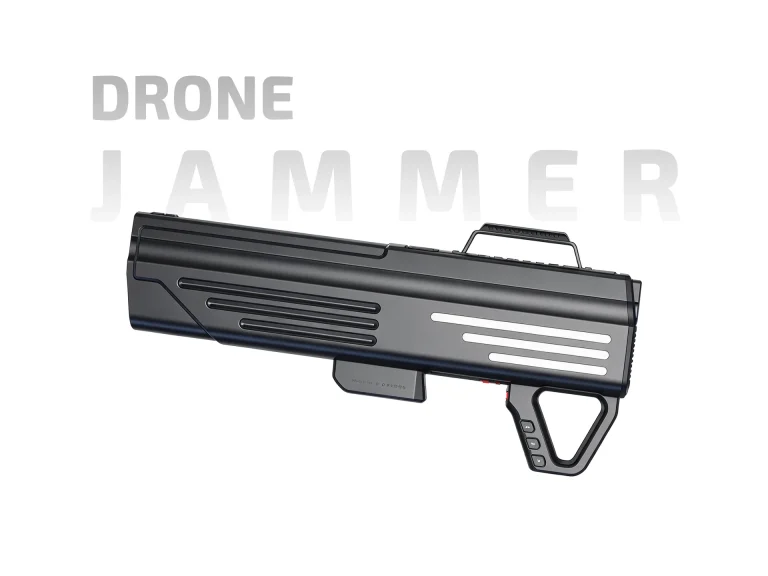
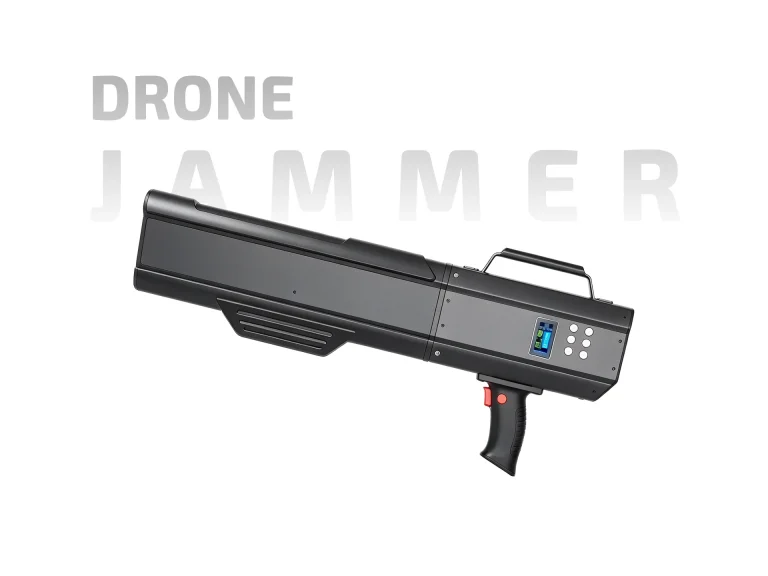
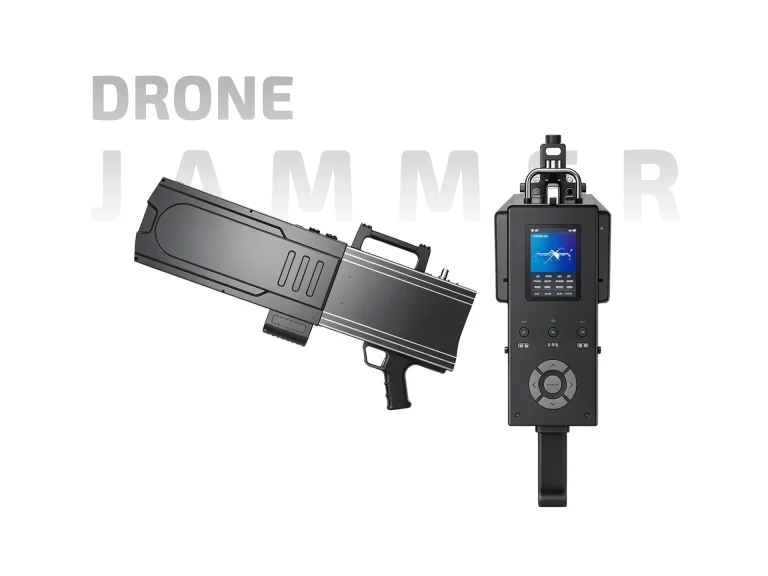
Drone jammer gun battery life is not a single number on a spec sheet. It is the result of RF output, duty cycle, battery chemistry, temperature, and how operators actually use the device in the field. In procurement meetings, runtime often arrives late—after power and form factor. That is a mistake. A jammer gun that runs out of power mid-mission creates a capability gap, no matter how strong its RF section looks on paper.

This industry guide explains what shapes runtime, how to compare battery packs, and how to plan spare capacity without overbuying. It is written for authorized counter-drone teams, integrators, and procurement staff who need practical answers rather than marketing claims.
Regulatory note: drone jamming devices are restricted to authorized users in many jurisdictions. Confirm local law, spectrum rules, and training requirements before purchase or deployment.
Why Drone Jammer Gun Battery Life Matters in the Field
A portable jammer gun is usually carried, aimed, and held on target. That makes weight and balance part of the runtime story. A larger battery may add minutes, but it can also make the device harder to aim for long periods. The best configuration is the one that supports the mission profile—not simply the highest capacity.
Runtime also affects team structure. If a device delivers 40 minutes of mixed use, the operator needs a clear battery-swap plan. If it delivers 90 minutes, the team may carry fewer spares but must still manage heat and charging cycles.
What Drives Drone Jammer Gun Battery Life?
RF Output and Duty Cycle
RF output is the largest load. A jammer gun that transmits at high power draws more current than one in standby. Duty cycle matters just as much. A device used in short bursts may last longer than one held on continuously, even if both use the same pack.
How Drone Jammer Gun Battery Life Is Measured
Vendors may quote “maximum runtime,” “typical runtime,” or “standby time.” These are not the same. Ask for test conditions: output power, frequency bands active, ambient temperature, battery age, and whether the figure includes idle time. Without that context, runtime comparisons are unreliable.
Battery Capacity, Voltage, and Usable Energy
Amp-hours alone can mislead. Energy is closer to voltage multiplied by amp-hours. A 14.4 V, 10 Ah pack carries roughly 144 Wh nominal. If the system allows 80% usable energy, plan around about 115 Wh.
Temperature and Environmental Stress
Cold weather reduces usable capacity in many lithium packs. Heat stresses cells and electronics. In hot vehicles or direct sun, battery aging accelerates. In cold operations, keep spare packs insulated and allow them to warm before use—within manufacturer limits.
Accessory Load and System Efficiency
Displays, cooling fans, heating elements, and communication modules all draw power. Conversion losses also matter. A pack rated at 144 Wh does not deliver 144 Wh to the RF stage. Procurement teams should request a system-level power budget, not just a cell datasheet.
| Runtime factor | Effect on drone jammer gun battery life | Procurement question |
|---|---|---|
| RF output power | Higher output usually shortens runtime | What is the average draw at each power setting? |
| Duty cycle | Continuous transmit drains faster than burst use | Is runtime quoted at 100% duty cycle or mixed use? |
| Battery energy | More Wh generally means longer runtime | Is capacity nominal or usable? |
| Temperature | Cold and heat can reduce performance | What is the tested operating temperature range? |
| Battery age | Cycle count reduces capacity over time | What is the warranted cycle life? |
| Accessories | Fans, displays, and heaters add load | Does the runtime figure include accessory load? |
Battery Chemistry Choices
Battery chemistry affects weight, safety, cycle life, and cost. There is no universal winner. The right choice depends on how the jammer gun is carried, charged, stored, and deployed.
| Chemistry | Typical strength | Watch-outs | Best fit |
|---|---|---|---|
| Li-ion 18650/21700 packs | Good energy density and mature supply chain | Pack quality and BMS design vary widely | Man-portable jammer guns with swappable packs |
| LiPo packs | High discharge capability and flexible shapes | More sensitive to swelling and physical damage | Compact high-draw designs with careful safety controls |
| LiFePO4 packs | Long cycle life and thermal stability | Lower energy density for the same weight | Vehicle-supported or stationary deployments |
| External hot-swap packs | Extends mission time without opening the device | Cable, connector, and ingress protection risks | Teams needing rapid battery changes |
A smart battery management system (BMS) is not a luxury. It helps manage cell balancing, over-current protection, temperature limits, and state-of-charge reporting. For field teams, accurate state-of-charge display can be as valuable as extra capacity.
How to Estimate Drone Jammer Gun Battery Life Before Purchase
Use a simple energy-based estimate, then validate it in a trial.
Estimated runtime (minutes) ≈ usable Wh ÷ average draw (W) × 60
Example: a pack provides 115 Wh usable energy. The drone jammer gun draws 90 W on average during mixed use. Estimated runtime is about 77 minutes. If the average draw rises to 120 W, runtime falls to about 58 minutes.
Average draw should include RF transmission, electronics, fans, and display. If the device transmits for 50% of the time at 120 W and idles at 15 W, the average is about 67.5 W before conversion losses. Add a safety margin of 20–30% for cold, aging, and mission uncertainty.
Procurement Checklist
-
Request runtime data at realistic duty cycles, not only maximum standby.
-
Ask for usable Wh, nominal voltage, and maximum continuous discharge current.
-
Confirm whether runtime includes accessory load and conversion losses.
-
Check battery swap time with gloves and in low light.
-
Review BMS protections, connector rating, and ingress protection.
-
Confirm spare-pack charging time and charger channel count.
-
Ask for cycle-life warranty and replacement lead time.
-
Plan training around counter-drone operator training procedures.
-
Verify transport and storage rules for lithium packs.
Field Practices
Runtime improves when teams treat batteries as mission equipment, not accessories. Label packs by cycle count and performance history. Rotate packs so one aging unit does not fail during a critical task. Keep spare packs within the manufacturer’s temperature range. Avoid full depletion when practical, and follow the vendor’s storage voltage guidance.
Operators should also record actual runtime by mission type. A 10-minute aiming exercise, a 45-minute patrol, and a 2-hour standby post all place different demands on the pack. Over time, these records become more useful than a generic datasheet claim.
FAQ
Is drone jammer gun battery life the same as transmit time?
No. Transmit time is only one load. Displays, fans, heating, and conversion losses also consume energy. A quoted transmit time may overstate real mission runtime.
Should buyers prioritize battery capacity or portability?
Prioritize the mission. Long static posts may favor larger or external packs. Mobile patrols often favor lighter swappable packs with disciplined rotation.
How often should batteries be replaced?
Replace packs when runtime falls below mission requirements, when the BMS reports faults, or when physical damage appears. Cycle count and warranty terms are useful guides, but field records are stronger.
Conclusion
Drone jammer gun battery life should be evaluated as a system performance issue. Buyers who compare usable energy, average draw, duty cycle, temperature, and swap logistics will make better decisions than those who chase a single runtime claim. The goal is not the longest number on a brochure. It is predictable power for the mission—backed by tested data, safe packs, and trained operators.