A drone enters restricted airspace. Within seconds, a security team needs to know whether it is a hobbyist, a delivery aircraft, or a hostile payload. Anti-drone systems, often called counter-UAS systems, are built for that moment. They are layered defenses, not a single device, and they combine sensors, software, and response tools to detect, track, identify, and stop unmanned aircraft.

The Five-Step Workflow Behind Anti-Drone Systems
Most anti-drone systems follow a similar operational loop:
-
Detect – Find the drone with radar, radio-frequency (RF) sensors, cameras, or acoustic arrays.
-
Track – Follow its movement, altitude, speed, and direction over time.
-
Identify – Classify the model, payload, and likely intent where possible.
-
Decide – Compare the threat against rules of engagement and safety limits.
-
Defeat – Use electronic, kinetic, or cyber-style countermeasures if authorized.
The goal is not simply to knock a drone out of the sky. It is to make a fast, proportionate decision with enough evidence to avoid disrupting safe aviation, communications, or nearby people.
How Detection Technologies See a Drone
No single sensor is perfect. Small drones fly low, move slowly, and can be made of materials that are hard to spot. That is why modern C-UAS platforms fuse several detection methods.
| Technology | What It Detects | Strengths | Limitations | Typical Role |
|---|---|---|---|---|
| Radar | Moving objects, range, speed, altitude, and micro-Doppler signatures | Wide-area coverage, day/night, all-weather | Small low-flying drones can be lost in clutter; licensing may apply | Primary cueing and tracking |
| RF detection | Control links, video feeds, and telemetry between drone and controller | Can identify protocol, direction, and sometimes the pilot’s location | Blind to fully autonomous drones; encrypted links are harder | Detection, direction finding, operator location |
| EO/IR | Visual and thermal signatures | Strong visual confirmation; can help identify payloads | Narrow field of view; weather and night limits for EO | Verification and evidence capture |
| Acoustic | Propeller and motor noise | Passive, low cost, useful in urban canyons | Short range; noisy environments reduce accuracy | Close-in backup detection |
In practice, radar may spot a track first. RF may locate the controller. EO/IR may confirm what the drone is carrying. Acoustic sensors may add confidence at short range. Fusion software correlates these inputs into one track, which reduces false alarms and gives operators a clearer picture.
How Mitigation Works
Once a drone is confirmed as a threat, the response depends on law, location, and risk. Common mitigation methods include:
| Method | How It Works | Best For | Cautions |
|---|---|---|---|
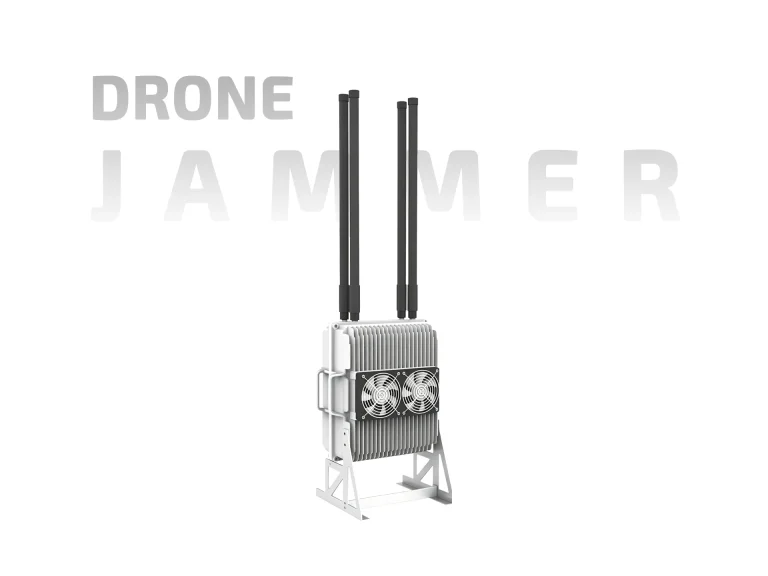
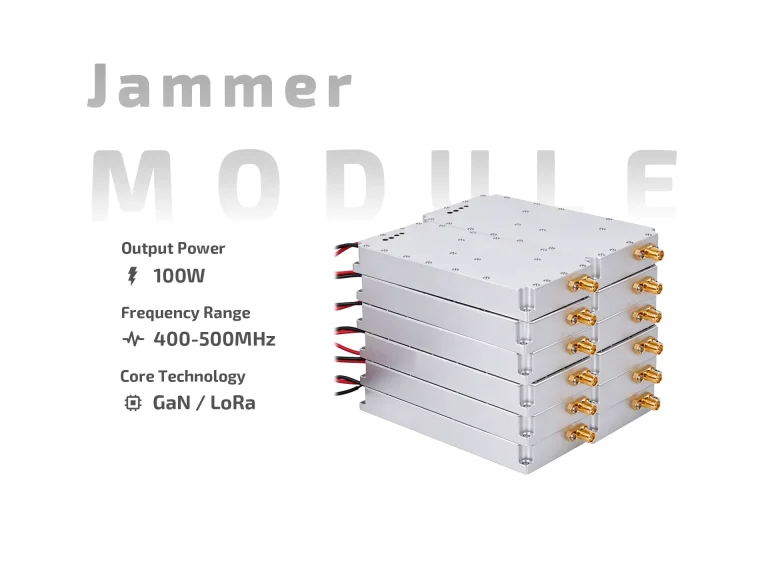
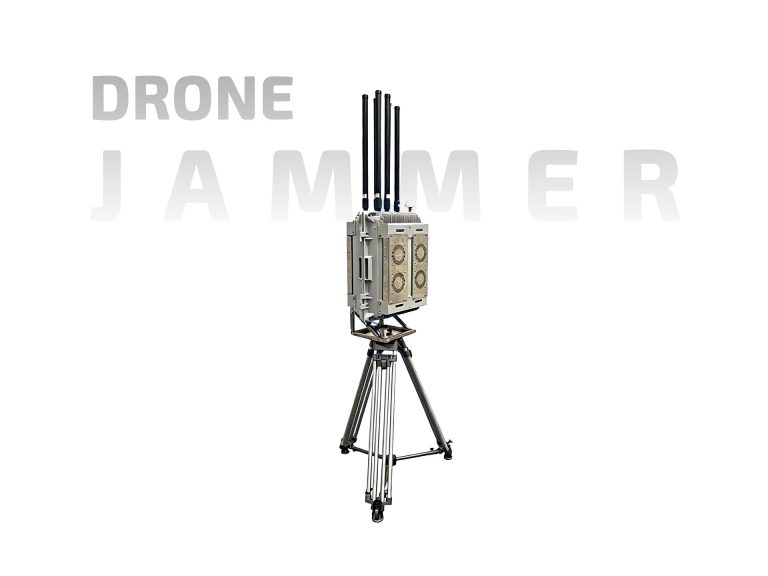
| RF jamming | Blocks control, video, or telemetry links | Forcing a drone to hover, land, or return | Can disrupt other wireless systems; often restricted to authorities |
| GNSS spoofing | Sends false satellite-navigation signals | Pushing a drone off course or into a safe landing zone | May affect other GNSS-dependent equipment |
| Protocol takeover | Uses known communication protocols to seize control | Supported, unencrypted drone models | Limited to known protocols; encryption can block it |
| Kinetic intercept | Uses nets, projectiles, or interceptor drones | Physical capture or immediate stop | Falling debris creates safety and liability risks |
| Directed energy | Uses high-power microwave or lasers | Disabling electronics or damaging airframes | Power, weather, and safety constraints are significant |
Electronic methods are usually preferred when the goal is to avoid debris. Kinetic options may be necessary when a drone carries a dangerous payload or refuses to respond. Directed energy remains promising, but it is not a simple plug-and-play solution for most sites.
Why Sensor Fusion and Software Matter
The hardest part of anti-drone work is not seeing a drone. It is knowing which contact is a threat and which is a bird, a plane, or a legal flight. Software is what turns raw sensor data into an actionable track.
A strong C-UAS platform should:
-
Correlate radar, RF, EO/IR, and acoustic data in real time.
-
Assign confidence scores to each track.
-
Log evidence for investigations and audits.
-
Integrate with command-and-control systems.
-
Support human review before any mitigation step.
This matters in crowded environments. A stadium, airport, or prison may see many RF signals and moving objects. False alarms erode trust quickly, so detection quality and operator workflow are as important as range.
Deployment Models: Fixed, Mobile, and Networked
Anti-drone systems are deployed in several ways. Fixed installations protect airports, prisons, borders, stadiums, utilities, and government sites. Mobile systems can be mounted on vehicles or carried in man-portable kits for temporary events. Networked C-UAS shares tracks across multiple sites, giving regional security teams a wider view.
Latency is critical. A drone moving at 20 meters per second covers 1.2 kilometers in a minute. By the time a sensor detects it, the response window may already be closing. Edge computing, fast data links, and clear standard operating procedures all help shorten that window.
Legal, Safety, and Operational Limits
Anti-drone technology is powerful, and that is exactly why it is regulated. In many countries, jamming or spoofing signals is illegal except for authorized government agencies. Private operators often rely on detection, tracking, and coordination with law enforcement rather than active mitigation.
Before deployment, organizations should review:
-
Local aviation and telecommunications laws.
-
Privacy rules for cameras, RF sensors, and data retention.
-
Rules of engagement for each threat level.
-
Safety procedures for falling debris or signal interference.
-
Coordination with airports, police, and emergency services.
A system that works technically but fails legally can create more risk than it removes.
What Buyers Should Evaluate
When comparing anti-drone systems, look beyond the headline detection range. Ask vendors for:
-
Performance against small, low, slow drones.
-
False alarm rates in realistic environments.
-
Identification confidence and update frequency.
-
Open APIs for integration with existing security systems.
-
Training, support, and software maintenance.
-
Compliance with local regulations.
-
Total cost of ownership over five years.
The best system is not always the one with the longest range. It is the one that fits the site, the threat profile, and the legal authority of the operator.
The Road Ahead
Anti-drone systems are evolving quickly. Expect more AI at the edge, cheaper radar, better RF fingerprinting, and greater use of interceptor drones. Swarm defense is an active area of research, because a single drone is a manageable problem, while dozens arriving at once are not.
As drone technology becomes more autonomous and more affordable, C-UAS will keep shifting from standalone hardware to integrated airspace security. Detection, decision support, and safe mitigation will matter more than any single gadget.
Conclusion
How do anti-drone systems work? They combine layered sensors, real-time software, and controlled response tools. Radar, RF, EO/IR, and acoustic sensors find and track the drone. Fusion software identifies the threat. Then, if law and policy allow, electronic or kinetic countermeasures neutralize it. The strongest programs are not just technology purchases. They are carefully planned security operations that balance speed, safety, and legal authority.