October 22, 2026
100W GaN Drone Jammer Module: Does GaN Deliver?
GaN promises efficiency and power density in 100W drone jammer modules. Here is where the gains are real, where they shrink, and what to verify.


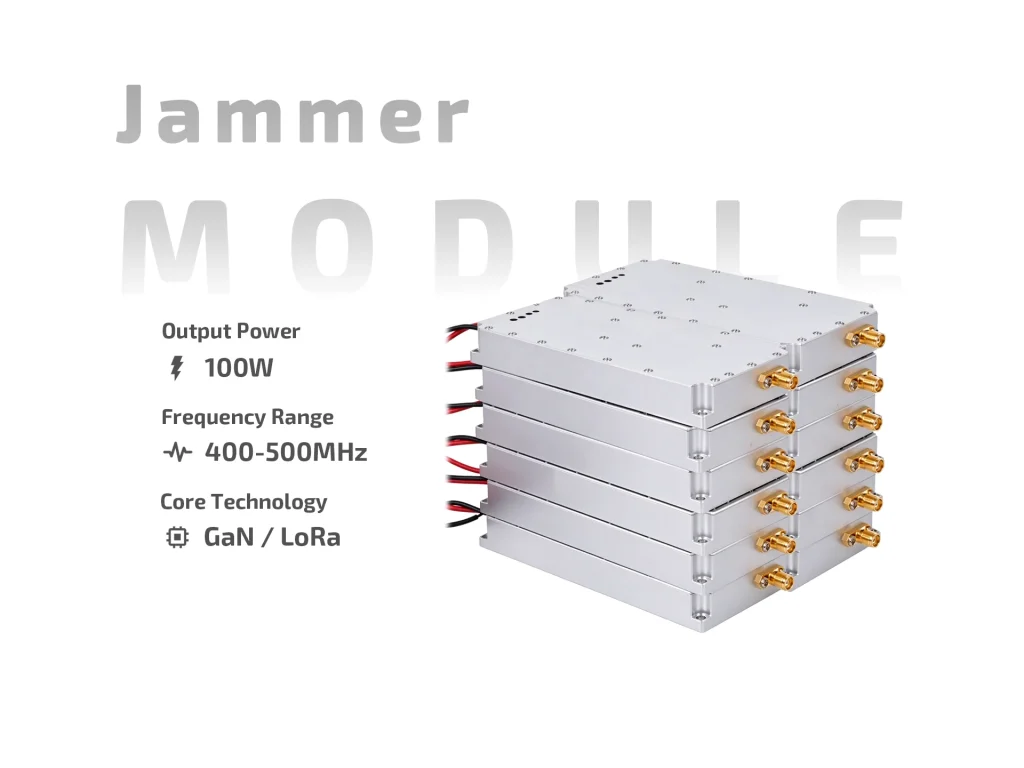
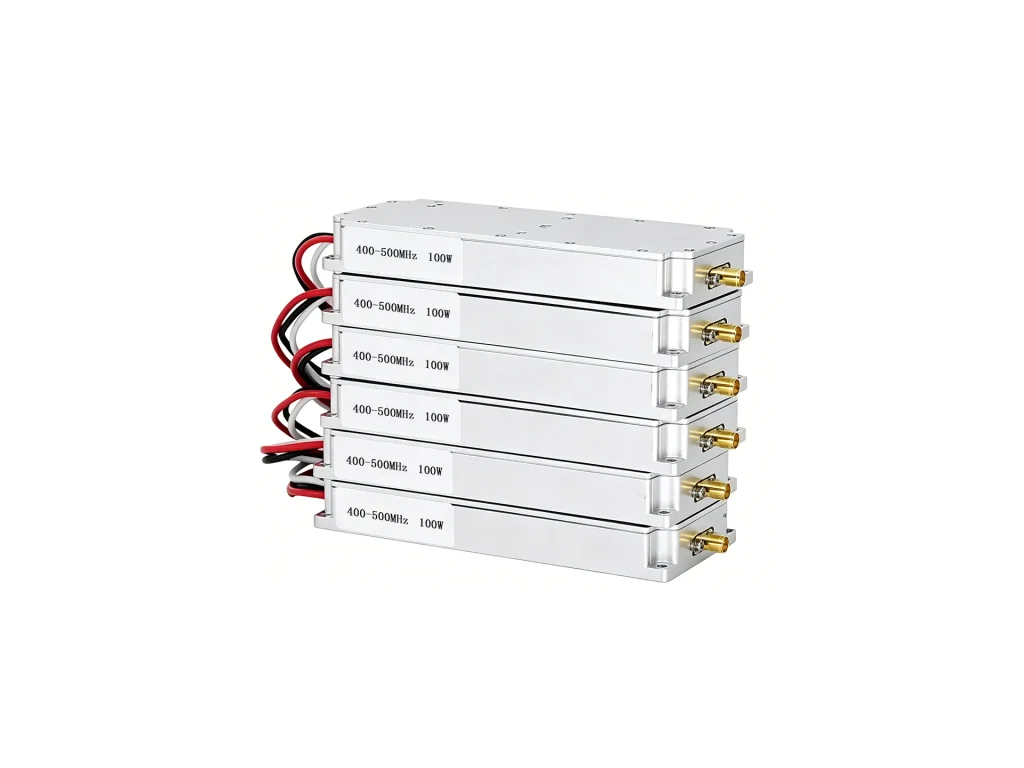
100W GaN LoRa drone jammer module, 400–500MHz, DC24–29V/12A, ≥40% efficiency, SMA female, built-in sweep source and VSWR protection.
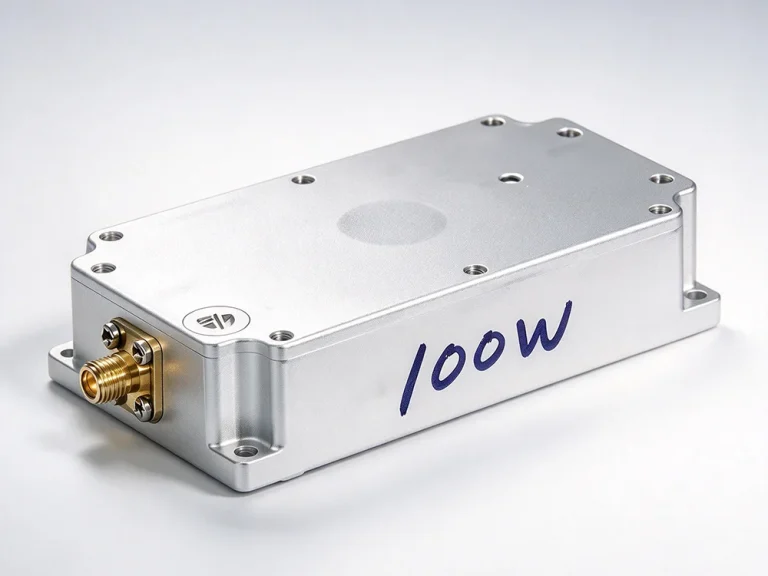
The JM0405G100 is a 100W GaN LoRa drone jammer module that operates across 400–500MHz. This band is widely used by LoRa devices, drone remote links, telemetry systems, and some industrial wireless controllers. The module packs 100W of RF power into a 168.5*84.5*23mm package weighing 0.55kg. Despite the power level, it keeps a compact footprint for tight integration. It works as a standalone jamming unit or as part of a larger system. That flexibility suits both field deployment and lab testing.
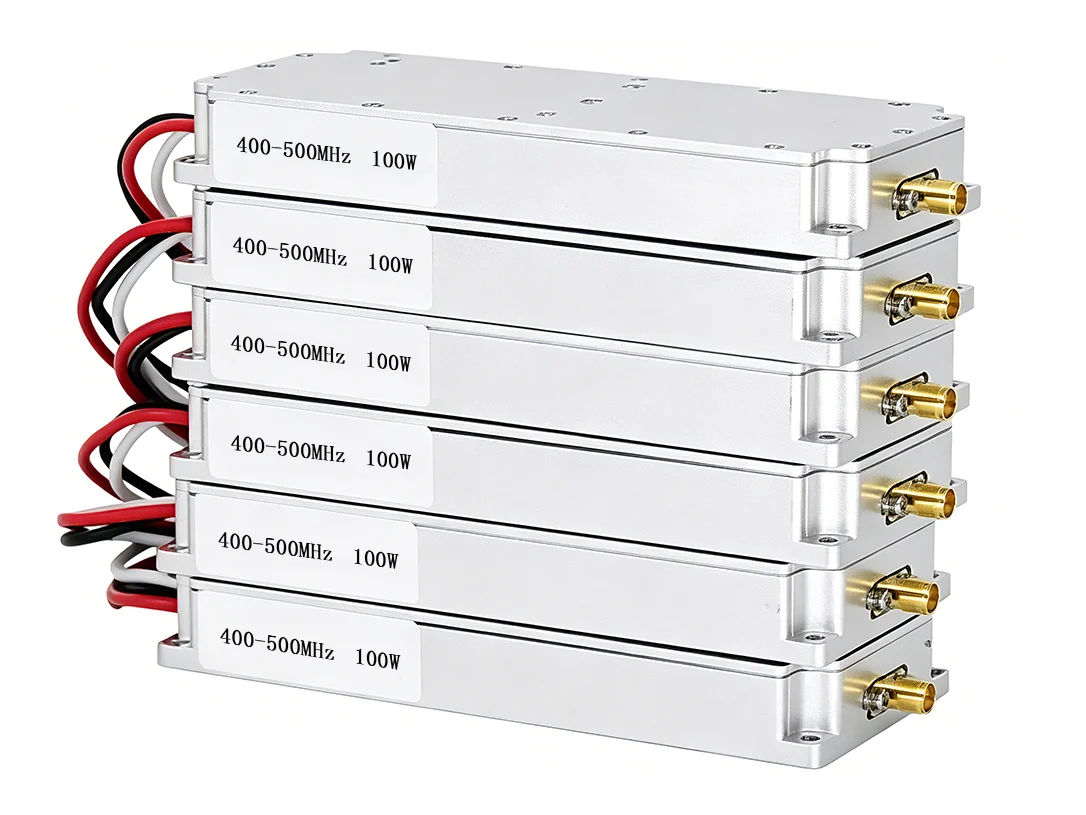
The core uses GaN (gallium nitride) power transistors. Compared with older LDMOS or silicon designs, GaN offers higher power density and better thermal behavior at the same output. This means a smaller package and longer component life. The module reaches ≥40% efficiency, so a good portion of input power becomes useful RF energy rather than waste heat. The operating voltage ranges from DC24V~29V, with a maximum current draw of 12.0A. At this power level, that efficiency figure helps with thermal management.
The module includes a high-speed sweep source, so no external signal generator or sweep circuit is needed. The sweep source automatically covers the full 400–500MHz range. This simplifies system integration because you don’t have to splice in a signal source externally. The module works as a complete jamming unit out of the box. Output is through an SMA female connector, a standard RF interface that is simple to connect with coaxial cable.
Antennas detune, cables age, connectors loosen. Any of these can push the VSWR up and damage the final stage. The module has built-in absorptive VSWR protection. When output VSWR climbs above 2.0, the protection circuit steps in to prevent final-stage burnout. For remote installations, long deployments, or unattended sites, this feature matters because maintenance access is not always convenient. It is the kind of “one less thing to worry about” function engineers appreciate.
Switch control uses a single pin: +5V or floating means ON, grounding means OFF. That simple logic-level interface means almost any controller, relay, or microcontroller can drive it without extra circuitry. System integrators don’t have to worry about complex timing or level shifting. Wiring and programming effort are both reduced. For module integration work, simpler is better.
At 100W output, heat is real. Even with GaN efficiency, some heat must be dissipated. Mount the module to a metal surface and use a thermal pad or thermal paste for best results. Ensure enough space around the front and back for air movement. If installed inside an enclosure, consider active cooling. The module is light at just 0.55kg, so standard mounting hardware works. Avoid mounting near heat sources or inside sealed plastic boxes for long periods without derating.
The 400–500MHz band is fairly wide and holds several different services and applications. LoRa devices often use license-free bands in the 400MHz and 500MHz ranges. Drone remote links commonly use the 420–450MHz region. Telemetry systems are scattered across the band. This module’s sweep source covers the whole 400–500MHz window, so it can address any signal in that band without separate tuning for each application. That wide coverage is a strong advantage—you don’t need multiple narrowband modules for different targets.
The module suits scenarios where 400–500MHz coverage is needed—LoRa links, drone control signals, remote-control systems, or system integrators building multi-band jammer racks. It works for bench testing and field deployment alike. When integrating, use an antenna rated for at least 100W and resonant in the 400–500MHz range. Ensure adequate airflow or heatsinking. While VSWR protection is built in, good RF practice still matters—don’t rely on the protection circuit to cover a mismatched antenna. Leave some space around the installation and keep antenna cable runs as short as practical. These simple steps keep the module stable over long runs.
If you need a 100W, 400–500MHz drone jamming module that is ready to integrate, the JM0405G100 offers a good balance of power, size, and built-in protection. GaN technology, an internal sweep source, and VSWR protection make integration straightforward.
| Operating frequency | 400–500MHz | Single wideband range |
| Output power | 100W | GaN output stage |
| Operating voltage | DC24V~29V | Nominal 24V |
| Max operating current | 12.0A | At full output |
| Efficiency | ≥40% | Typical at rated power |
| Output VSWR | ≤2.0 | Protected internally |
| Output connector | SMA female | Standard RF interface |
| Switch control | +5V or floating = ON / grounded = OFF | Simple logic pin |
| Jamming source | Built-in high-speed sweep source | No external source needed |
| VSWR protection | Built-in absorptive VSWR protection device | Protects final stage |
| Dimensions | 168.584.523mm | Compact housing |
| Weight | 0.55kg | Lightweight |
GaN promises efficiency and power density in 100W drone jammer modules. Here is where the gains are real, where they shrink, and what to verify.
A procurement-focused review of 100W FPV jammer modules: where the extra power helps, where it costs, and what to validate before purchase.
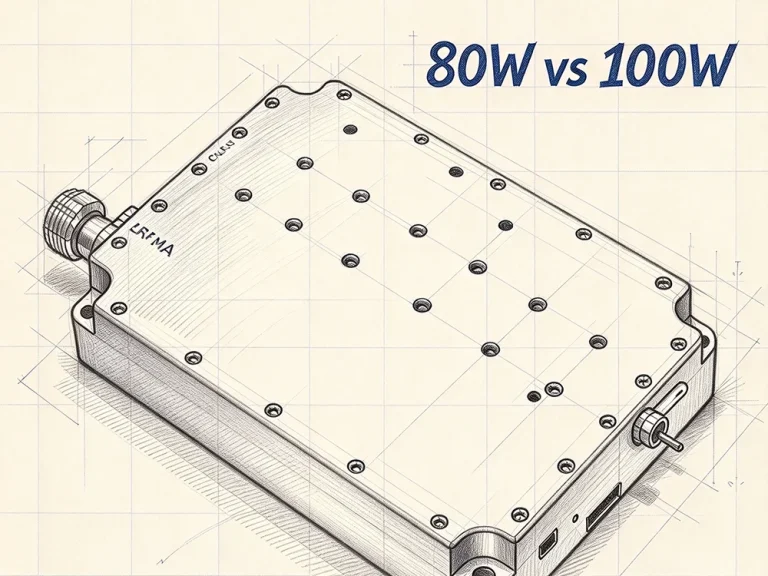
Comparing 80W vs 100W drone jammer module: real thermal gaps, efficiency trade-offs, bandwidth costs, and when the extra 20W is worth it.