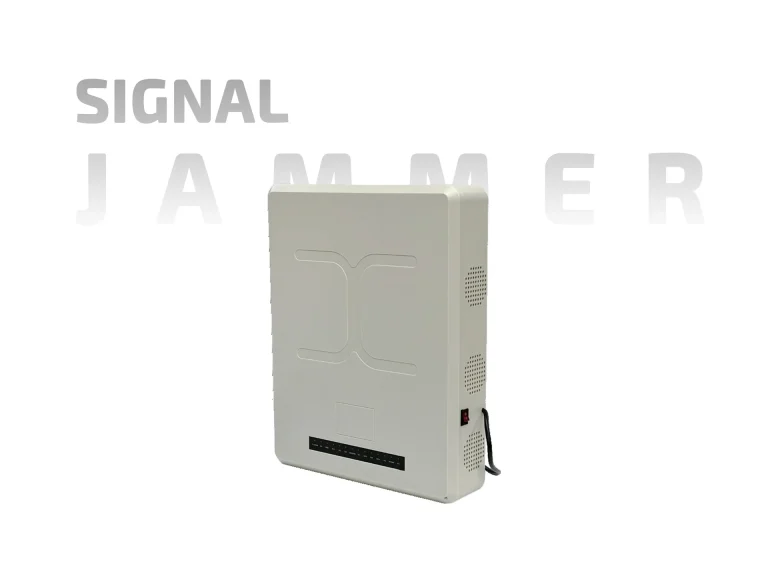
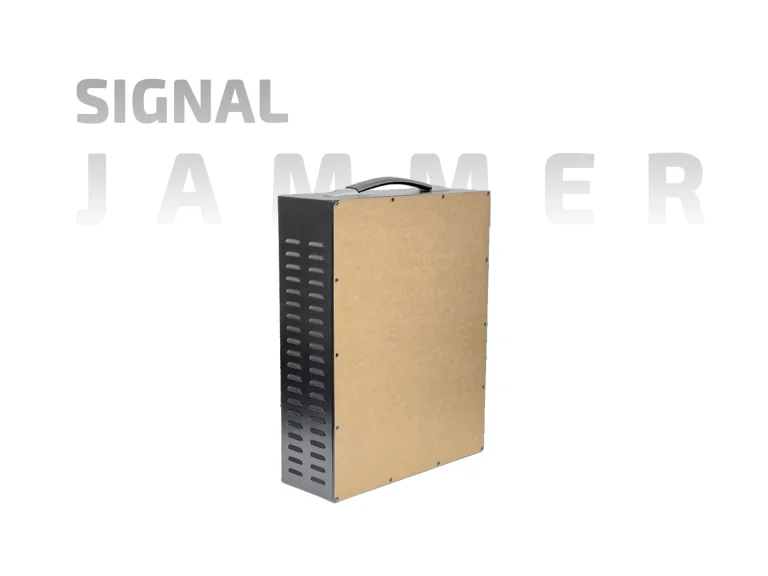
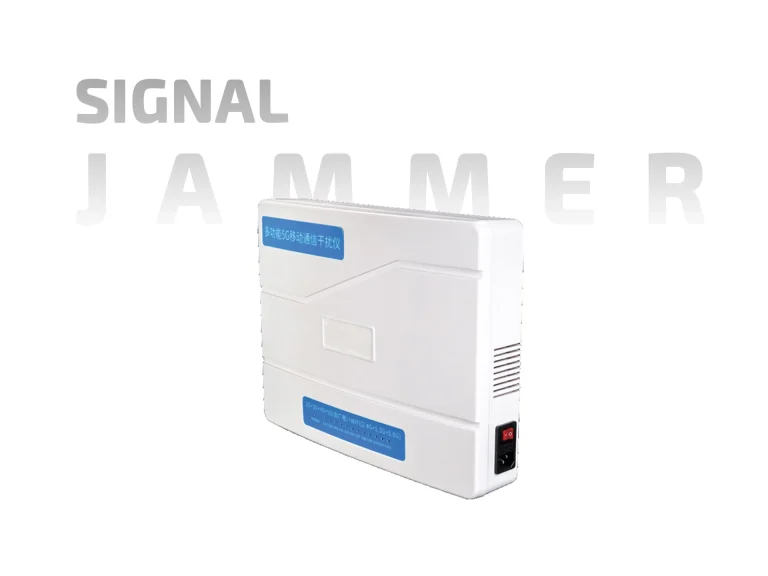
Ask ten vendors what makes a jammer “professional” and you will get ten answers, most of them involving the word “power.” That is the wrong place to look. Professionalism in RF equipment is not a wattage bracket or a metal enclosure. It is a set of engineering and operational habits: honest specifications, stable thermal behavior, documented test data, and a supplier who talks openly about limits. A 40 W unit built to those standards deserves the label far more than a 150 W box with a vague datasheet and no test report.
If you are already shortlisting products, Medium Power Signal Jammer for Sale: What Buyers Must Verify First walks through the pre-purchase checks.

The Real Divide: Discipline, Not Wattage
Professional equipment is built by teams who expect to be measured. That expectation shows up in small ways long before anyone powers the unit on. Amateur products tend to advertise; professional products tend to specify. The difference is easiest to see when the two are placed side by side.
| Trait | Amateur-grade listing | Professional-grade offering |
|---|---|---|
| Power claims | One headline number | Per-band figures with test conditions |
| Bandwidth | “Wide coverage” | Named ranges, filters, and roll-off |
| Thermal design | Mentioned in passing | Derating curves and ambient ratings |
| Documentation | A short manual | Datasheet, block diagram, test report |
| Supplier posture | Avoids hard questions | Volunteers constraints and caveats |
| Support | Sales contact only | Engineering contact and warranty terms |
What a Professional Datasheet Should Contain
A datasheet is where professionalism becomes checkable. The items below are the ones that separate a genuine engineering document from a marketing one-pager.
| Datasheet item | Why a professional supplier includes it |
|---|---|
| Output per frequency band | Total wattage can hide a weak or missing band |
| Bandwidth and filter response | Shows how precisely the unit targets a range |
| Antenna gain and pattern | Explains where the energy actually goes |
| Duty cycle and derating | Sets honest expectations for continuous use |
| Input power and connector ratings | Lets the buyer size supply and protection |
| Operating temperature range | Reveals whether the cooling design is adequate |
| Measurement conditions | Makes every claim reproducible by a third party |
| Revision history | Shows the document is maintained, not decorative |
Design Choices That Signal Quality
Some engineering decisions are invisible in a spec sheet but obvious in service. A professional medium power unit typically shows careful attention to impedance matching across the band, filtering that suppresses harmonics and spurious emissions, and a control interface that supports logging and a clean shutdown. These features cost money and are rarely mentioned in advertising, which is precisely why their presence is telling.
| Design area | What good practice looks like | Why it matters operationally |
|---|---|---|
| Impedance matching | Stable across the full band | Prevents hot spots and protection trips |
| Harmonic filtering | Suppresses out-of-band products | Reduces interference beyond the target band |
| Thermal path | Direct conduction from amplifier to heat sink | Extends continuous runtime and component life |
| Control interface | Logging, status indicators, kill switch | Supports accountability during testing |
| Connector and cabling | Rated for the actual current and frequency | Avoids losses and failure points |
Questions That Reveal a Supplier’s Caliber
A short conversation often tells you more than a catalog. Ask for the test conditions behind the output figure. Ask what happens at 40 °C ambient. Ask whether the manual covers derating. Ask who signs the test report. Suppliers who answer precisely are usually the ones whose equipment behaves as described. Suppliers who deflect toward price and delivery are telling you something too.
Matching Professional Equipment to Professional Practice
Even excellent hardware becomes unprofessional in careless hands. A medium power jammer used without a written test plan, without containment, and without legal review is a liability regardless of how well it was built. The equipment and the practice have to match: documented specifications on one side, documented procedures on the other. Buyers who plan for both get predictable results; buyers who plan for only one get surprises.
A Different Way to Judge
Instead of ranking products by output, rank them by how much you can verify before purchase. A professional medium power signal jammer is one whose behavior can be predicted from its documentation, whose limits are stated rather than hidden, and whose supplier is comfortable being asked hard questions. That standard is harder to meet than a wattage number—and far more useful when the equipment is actually in service.