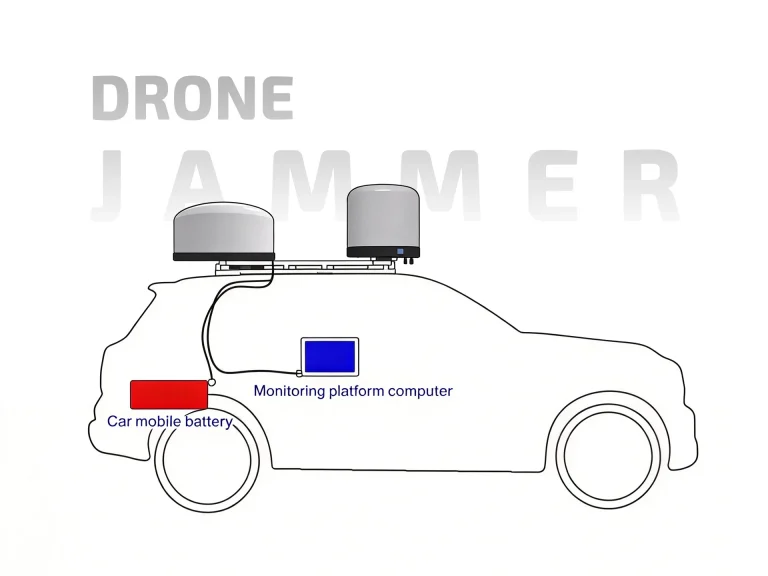
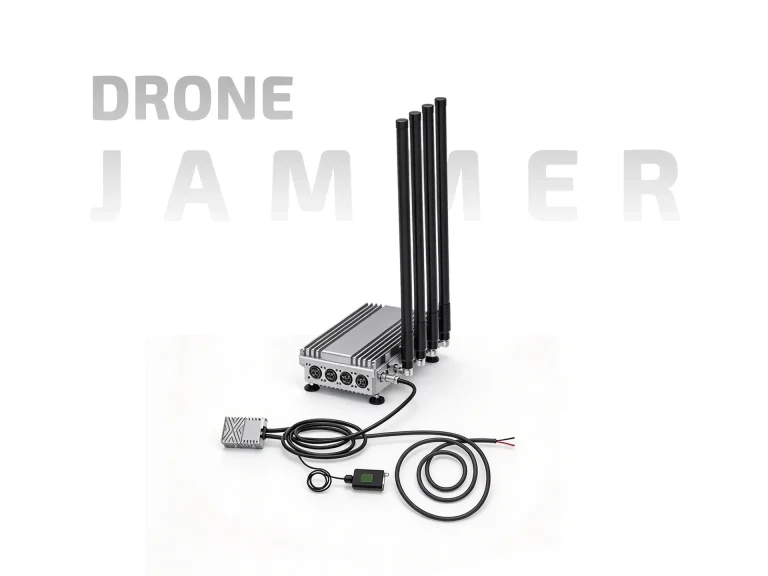
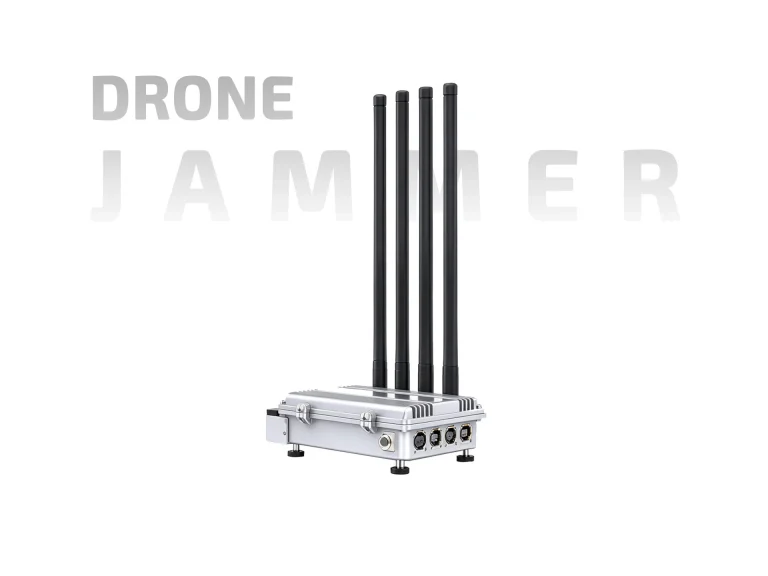
A vehicle-mounted drone jammer for sale is a major procurement decision. It combines RF hardware, vehicle integration, and legal responsibility. Before you request quotes, define the mission. Will the system escort convoys, patrol borders, or protect temporary events? The answer shapes power, antenna, and control requirements. This guide covers what to evaluate when shopping for a vehicle-mounted drone jammer for sale.

Start with the Mission, Not the Price
Many buyers start with budget. That is a mistake. A cheap unit may lack filtering, cooling, or remote control. It may also fail to meet local RF rules. Start with the threat profile. Which drone bands matter? How fast must the vehicle respond? Will the jammer operate while moving or only when parked?
Write a short operational concept. Then match vendors to that concept. This keeps the vehicle-mounted drone jammer for sale process focused on capability, not marketing claims.
Key Specifications to Compare
Ask every vendor for the same data. Use a spreadsheet. Do not accept “high power” without numbers.
| Specification | Why It Matters | Red Flag |
|---|---|---|
| Frequency bands | Must cover threat links | Missing 2.4/5.8 GHz |
| Output power per band | Affects range | Vague “total power” |
| Antenna gain and type | Shapes coverage | No pattern data |
| Duty cycle | Supports continuous use | No thermal rating |
| Power draw | Must match vehicle | Overloads alternator |
| Cooling | Prevents shutdown | Fan-only in hot climates |
| Control interface | Remote and safe operation | No fail-safe |
| Spurious emissions | Avoids interference | No test report |
A serious vendor will share band-specific power, antenna patterns, and test reports. If they cannot, keep looking.
Vehicle Integration and Power
Vehicle-mounted drone jamming systems must survive vibration, heat, and dust. Check the mounting hardware. Ask about shock isolation and cable routing. Confirm the alternator and battery can handle the load. Some units need a second alternator or auxiliary battery.
Cooling is critical. A jammer that shuts down mid-mission is a liability. Demand thermal test data. Also ask about RF exposure safety for the crew.
Legal and Compliance Checks
Jamming is illegal for most civilian users. Only authorized government, military, or law enforcement agencies should deploy these systems. Confirm licensing, operator training, and coordination with local spectrum authorities.
Ask the vendor for compliance documentation. They should understand export controls and end-user requirements. A legitimate vehicle-mounted drone jammer for sale listing will include these details.
Procurement Checklist
Use this list before signing a contract.
| Step | Action |
|---|---|
| 1 | Define mission and threat bands |
| 2 | Confirm legal authority |
| 3 | Request band-specific specs |
| 4 | Review test reports |
| 5 | Check vehicle power and cooling |
| 6 | Verify remote shutdown |
| 7 | Ask for training and spare parts |
| 8 | Confirm warranty and firmware updates |
| 9 | Plan maintenance schedule |
| 10 | Document RF exposure controls |
Common Pitfalls When Buying
Pitfall 1: Ignoring integration costs. The jammer price may not include vehicle wiring, mounts, or antennas. Ask for a turnkey quote.
Pitfall 2: Overlooking detection. A jammer works best with radar or RF detection. Without detection, operators may jam blindly.
Pitfall 3: Skipping training. Crews need clear rules of engagement and shutdown drills. Include training in the purchase.
Pitfall 4: No spare parts. Ask about antenna spares, amplifier modules, and fuses. Long lead times can ground a vehicle.
For a broader view of how mobile jammers fit into a layered defense, see our counter-UAS systems overview.
Final Advice
A vehicle-mounted drone jammer for sale should be evaluated as a system, not a box. Match bands to threats, confirm vehicle power, demand thermal data, and verify legal authority. Choose vendors who provide test reports, training, and spare parts. The lowest price is rarely the lowest risk.