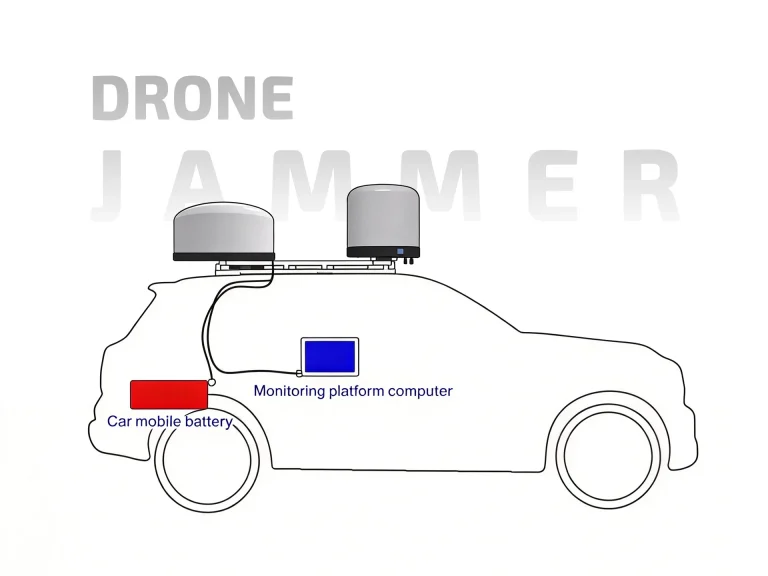
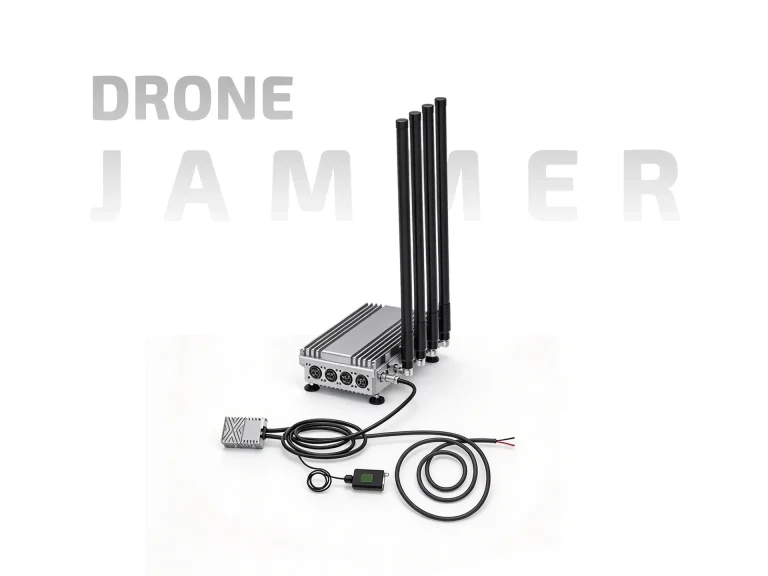
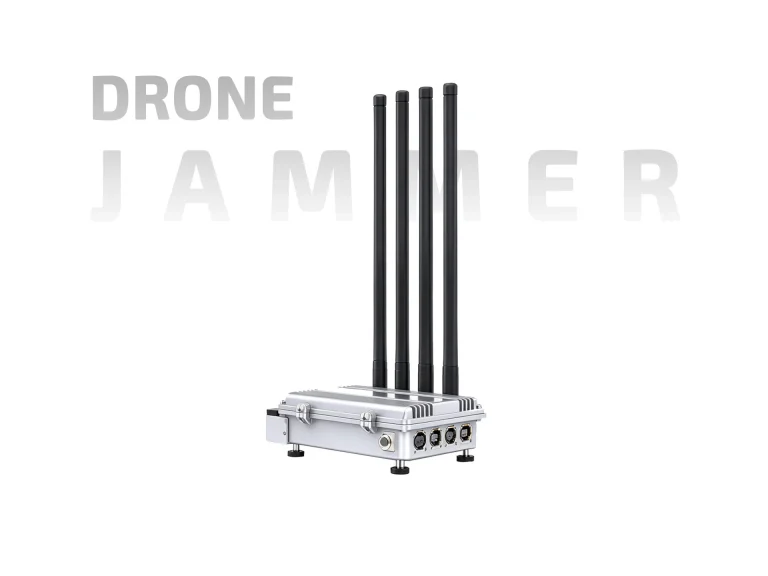
A vehicle-mounted drone jammer price is rarely a single number. It depends on bands, power, antennas, vehicle integration, and compliance work. Two systems that look similar on a spec sheet can differ by tens of thousands of dollars. This article explains the cost drivers behind a vehicle-mounted drone jammer price and how to compare quotes without getting misled.

What Drives Vehicle-Mounted Drone Jammer Price?
The biggest cost driver is the RF chain. More bands mean more amplifiers, filters, and antennas. Higher output power means larger heat sinks and stronger power supplies. Both raise the vehicle-mounted drone jammer price.
Vehicle integration is the second driver. Roof mounts, cable routing, shock isolation, and alternator upgrades all add cost. A jammer that draws too much power can force a second alternator or auxiliary battery bank.
Control and safety features also matter. Remote shutdown, event logging, and RF exposure controls are not optional for serious users. They add engineering cost but reduce operational risk.
Typical Vehicle-Mounted Drone Jammer Price Ranges
The table below shows indicative planning ranges. Actual quotes vary by vendor, region, and configuration. Treat these figures as a starting point, not a fixed price list.
| Tier | Typical Configuration | Indicative Price Range (USD) |
|---|---|---|
| Entry | Single or dual band, lower power, basic mount | $10,000–$30,000 |
| Mid-range | Multi-band, directional antennas, remote control | $30,000–$80,000 |
| High-end | Wideband, high duty cycle, integrated detection | $80,000–$200,000+ |
A low price often signals missing filters, weak cooling, or no test reports. Ask for band-specific power data and thermal ratings before comparing numbers.
Hidden Costs Behind the Vehicle-Mounted Drone Jammer Price
The unit price is only part of the budget. Buyers should plan for installation, training, spares, and maintenance.
| Cost Item | Why It Matters |
|---|---|
| Vehicle wiring and mounts | Poor integration causes failures |
| Antenna placement | Affects coverage and safety |
| Cooling upgrades | Prevents mid-mission shutdown |
| Operator training | Reduces misuse and legal risk |
| Spare amplifiers and antennas | Avoids long downtime |
| Firmware and support | Keeps system current |
| Compliance and testing | Meets local RF rules |
A turnkey quote is easier to compare than a hardware-only price. Ask each vendor to itemize installation, training, and warranty.
How to Compare Vehicle-Mounted Drone Jammer Price Quotes
Do not compare total price alone. Compare scope. A quote that includes antennas, mounting, training, and spares may be better value than a cheaper box-only offer.
Ask these questions:
-
Which bands are included, and at what power?
-
What is the duty cycle and cooling method?
-
Does the price include vehicle integration?
-
Are test reports and compliance documents included?
-
What training and spare parts are provided?
-
What is the warranty and support term?
Legal and Compliance Costs
Jamming is illegal for most civilian users. Only authorized government, military, or law enforcement agencies should deploy these systems. Compliance work adds cost but is unavoidable. Review drone jamming regulations before requesting quotes. Budget for licensing support, operator training, and spectrum coordination.
Conclusion
The vehicle-mounted drone jammer price you see online is only an entry point. Real cost includes RF hardware, vehicle integration, cooling, training, spares, and compliance. Compare itemized quotes, demand test data, and verify legal authority. The cheapest offer is rarely the safest or most durable choice.