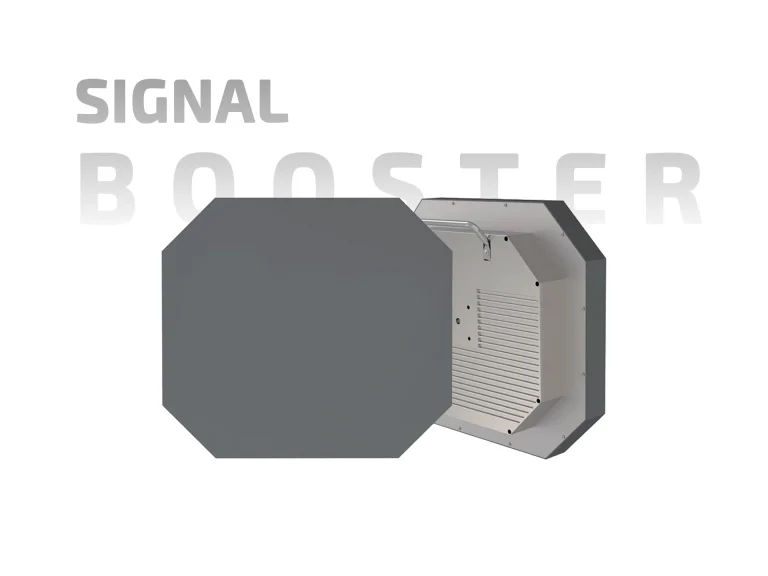
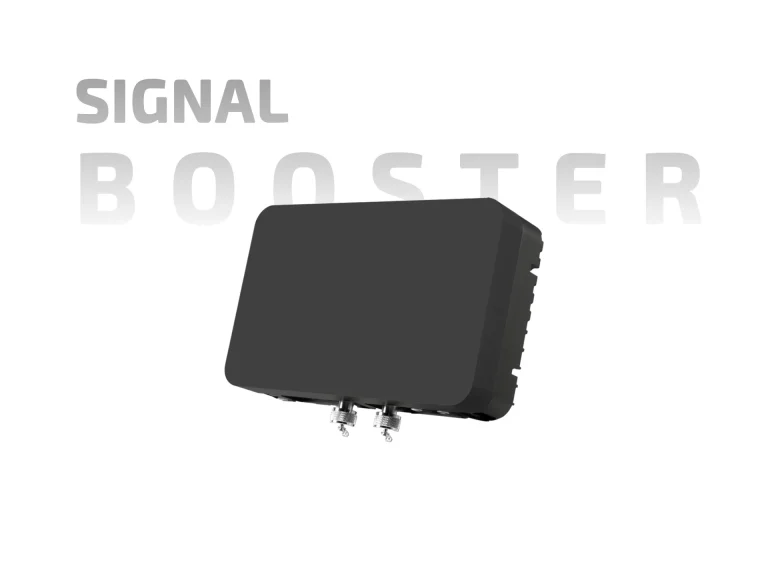
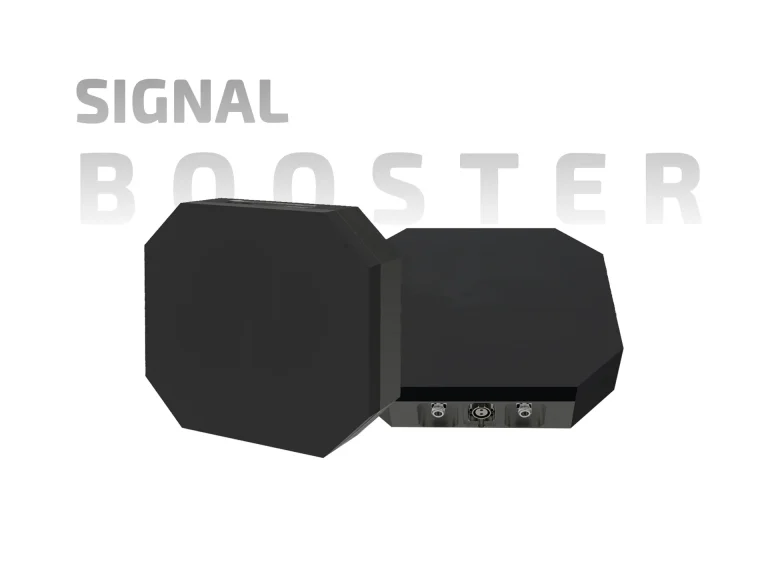
Weak coverage usually starts outside. Before blaming the router, SIM card, or handset, walk the perimeter of the building and note where calls drop and data stalls. An outdoor signal amplifier captures usable macro-network signal at a roof or mast, amplifies it in a controlled way, and rebroadcasts it indoors. Done well, it turns a marginal bar into a stable connection. Done badly, it amplifies noise, creates oscillation, or breaches operator rules.
This guide is written for facilities managers, rural homeowners, and installers who need a deployment that survives weather and audits—not just a box that lights up.

Start with the signal, not the box
A booster cannot create signal where none exists. It needs a usable donor signal, adequate isolation between the outdoor and indoor antennas, and a clear match between the amplifier’s bands and the carrier’s live frequencies.
Measure before you buy. A phone app is useful for a first walk-through, but a spectrum analyzer or carrier-supported test mode gives better band-level data.
| Metric | What it tells you | Field note |
|---|---|---|
| RSRP | Raw received signal strength | Record the best and worst outdoor spots, not just one reading |
| SINR/SNR | Signal quality against noise | Weak RSRP with good SINR is often easier to improve |
| Band lock | Which LTE/5G bands are usable | Match the booster to the carrier’s active bands, not marketing labels |
| Terrain and obstruction | Path loss from the tower | Line of sight helps, but it is not the only viable scenario |
| Indoor/outdoor delta | How much wall loss you must overcome | Set realistic expectations before promising full-building coverage |
What an outdoor signal booster actually does
The system has four practical parts: a donor antenna, coax or fiber feed, an amplifier, and a service antenna. Some vendors call the whole kit an “outdoor signal amplifier,” but the outdoor element is usually the donor antenna and, in some designs, a weatherproof amplifier housing.
The critical design issue is isolation. If the service antenna “hears” the donor antenna too well, the amplifier oscillates and reduces performance or shuts down. Physical separation, directional donor antennas, and careful aiming matter more than a higher gain number on the datasheet.
Selection matrix by deployment type
| Scenario | Sensible system approach | Must-have specification | Common mistake |
|---|---|---|---|
| Rural single home | Directional donor antenna on roof or mast; indoor panel antenna | Band coverage matched to one or two carriers; surge protection | Buying a high-gain unit before checking donor signal quality |
| Small office | Outdoor donor with controlled indoor coverage | AGC and oscillation protection; clean cabling | Placing the service antenna near windows facing the donor |
| Warehouse | Outdoor donor plus distributed indoor antennas | Low-loss coax or fiber feed; balanced output | Assuming one indoor antenna can cover a long aisle layout |
| Multi-building site | Fiber-fed remote units or sectorized design | Site survey and operator coordination | Treating a campus as a single-room installation |
Specifications that separate usable from frustrating
-
Band coverage: Match real carrier bands. “5G ready” means little if the supported bands do not include the ones in use.
-
Gain and output power: More gain is not automatically better. Automatic gain control and oscillation protection are practical necessities.
-
Isolation: Plan antenna separation and aiming before mounting hardware.
-
Connectors and coax: Weatherproof every outdoor connector. Every poorly sealed joint becomes a future water path.
-
Power and surge: Use outdoor-rated enclosures and appropriate grounding.
-
Compliance: Check certification and local rules before installation.
Installation pitfalls worth avoiding
Do not power up the amplifier before antenna isolation is checked. Ground the mast and enclosure according to local electrical codes. Keep the service antenna away from exterior walls that face the donor antenna. Label cables at both ends, and leave a service loop at each connector. Use low-loss coax where the run is long; cheap cable can erase the benefit of a good amplifier.
In the United States, consumer boosters must be FCC certified and meet network-protection requirements; carrier registration may apply. Canada, the UK, the EU, and other markets have their own rules. Never use a booster to create coverage beyond your premises or in prohibited areas.
A simple pre-purchase checklist
-
Confirm a usable outdoor donor signal on the carrier’s live bands.
-
Decide whether the goal is voice, data, or both.
-
Map indoor coverage zones before choosing antenna types.
-
Check amplifier certification for your jurisdiction.
-
Budget for coax, mounts, grounding, and weatherproofing—not just the booster.
-
Plan a post-install test with RSRP, SINR, upload, download, and call stability.
Bottom line
An outdoor signal amplifier is a controlled radio system, not a plug-and-play miracle. The successful projects start with measurement, respect isolation, match bands to the carrier, and treat compliance as part of the design. Choose the system around the site—not the site around the box.