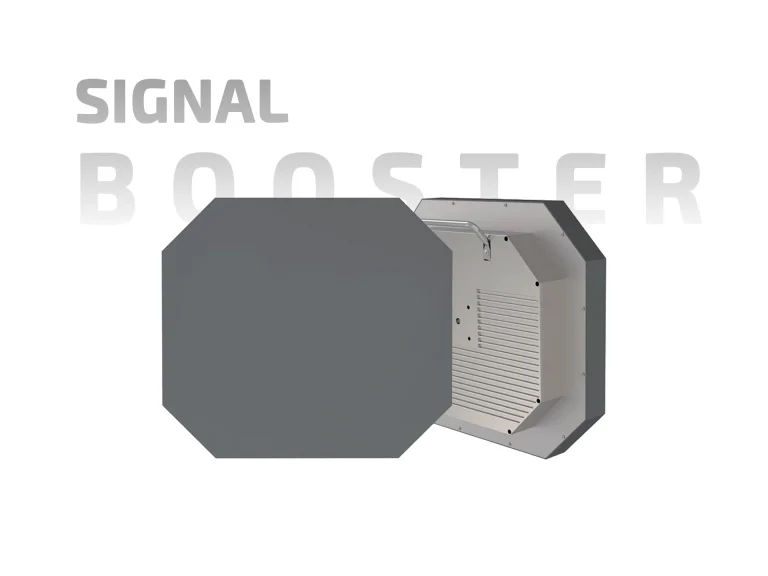
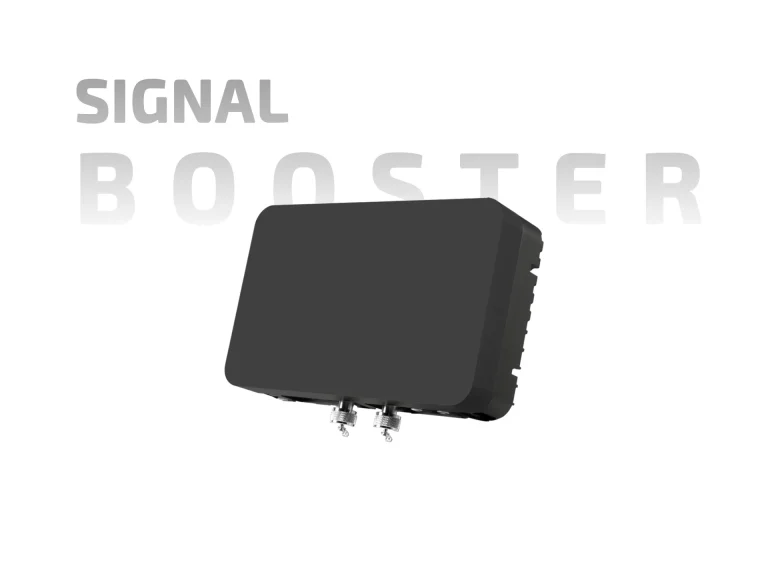
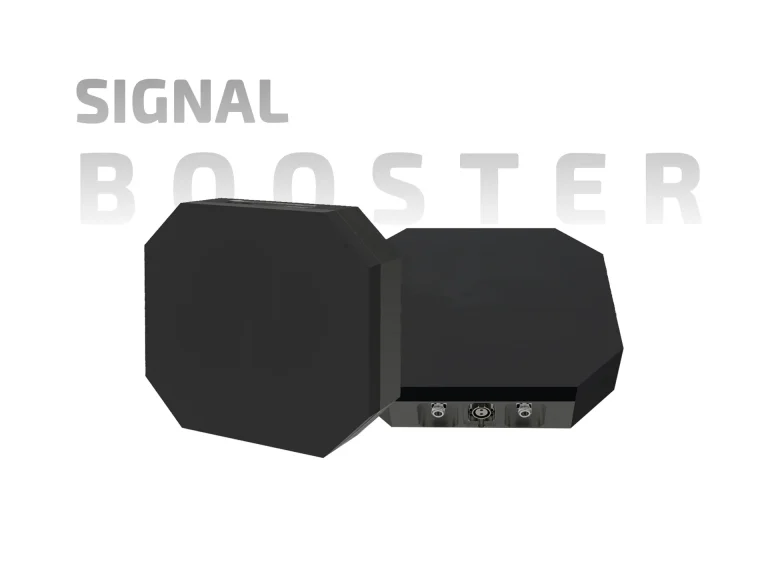
An omnidirectional signal amplifier sounds like the obvious choice. If the system hears in every direction, why aim anything? In practice, omni antennas trade gain for convenience. They can be useful when the serving tower is unclear, when several carriers matter, or when the installation must remain visually discreet. They are a poor fit when the donor signal is weak and a directional antenna could pull in a cleaner signal.
The short answer: choose omni for flexibility, not for maximum reach.

What “omnidirectional” actually changes
In a amplifier system, “omnidirectional” usually describes the donor antenna—the antenna that listens to the outside network. An omni donor antenna collects signal from a broad arc rather than a narrow beam. That reduces aiming work and can help when towers are in different directions. It also means lower gain in any one direction, so a weak donor signal stays weak.
Some kits also use omnidirectional indoor service antennas to spread coverage in a room. That is a different job. An omni service antenna can reduce dead spots around a central location, but it does not fix a poor outdoor donor signal.
| Factor | Omnidirectional donor antenna | Directional donor antenna |
|---|---|---|
| Aiming | Minimal; broad reception | Requires careful alignment |
| Gain in one direction | Lower | Higher |
| Best donor condition | Usable signal from multiple directions | Weak but stable signal from one tower |
| Isolation risk | Can be harder to control indoors | Easier to separate from the service antenna |
| Visual impact | Often less obtrusive | May need a visible mast or boom |
| Typical use | Multiple carriers, uncertain tower direction, temporary sites | Rural homes, fixed sites, long donor paths |
Omni is not an upgrade over directional. It is a different compromise.
Where an omni amplifier earns its place
| Situation | Better choice | Why |
|---|---|---|
| Tower direction is unknown or changes with seasons | Omnidirectional donor | Avoids repeated re-aiming |
| Two or three carriers must be supported | Omni donor plus multi-band amplifier | Broad reception can cover more than one network direction |
| Rented property with strict mounting rules | Compact omni donor | Lower visual profile and simpler installation |
| Donor signal is already strong outdoors | Omni donor is often sufficient | The system does not need extra directional gain |
| Donor signal is weak and one tower is known | Directional donor | Higher gain and better signal-to-noise ratio |
| Long cable run indoors | Directional donor plus careful isolation | Lower donor gain makes cable loss harder to tolerate |
If the project is a full outdoor build, this guide to outdoor signal amplifiers covers donor placement and weatherproofing in more detail. For a house with several priority rooms, the room-by-room approach in this home signal amplifier planning guide is more useful than picking an antenna by label alone.
Installation realities that catch people out
An omni donor antenna is less directional, but it is not immune to isolation problems. The indoor service antenna can still feed signal back into the donor path. Keep physical separation, use walls and rooflines, and check the amplifier’s oscillation protection before trusting a green light.
Also treat gain claims carefully. A high gain number on an omni antenna can be misleading if the pattern is uneven or the mounting height is poor. Height and a clear path to the network usually matter more than a few decibels on the box.
-
Mount the donor antenna as high as practical and away from metal roofing.
-
Keep the service antenna off exterior walls that face the donor.
-
Weatherproof every outdoor connector.
-
Ground the mast and enclosure according to local electrical rules.
-
Test with real calls and data, not only the booster’s status LEDs.
Bottom line
An omnidirectional signal amplifier is a sensible tool when flexibility matters more than maximum donor gain. It simplifies aiming and can support multiple directions, but it will not rescue a marginal outdoor signal. Match the antenna pattern to the site, plan isolation carefully, and verify compliance before installation.