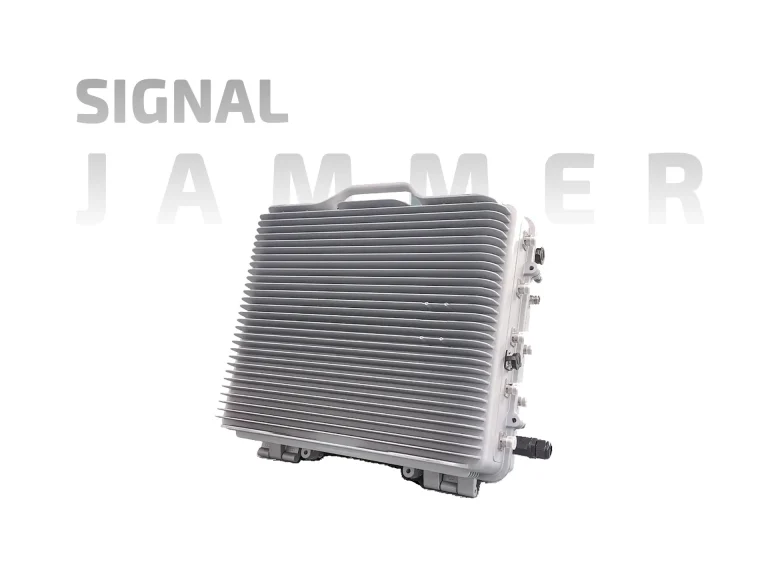
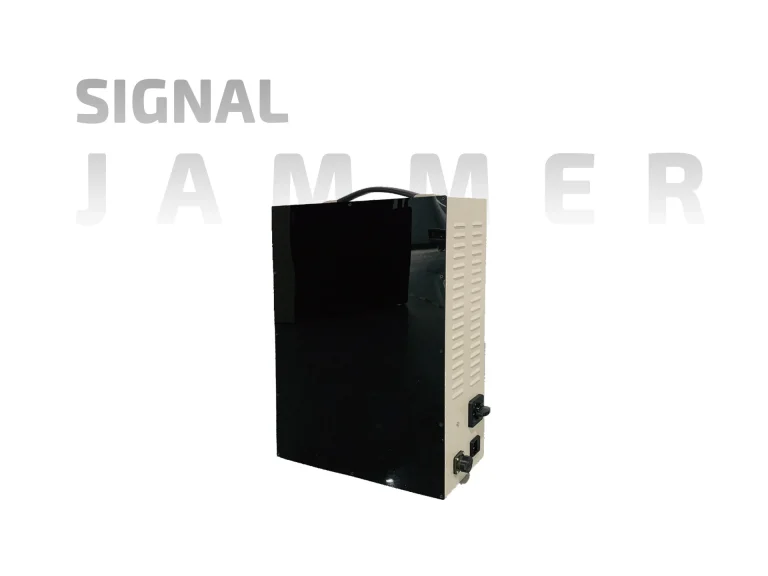
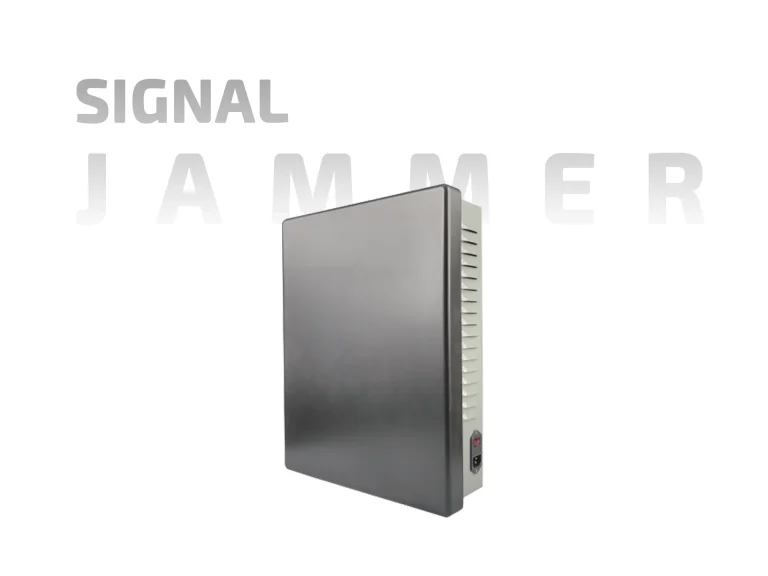
The choice between a high power and a low power signal jammer is often framed as a simple upgrade decision: more watts must be better. In authorized RF planning, that framing is backwards. The right question is not which class is stronger, but which class fits the task, the site, the power budget, and the legal boundary. A low power unit that is well placed and narrowly targeted can outperform a high power unit that is poorly sited and broadly emitting. Conversely, a high power system may be the only workable option when the protected zone is large and the legitimate signal is strong—provided the thermal, electrical, and regulatory costs are understood.
For the underlying receiver mechanics that apply to both classes, see How Does a Signal Jammer Work? RF, GPS, WiFi and Cellular Explained. For the coverage side of the comparison, see Signal Jammer Range: What Actually Determines It?.

The Two Classes at a Glance
The table below contrasts the two approaches across the dimensions that usually decide a project. It is a planning aid, not a product ranking.
| Dimension | Low power signal jammer | High power signal jammer |
|---|---|---|
| Typical use case | Contained rooms, bench tests, short-range studies | Large protected zones, strong ambient signals |
| Coverage behavior | Limited radius; sensitive to placement | Broader reach; still shaped by antennas and terrain |
| Heat and cooling | Modest; often fanless or simple airflow | Significant; heat sinks, fans, and derating matter |
| Power supply | Small adapters or modest batteries | Dedicated circuits, breakers, or large battery banks |
| Portability | High; easy to relocate and contain | Lower; heavier and more installation-bound |
| Collateral footprint | Easier to keep inside a shielded area | Harder to contain; wider unintended reach |
| Cost profile | Lower entry cost, lower operating cost | Higher purchase, power, and maintenance cost |
| Legal exposure | Narrower physical footprint, but rules still apply | Greater potential impact if containment fails |
Where Each Class Makes Sense
Matching the class to the scenario prevents the two most common mistakes: over-specifying power for a small task, and under-specifying power for a demanding one.
| Scenario | Better fit | Reasoning |
|---|---|---|
| Shielded room or Faraday enclosure testing | Low power | Containment does the work; excess power adds heat and risk |
| Bench-level receiver studies | Low power | Short distances and controlled conditions |
| Small defined zone with weak ambient signal | Low power | Adequate margin without collateral spread |
| Large open area with strong legitimate signals | High power | Needs more jamming margin at the receiver |
| Portable field assessment | Low power | Battery life and weight favor efficiency |
| Fixed installation with dedicated power | High power | Site infrastructure can support draw and cooling |
| Any open-air use near critical infrastructure | Neither | Authorization and containment must be resolved first |
The Costs People Underestimate
Low power units are often chosen for budget reasons, but their real advantage is control. They are easier to contain, easier to power, and easier to shut down. High power units are chosen for reach, but their real cost extends well beyond the purchase price: electrical service upgrades, cooling, maintenance, and a larger compliance burden all follow from the higher output.
| Cost category | Low power impact | High power impact |
|---|---|---|
| Electrical infrastructure | Minimal | May require dedicated circuits |
| Thermal management | Simple | Heat sinks, airflow, monitoring |
| Maintenance | Low | Fan filters, thermal checks, derating reviews |
| Containment effort | Easier | Requires more rigorous planning |
| Incident risk | Smaller footprint | Larger potential blast radius |
A Decision Sequence for Authorized Teams
Rather than starting with a wattage target, authorized teams can work through a short sequence. First, confirm the legal basis and the containment method. Second, measure the legitimate signal level at the edge of the protected zone. Third, estimate the jamming margin required. Fourth, evaluate whether antenna selection and placement can close the gap before adding power. Only then should the power class be chosen. This order keeps the decision grounded in measurement rather than marketing.
The Short Answer
High power versus low power is not a quality hierarchy. Low power jammers suit contained, portable, and controlled tasks where efficiency and containment matter most. High power jammers suit large zones with strong ambient signals, but they demand more from power, cooling, and compliance planning. The correct choice follows from the site, the measurement, and the authorization—not from the wattage on the label.