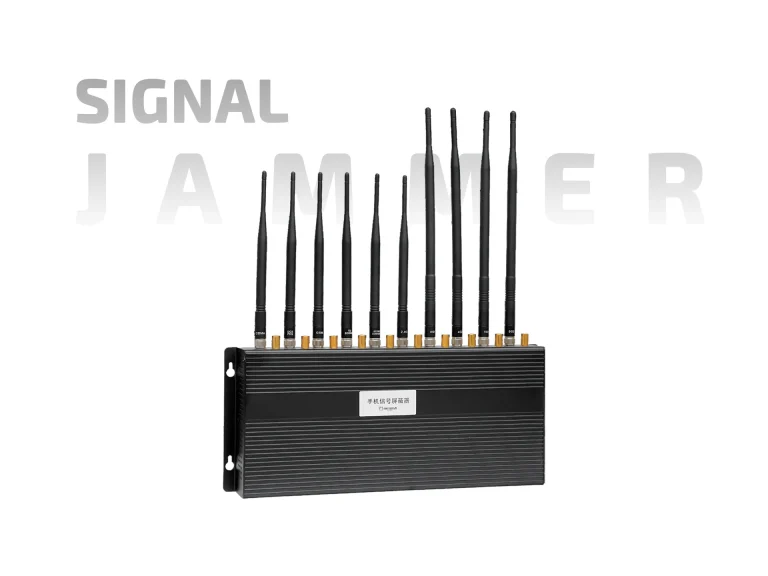
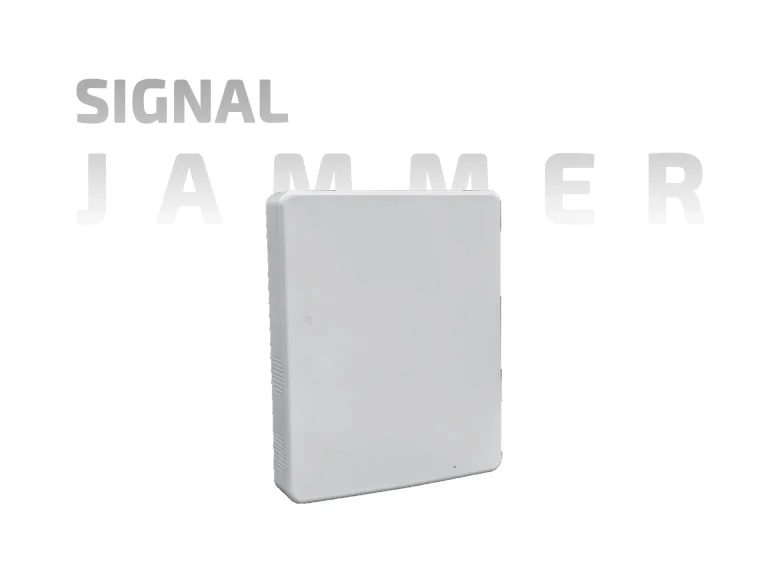
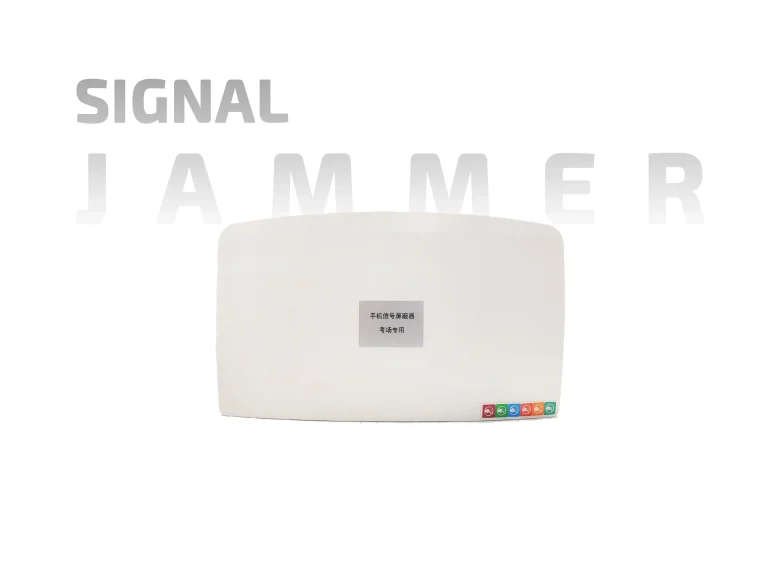
A signal jammer is a radio-frequency transmitter designed to stop a receiver from reliably decoding a wanted signal. It does not usually break encryption, steal data, or “hack” a device. Instead, it interferes at the physical layer: it adds competing RF energy in the same band as the target signal, raising the noise floor and reducing the receiver’s signal-to-noise ratio. Once the wanted signal is buried in interference, the receiver may lose synchronization, drop packets, fail to calculate a position fix, or show “no service.”
The phrase “RF, GPS, WiFi and cellular explained” matters because jamming is not one single technique. The core idea is similar, but the target band, receiver design, power level, antenna pattern, and legal status differ sharply.

The Core Principle: Overwhelm the Receiver
A radio receiver works best when the wanted signal is clearly stronger than background noise and other interference. A jammer transmits extra energy on or near the target frequency. At the receiver’s antenna, that extra energy competes with the legitimate signal. If the interference is strong enough, the receiver cannot separate the two.
Most jammers use one of four approaches:
| Jamming mode | How it works | Practical implication |
|---|---|---|
| Barrage jamming | Transmits noise across a wide band | Simple and broad, but inefficient in power |
| Spot jamming | Concentrates energy on one frequency | Efficient when the target channel is known |
| Sweep jamming | Moves quickly across a band | Covers multiple channels with intermittent effects |
| Protocol-aware jamming | Targets synchronization or control channels | More complex; not typical of basic consumer devices |
A jammer’s effective range is not simply its rated power. It depends on antenna gain, terrain, obstacles, the target signal’s strength, the receiver’s sensitivity, and how much interference reaches the receiver. In general, the interference must be strong enough at the receiver—not just at the jammer—to create a useful “jamming margin.”
Inside a Typical Jammer
Although designs vary, a basic jammer follows a recognizable signal chain.
| Component | Role | Why it matters |
|---|---|---|
| RF oscillator or VCO | Generates a carrier or noise source | Must align with the target band |
| Modulation/noise stage | Shapes the interference waveform | Determines barrage, spot, or sweep behavior |
| RF amplifier | Boosts output power | Affects reach, heat, and power demand |
| Antenna | Radiates energy into the target area | Gain and pattern shape coverage |
| Tuning/control section | Selects bands and modes | Enables spot, sweep, or multi-band operation |
| Power supply and cooling | Sustains operation | Duty cycle and thermal design limit performance |
This is why two jammers with the same “output power” can behave very differently. Antenna design, frequency accuracy, bandwidth, and thermal management often matter as much as raw power.
RF, GPS, WiFi, and Cellular: What Changes?
The table below summarizes the main differences without providing construction details.
| System | Illustrative frequency range | How jamming typically works | Common observed effect | Key caution |
|---|---|---|---|---|
| General RF | Varies by service | Adds noise or swept interference in the target band | Lost links, sensor faults, disrupted control signals | Can affect safety and emergency services |
| GPS/GNSS | L1 around 1575.42 MHz; other GNSS bands exist | Overwhelms very weak satellite signals at the receiver | No position fix, drift, timing errors | High risk to aviation, maritime, and timing networks |
| WiFi | 2.4 GHz, 5 GHz, and 6 GHz bands | Noise or sweep interference across channels | Dropped connections, retries, lower throughput | Can disrupt local critical networks |
| Cellular | Roughly 700 MHz to 2.6 GHz+ depending on region | Downlink interference to the device receiver | No service, dropped calls, data stalls | Licensed spectrum; severe legal penalties in many countries |
RF jamming
General RF jamming is broad. It may target remote controls, wireless sensors, industrial links, or other radio services. Because many RF devices use low-power links and simple protocols, interference can cause repeated retries or complete link loss. The impact is highly dependent on frequency, bandwidth, and proximity.
GPS jamming
GPS and other GNSS signals arrive at Earth with very low power. That makes GNSS receivers vulnerable to relatively low levels of in-band interference. A GPS jammer does not need to “spoof” a false location; it can simply prevent the receiver from acquiring or tracking satellites. The result may be no fix, position drift, or timing errors. Because GNSS timing supports communications, finance, and transport, GPS jamming can create effects far beyond a single device.
WiFi jamming
WiFi jamming usually targets the 2.4 GHz, 5 GHz, or 6 GHz bands. A jammer may raise the noise floor across channels or sweep through them. Users may see dropped connections, high latency, repeated retries, or reduced throughput. In dense environments, interference can be difficult to distinguish from congestion, faulty access points, or channel planning problems.
Cellular jamming
Cellular jamming typically interferes with the downlink—the base station’s signal to the handset. When the handset’s receiver cannot decode the downlink, the device may show no service, drop calls, or stall data. Because cellular bands are licensed and tightly regulated, operating a cellular jammer is illegal in many jurisdictions except for authorized government or laboratory use.
What a Signal Jammer Does Not Do
A signal jammer is often misunderstood. In most cases, it does not:
-
decrypt encrypted traffic;
-
read messages or capture credentials;
-
bypass authentication;
-
permanently damage a normal device;
-
guarantee coverage of every band or protocol;
-
work invisibly without collateral interference.
It is a denial-of-service tool at the radio layer. That is also why it can disrupt unintended receivers nearby, including safety-critical systems.
Legal and Safety Considerations
In many countries, transmitting jamming signals is illegal outside narrowly authorized government, military, or laboratory settings. GPS jamming is particularly dangerous because it can affect aviation, maritime navigation, emergency response, and timing infrastructure. Cellular jamming can interfere with emergency calls. WiFi jamming can disrupt hospitals, schools, and industrial controls.
For testing or research, authorized teams typically use shielded rooms, Faraday enclosures, or licensed test ranges. Anyone evaluating a jammer claim should ask not only “How does a signal jammer work?” but also “Is this use legal, authorized, and contained?”
Bottom Line
A signal jammer works by adding RF interference that prevents a receiver from separating the wanted signal from noise. The principle is consistent across RF, GPS, WiFi, and cellular systems, but the practical effects depend on frequency, power at the receiver, antenna design, protocol behavior, and environment. Because jamming can cause serious collateral interference, it should be treated as a controlled RF denial technique—not a general-purpose tool.