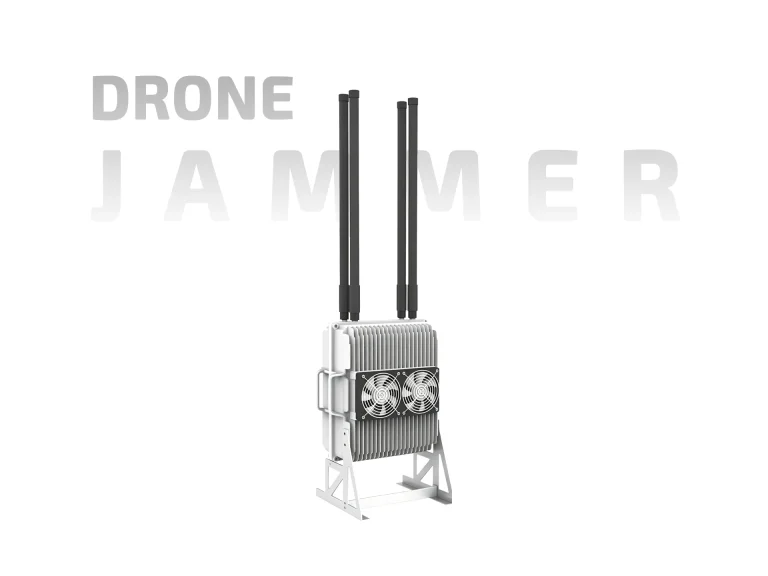
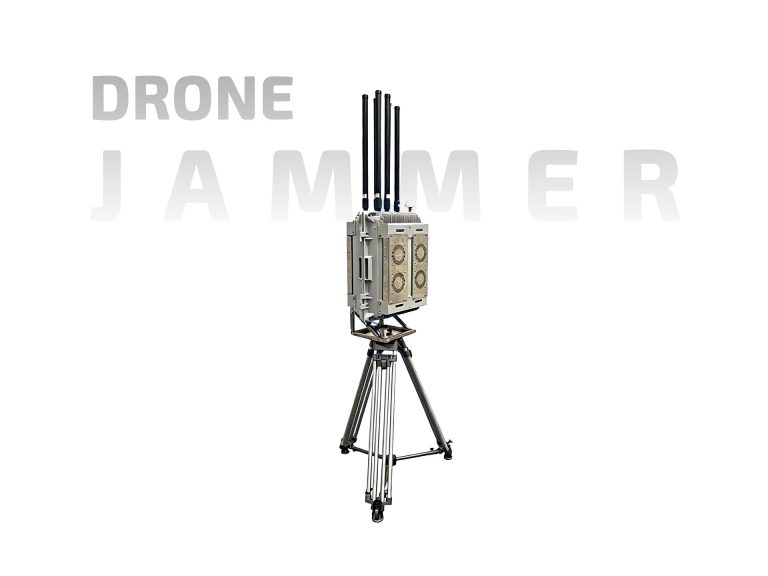
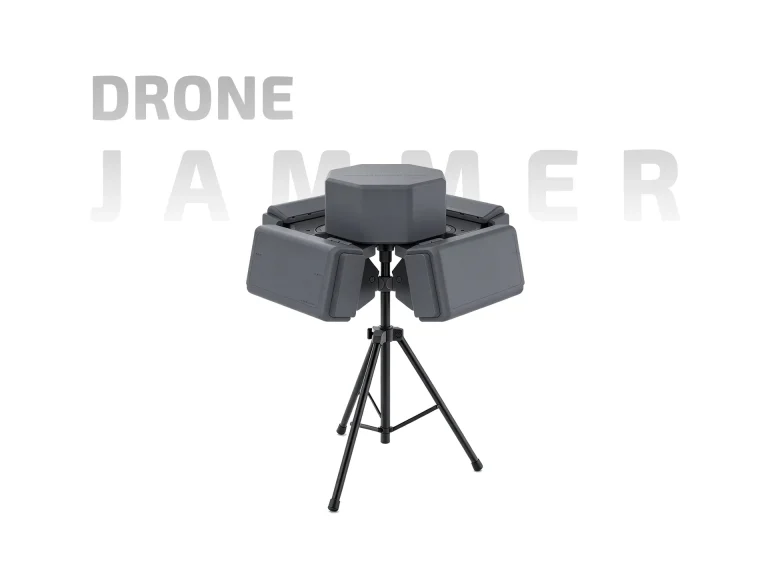
A multi-band fixed drone jammer is a permanently installed counter-UAS system that disrupts several drone radio links at once. It is mounted on a mast, rooftop, or tower and powered continuously. Unlike portable units, it is built for repeatable coverage, remote control, and 24/7 operation.

Why Choose a Multi-Band Fixed Drone Jammer?
Most drones rely on radio frequencies for command, telemetry, video, and navigation. A single-band jammer may only block one link. A multi-band fixed drone jammer can target 433 MHz, 868/915 MHz, 1.2 GHz, 1.5 GHz, 2.4 GHz, and 5.8 GHz in one installation. That makes it useful for prisons, airports, military bases, stadiums, and critical infrastructure.
Fixed installation also allows higher gain antennas, higher duty cycles, and better cooling. The result is wider, more consistent coverage than a portable backpack or handheld device. However, jamming is tightly regulated. It should only be deployed with legal authorization and proper coordination with local authorities.
| Band | Typical Drone Use | Jammer Role |
|---|---|---|
| 433 MHz | Low-cost RC, telemetry | Disrupt control |
| 868/915 MHz | ISM command links | Block command |
| 1.2 GHz | Video and telemetry | Cut video feed |
| 1.5 GHz | GNSS navigation | Reduce positioning |
| 2.4 GHz | Control, video, Wi-Fi | Primary control jamming |
| 5.8 GHz | HD video, control | Disrupt video/control |
Core Components of a Multi-Band Fixed Drone Jammer
A complete system usually includes antennas, RF amplifiers, signal generators, filters, power supplies, cooling, and a control unit. Each band needs clean output and low spurious emissions. Otherwise, the jammer may interfere with nearby communications.
Antenna and Amplifier Choices
Directional panel antennas focus energy toward a threat corridor. Omnidirectional antennas cover a wider area but with lower gain. Amplifier selection depends on required ERP, band isolation, and thermal design. Outdoor enclosures should be IP66 or better.
Control and Integration
Modern units support Ethernet, fiber, or wireless control. They can integrate with RF detection and radar to jam only when a drone is confirmed. This reduces interference and improves efficiency. For broader site design, see our counter-UAS systems.
Multi-Band Fixed Drone Jammer Deployment Checklist
| Check | Why It Matters |
|---|---|
| Site survey | Maps dead zones and rooftops |
| Legal permit | Avoids illegal interference |
| Band plan | Matches local drone threats |
| Power and backup | Ensures 24/7 uptime |
| Cooling | Prevents amplifier shutdown |
| Remote monitoring | Alerts faults fast |
| Fail-safe mode | Stops output if needed |
| Maintenance plan | Keeps VSWR and output stable |
Performance Factors That Matter
Output power alone is not enough. Buyers should compare ERP, antenna gain, beamwidth, band isolation, duty cycle, and spurious emissions. A well-designed multi-band fixed drone jammer balances power with spectral discipline. Overpowered systems can create interference complaints and legal risk.
| Factor | Multi-band fixed | Portable |
|---|---|---|
| Coverage | Permanent sector or omni | Short-term |
| Power | High, continuous | Limited by battery |
| Bands | Multiple simultaneous | Fewer bands |
| Integration | Radar, RF, C2 | Standalone |
| Upfront cost | Higher | Lower |
Buying and Compliance Notes
Ask vendors for test reports, band-specific power data, antenna patterns, and remote power control. Confirm spare parts, warranty, and firmware updates. Check drone jamming regulations before any installation. A fixed drone jammer is a powerful tool, but it must be used responsibly.
How many bands are enough?
It depends on the threat. For commercial drones, 2.4 GHz and 5.8 GHz are essential. For GNSS-guided or industrial drones, add 1.2 GHz and 1.5 GHz. For low-cost RC links, include 433 MHz and 868/915 MHz.
Can it run continuously?
Yes, if cooling, power, and duty cycle are designed for it. Many sites run 24/7 with scheduled maintenance.
Does it need detection?
Not always, but detection improves precision and reduces unnecessary jamming. Integrated RF and radar are strongly recommended.
Conclusion
A multi-band fixed drone jammer delivers persistent, wideband protection for high-value sites. The best results come from careful band planning, legal review, and integration with detection. Choose a system that matches your threat, environment, and compliance requirements.