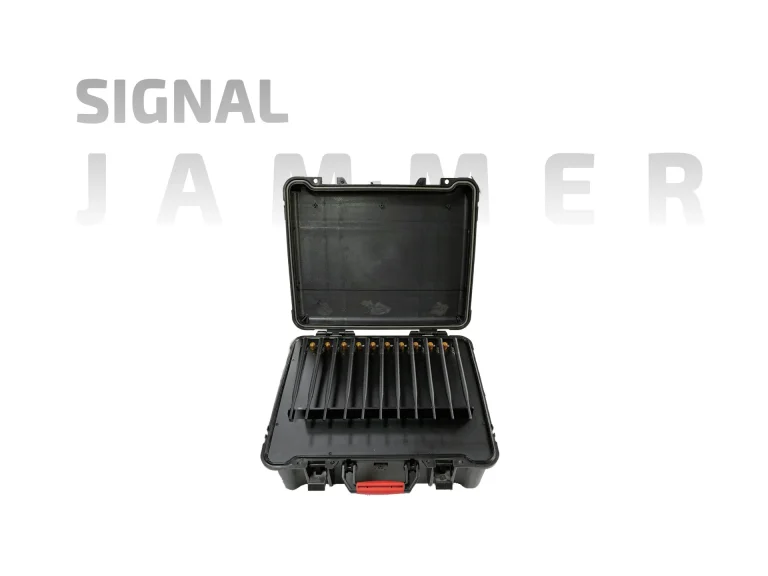
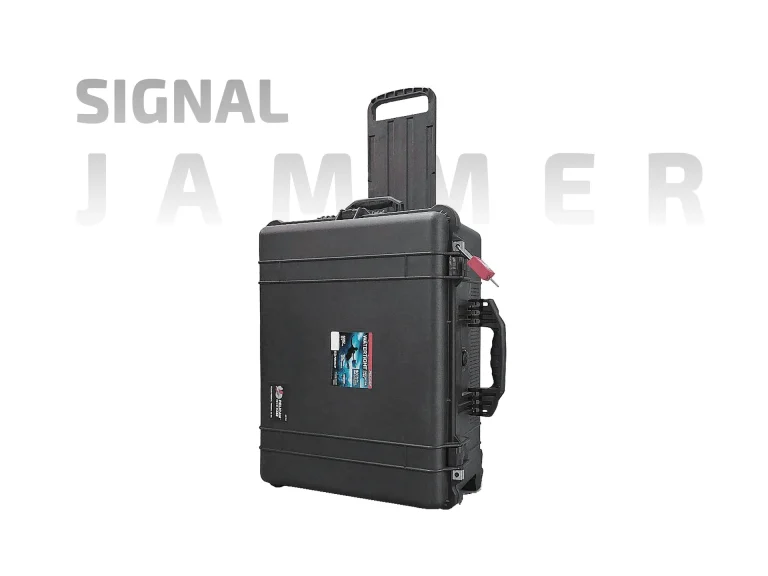
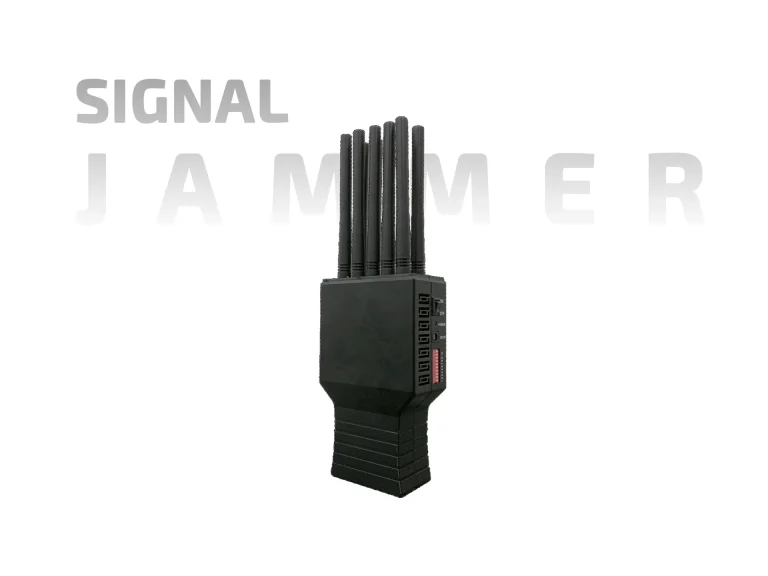
Portable signal jammer price is one of the least transparent topics in RF procurement. Two units that look similar in a photo can carry quotes that differ by a factor of five. One listing shows a single number; another arrives as a multi-page quotation with line items for bands, antennas, batteries, and documentation. The gap is not random. It reflects real differences in engineering, materials, testing, and the amount of compliance work a supplier is willing to do. Understanding those differences is the only reliable way to compare offers.
For the technical reason why coverage claims and price rarely move together, see Signal Jammer Range: What Actually Determines It?. For the electrical costs that portable designs must absorb, see High Power Jammer Power Consumption Explained.

Price Is a Symptom, Not a Specification
A price tag tells you what a supplier wants for a product. It does not tell you what the product can do, how long it will last, or whether it can be used lawfully where you intend to use it. Buyers who anchor on price alone tend to discover the missing costs later—during installation, during maintenance, or during a compliance review. A more useful approach is to treat price as the output of a set of design and business decisions, then examine those decisions directly.
| What the price reflects | Why it changes the quote | What buyers often miss |
|---|---|---|
| RF design and band coverage | More bands and tighter filtering cost more | Total wattage can hide weak individual bands |
| Thermal engineering | Effective cooling requires better materials | Cheap cooling shortens service life |
| Battery and power system | Capacity and safety circuitry add cost | Runtime claims may assume ideal conditions |
| Antenna quality | Gain and pattern consistency vary widely | Included antennas are often basic |
| Testing and documentation | Verified data requires lab time | Undocumented claims cannot be checked |
| Compliance work | Export and end-use review adds overhead | Some suppliers skip this entirely |
The Line Items Behind a Portable Quote
A credible portable quotation can usually be broken into recognizable blocks. When a supplier cannot or will not break it down, that is itself information.
| Cost block | Typical share of a portable quote | What to verify |
|---|---|---|
| RF amplifier and band modules | Largest single block | Per-band output and test conditions |
| Enclosure, heat sink, and cooling | Significant in higher-output units | Derating data at stated ambient |
| Battery pack and management | Grows with runtime and output | Cell chemistry, safety certification |
| Antenna set | Often underestimated | Gain, pattern, connector durability |
| Control and monitoring | Small but telling | Logging, status indicators, kill switch |
| Testing and documentation | Small line, large value | Test report scope and issuing lab |
| Freight, duties, and handling | Varies by destination | Incoterms and import classification |
Why Portable Costs More Than It Looks
Portability is not free. Packing RF power, cooling, and energy storage into a carryable form factor forces engineering compromises that raise cost per watt. A benchtop unit can rely on mains power and a large heat sink. A portable unit must carry its own energy and shed heat without a fixed airflow path.
| Portable design challenge | Cost consequence | Buyer implication |
|---|---|---|
| Battery energy density | Larger, safer packs cost more | Runtime claims need scrutiny |
| Heat removal without fixed airflow | Louder fans or heavier heat sinks | Weight and noise trade-offs |
| Rugged enclosure | Impact and weather protection | Adds mass and price |
| Antenna storage and protection | Connector and mount durability | Field reliability varies |
| Safety circuitry | Thermal and electrical protection | Cheap units may omit it |
Hidden Costs That Do Not Appear in the Quote
The purchase price is only the first payment. Portable equipment carries ongoing costs that are easy to overlook during comparison.
| Hidden cost | When it appears | How to plan for it |
|---|---|---|
| Replacement batteries | After repeated charge cycles | Ask for cycle life and replacement price |
| Fan and filter servicing | During regular maintenance | Confirm service intervals and parts availability |
| Antenna replacement | After field damage | Check connector standard and spares |
| Calibration or verification | Periodic or post-repair | Ask whether verification is offered |
| Containment equipment | Before any authorized use | Budget for shielded facilities if required |
| Legal and compliance review | Before deployment | Treat as a fixed project cost |
How to Compare Quotes Fairly
The most common comparison error is matching headline wattage against headline price. A fair comparison normalizes the offers first.
| Normalization step | Question to ask | Why it changes the comparison |
|---|---|---|
| Per-band output | Is power stated for each band? | Total figures can mask gaps |
| Runtime basis | At what output and ambient? | Ideal-condition claims inflate value |
| Antenna inclusion | Are antennas included and specified? | Basic antennas shift cost later |
| Documentation | Is a test report included? | Undocumented units carry verification cost |
| Warranty scope | What is covered and for how long? | Short warranties signal expected failure |
| Compliance support | Will the supplier document end use? | Serious suppliers engage with this |
Price and Legal Standing Are Separate Questions
A low price does not make a device lawful, and a high price does not make it authorized. Portable jamming equipment remains subject to the same regulatory limits as fixed installations. Buyers should confirm the legal basis for the intended use, the destination import rules, and the containment plan before negotiating price at all. A quotation that ignores these questions is incomplete, however attractive the number at the bottom.
A Calmer Way to Buy
Start with the operating requirement, not the budget line. Define the contained area, the target signals, and the required runtime. Then request itemized quotes that separate hardware, documentation, and support. Compare on normalized specifications, add the hidden costs, and only then look at the total. Portable signal jammer price becomes meaningful only when it is attached to a defined, authorized, and verifiable scope of work.