October 22, 2026
China 150W Drone Jammer Module: Sourcing Guide
Sourcing a China 150W drone jammer module? Here is a verification framework covering spec evidence, thermal data, compliance.


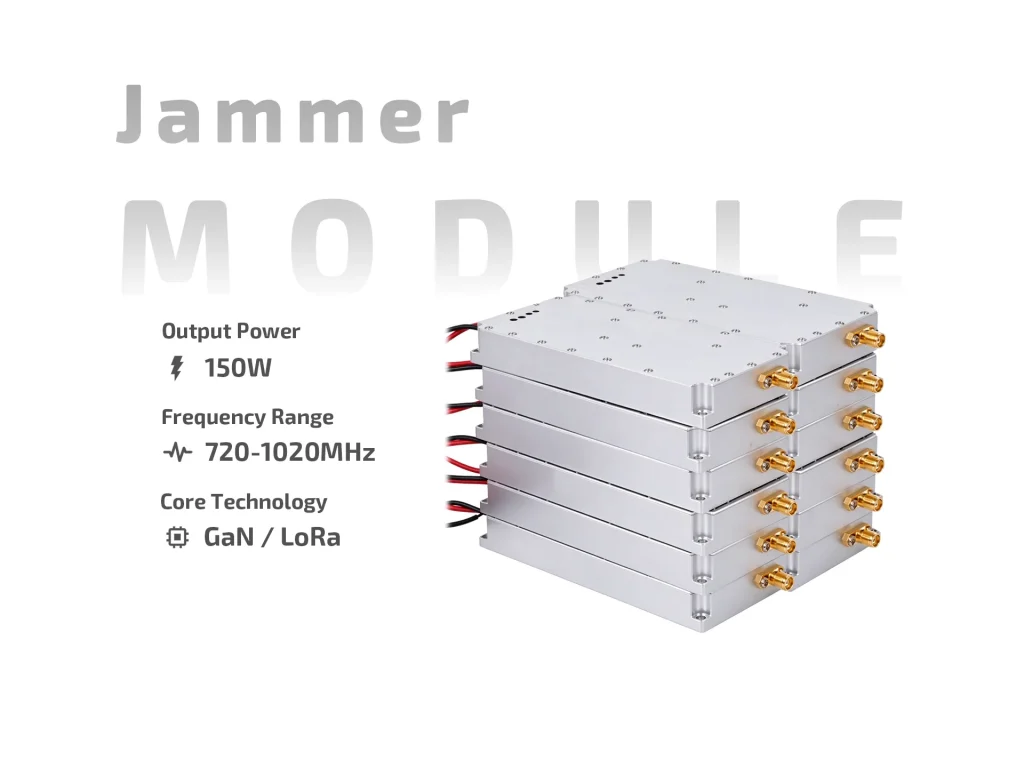
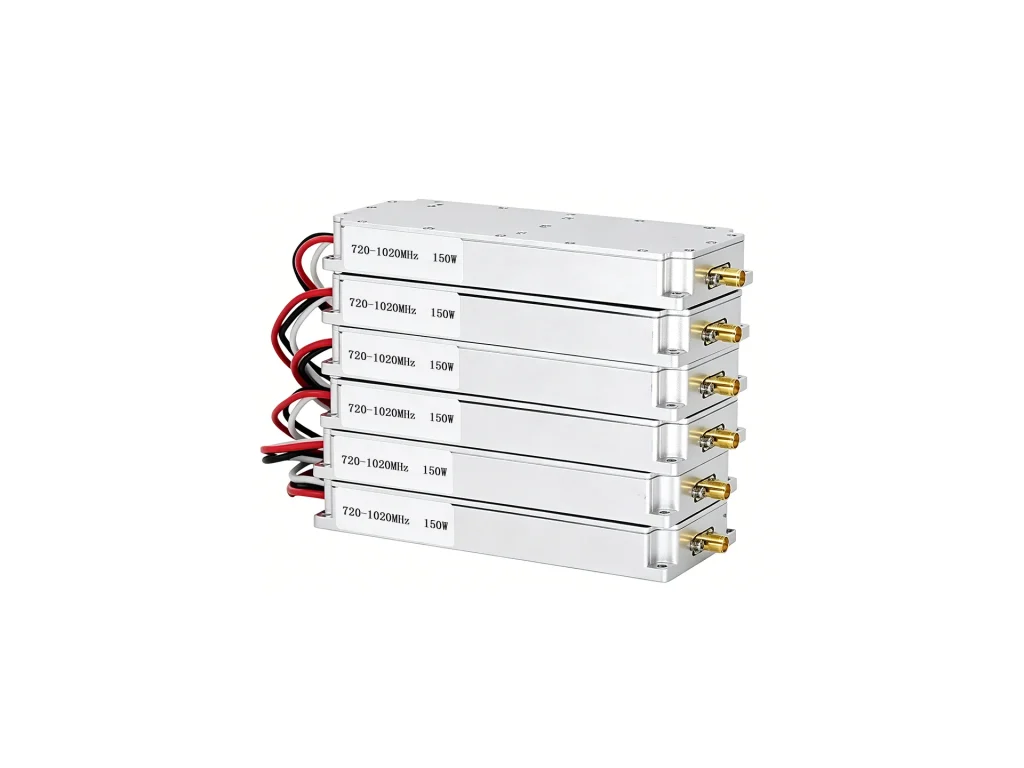
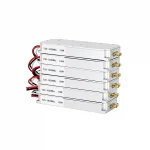
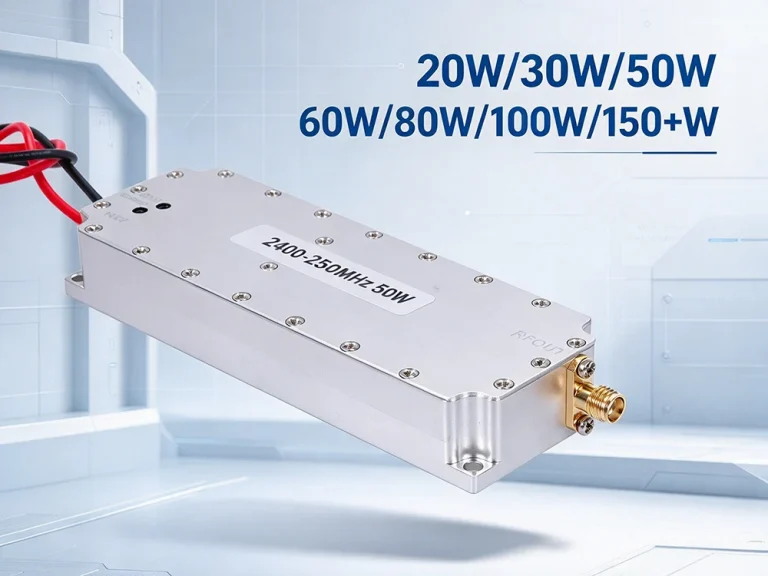
JM0710G150: 150W LoRa drone jammer module, 720–1020MHz, DC24–29V, 15A max, ≥40% efficiency, SMA female, built-in sweep and VSWR protection.
The JM0710G150 is a 150W LoRa drone jammer module for the 720–1020MHz range. Instead of a bare amplifier, it arrives as a complete analog interference unit with a high-speed sweep source already inside. That saves rack space and removes the need to tune an external modulator. The module runs from DC24–29V, draws up to 15.0A and uses GaN devices to keep the package small. It is intended for authorized counter-drone systems, not casual use.

Low-band links behave differently from 2.4GHz or 5.8GHz systems. Signals in 720–1020MHz travel farther and bend around obstacles, so a countermeasure module must cover a wide slice rather than a narrow channel. The JM0710G150 sweeps the full band continuously. That matters when the target link hops or when several low-band devices share the same area. A single module can cover LoRa-style links, remote controls and other narrowband traffic without swapping filters.
The 150W figure is the rated RF output, not the DC input. With ≥40% efficiency, a good share of the input still becomes heat, so the mounting surface is part of the RF design. Output VSWR is specified at ≤2.0. If the antenna is damaged or a cable is loose, the internal absorption-type protector takes the reflected energy. That protection is for faults, not for running the unit into an open connector. Use a proper load or antenna at all times.
Feed the drone jammer module with a stable 24–29V DC supply that can deliver 15.0A without serious sag. Thin cables and weak connectors cause voltage drop, which can make the output fall or the unit reset. The switch control is simple: +5V or floating means on, grounding means off. Do not pull current from the control pin. Keep the control wire separated from RF jumpers where practical. Check polarity twice before the first power-up; reverse voltage can destroy the module.
The built-in high-speed sweep source covers 720–1020MHz without an external generator. The output is an SMA female connector. Use a short, low-loss jumper and tighten the coupling to the correct torque. Avoid sharp bends and side load on the connector. Before connecting the antenna, inspect the mating interface for dirt or damage. A poor RF joint can look like a module fault, so test the cable and antenna separately if output seems low.
The housing measures 168.5*84.5*23mm and weighs about 0.55kg. That is compact enough for vehicle racks, portable cases and fixed cabinets. The base must sit on a flat heatsink or cold plate with a thin thermal interface. Do not rely on airflow across the top cover alone. In sealed enclosures, use a cold plate or a heat pipe. For portable use, add shock isolation so the SMA joint and internal board are not stressed by repeated handling.
Record supply voltage, current draw and antenna VSWR at first run. Let the unit warm up and check that current stays steady. If current climbs or output drops after a cable change, stop and inspect the RF path. Confirm the switch line is not shorted to ground when the module should be on. Keep the antenna away from metal surfaces that can detune it. These simple checks catch most installation problems before they become field failures.
The JM0710G150 combines a 150W GaN output stage, wide 720–1020MHz coverage, an internal sweep source and absorption protection in one compact module. For authorized low-band counter-drone builds, it shortens the RF chain and reduces integration work. Match it with a clean supply, a good heatsink and a healthy antenna, and it will do the job it was designed for.
| Parameter | Specification | Notes |
| Operating Frequency | 720–1020 MHz | Wide low-band coverage |
| Output Power | 150 W | Rated RF output |
| Operating Voltage | DC 24–29 V | Stable supply required |
| Maximum Current | 15.0 A | Peak draw |
| Efficiency | ≥40% | Heat path matters |
| Output VSWR | ≤2.0 | At rated load |
| Switch Control | +5V or floating = ON; grounding = OFF | Do not load control pin |
| Output Connector | SMA female | Tighten to torque |
| Interference Source | Built-in high-speed sweep source | No external modulator |
| VSWR Protection | Built-in absorption-type protector | Fault protection only |
| Dimensions | 168.5 × 84.5 × 23 mm | L × W × H |
| Weight | 0.55 kg | Approx. |
Sourcing a China 150W drone jammer module? Here is a verification framework covering spec evidence, thermal data, compliance.
A 150W GaN UAV jammer module is not a linear step up from 100W. Here is where thermal, supply, and enclosure limits appear.

Drone jammer module power is more than watts. Learn ERP, duty cycle, heat, and band-specific power needs for real counter-drone performance.