October 16, 2026
Fixed vs Vehicle-Mounted Drone Jammer Guide
Compare fixed vs vehicle-mounted drone jammer options: coverage, mobility, power, cost, and deployment for counter-UAS site protection.
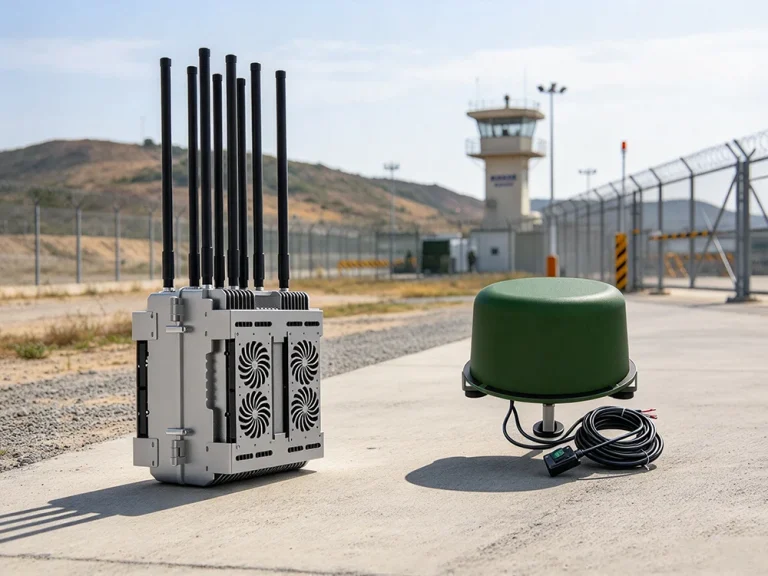

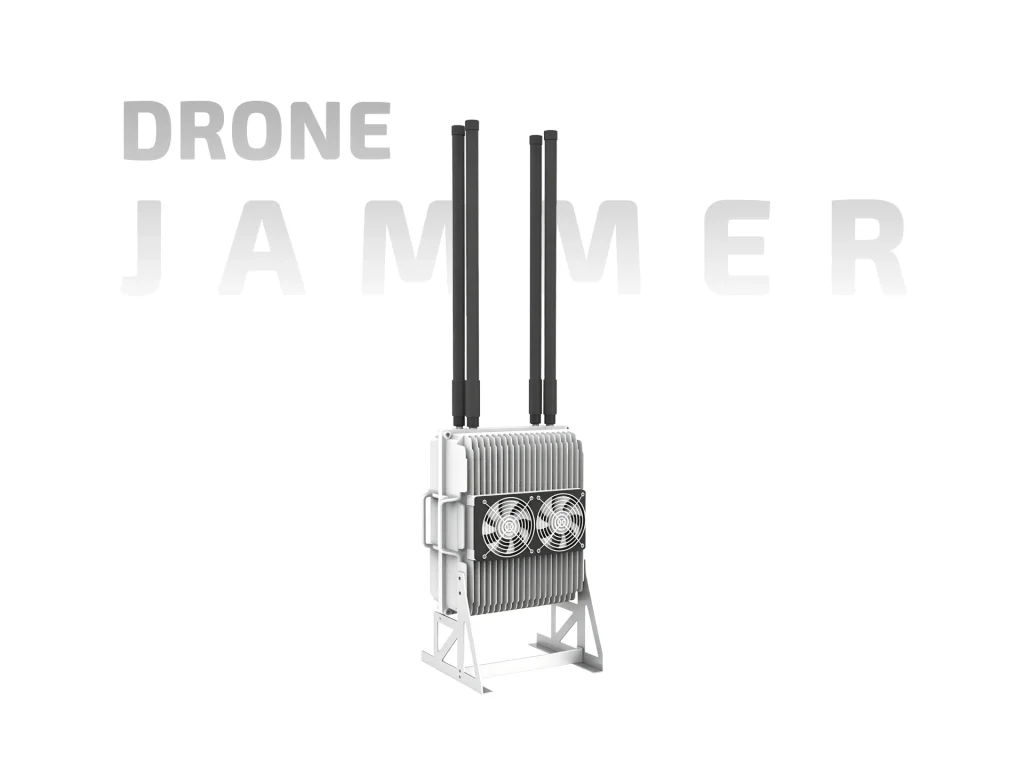
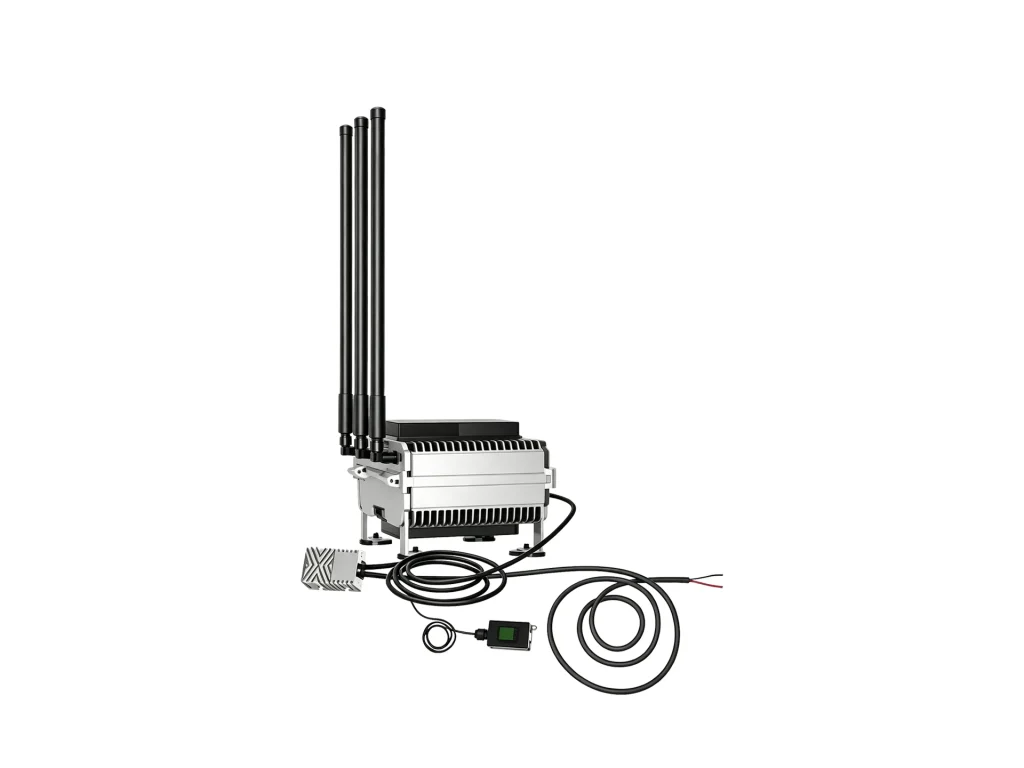
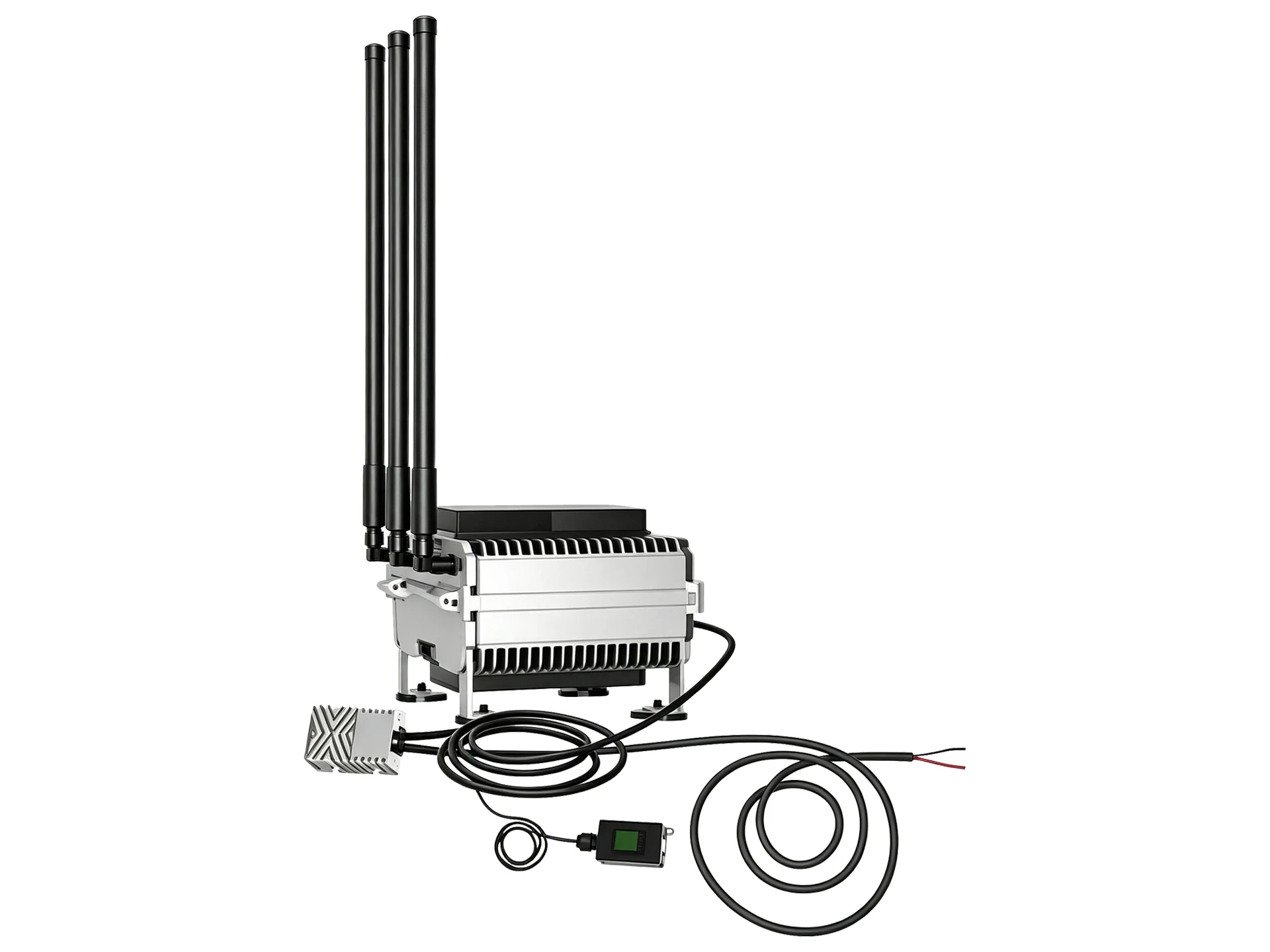
Fixed anti-drone jammer ETLD-S034L: 900M/1.5G/2.4G/5.8G, 50W per band, omni 0–300m, DC12V/28V, waterproof, 3m control handle.
The ETLD-S034L is a fixed anti-drone jammer built for continuous duty. It runs from a DC supply rather than a battery pack, so it can watch the same site around the clock without downtime for recharging. A waterproof housing lets it sit on a pole, a rooftop or a vehicle without extra shelter. Once installed, it puts a permanent electromagnetic barrier around the facility.
Four channels transmit at the same time: 900MHz, 1.5GHz, 2.4GHz and 5.8GHz. Each channel delivers 50W. Together they cover remote control links, video downlinks and satellite navigation signals—the three things a small multirotor needs to position itself, fly and be steered. The 1.5GHz channel works against the GPS L1 band, so the aircraft is affected in navigation as well as control. The frequency set can be customized if the local links in your area fall outside these bands.
Radiation is omnidirectional, so there is no blind sector around the unit. In line of sight, the effective radius reaches 300m. Real coverage depends on terrain, building density and drone altitude—open ground gives the best result, while dense urban clutter shortens it. Raising the antenna above nearby obstacles is usually the cheapest improvement you can make. Because the unit is installed in place, the protected circle does not disappear at shift change or when a battery runs flat.
The equipment accepts both DC12V and DC28V input. That covers vehicle electrical systems, battery banks and fixed DC supplies with a suitable converter. With four 50W modules, total output is around 200W, so supply wiring, fuses and connectors need to be sized for it. The terminal box is sealed and the cable enters from the bottom so water cannot collect.
A 3m control handle is supplied as standard. From it, the operator switches channels on or off and checks the current status. The long cable lets the main unit sit high on a mast, inside an enclosure or on a vehicle roof while the operator stays within easy reach. Where full coverage is not needed, individual channels can be switched off to reduce power draw and heat.
The housing is waterproof and accepts pole, wall and roof-rack mounting. No separate equipment room or air conditioning is required. Fitting the unit in a shaded, ventilated position extends its continuous working time. Seals and cooling vents should be part of the routine maintenance check.
The drone jammer targets the control, video and navigation links of small and mid-size multirotors—typically the consumer and commercial types used for casual intrusion over a fence line. Larger or specially hardened platforms that lean on inertial navigation or pre-programmed flight may not be stopped by link denial alone.
Checkpoints, prison perimeters, substations, airport outer fences, oil fields, large event venues and fixed posts along a boundary. In each case the requirement is steady protection rather than occasional intervention.
Jamming is a regulated activity in most countries. The ETLD-S034L should be installed and operated only with the permissions your local authority requires, and only against airspace you are responsible for. Keep the antenna away from your own GPS receivers and radio equipment to avoid self-interference.
The ETLD-S034L is built for long-term guard duty, not for rapid deployment. If you are assessing it for a specific site, send us the layout and the type of drones you are concerned about, and we will advise on antenna height and the number of units required.
| Parameter | Specification | Notes |
| Jamming frequency | 900MHz / 1.5GHz / 2.4GHz / 5.8GHz | Custom combinations available |
| Output per band | 50W | Four channels transmitting together |
| Effective radius | 0–300m | Omnidirectional, line of sight; shorter in clutter |
| Total output | Approx. 200W (4 × 50W) | All modules running |
| Power supply | DC12V / DC28V | Input circuit must match output load |
| Structure | Waterproof housing | Pole, wall or roof-rack mounting |
| Channels | 4 | Each switchable on its own |
| Radiation pattern | Omnidirectional | No blind sector in the horizontal plane |
| Control | 3m control handle | Per-channel on/off and status |
| Installation | Pole, wall, roof rack | No equipment room needed |
| Working position | Outdoor | Shade and ventilation recommended |
Compare fixed vs vehicle-mounted drone jammer options: coverage, mobility, power, cost, and deployment for counter-UAS site protection.
Fixed vs portable drone jammer compared: coverage, power, cost, deployment, and legal use. Learn which counter-UAS option fits your site.
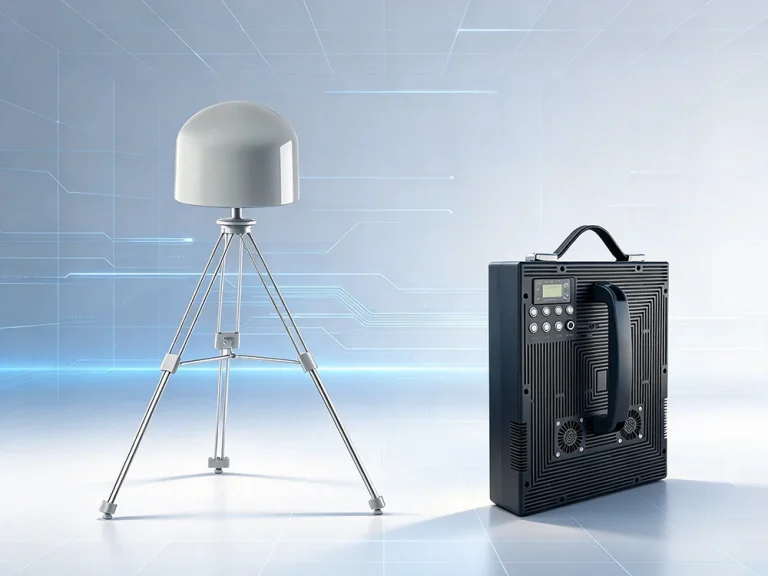
Discover how a multi-band fixed drone jammer protects critical sites, key specs, deployment tips, and buying checks for counter-UAS defense.