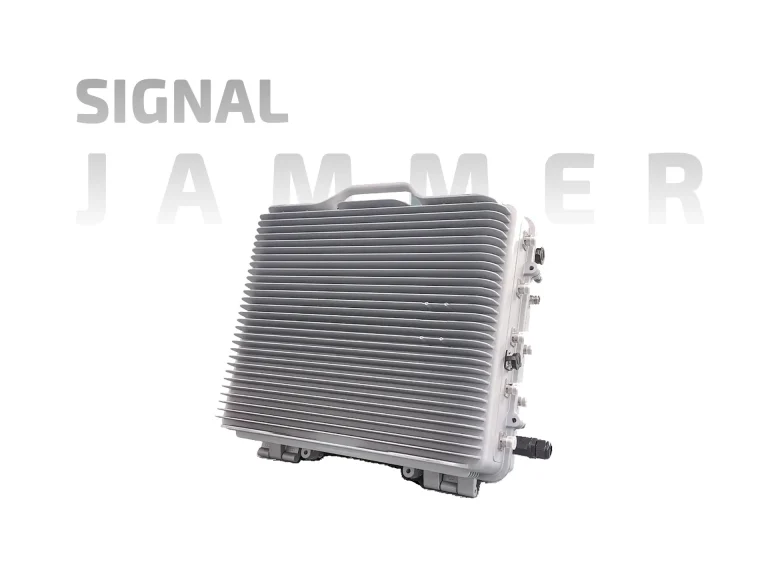
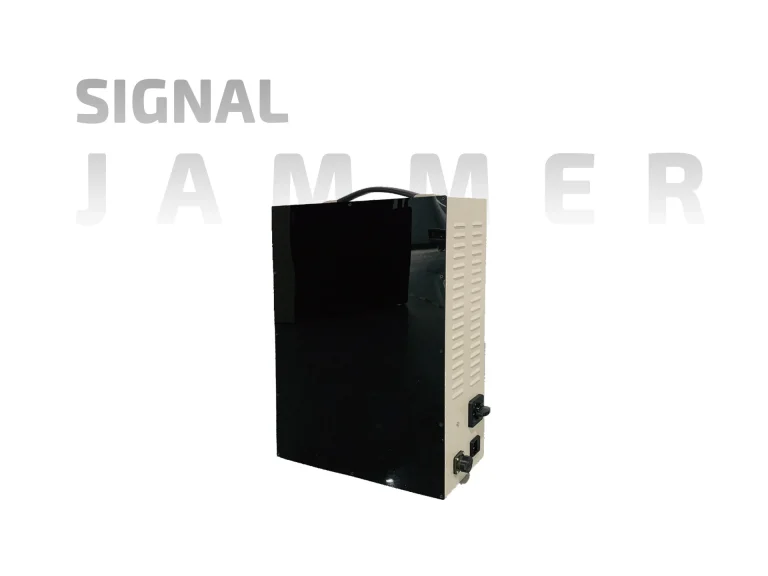
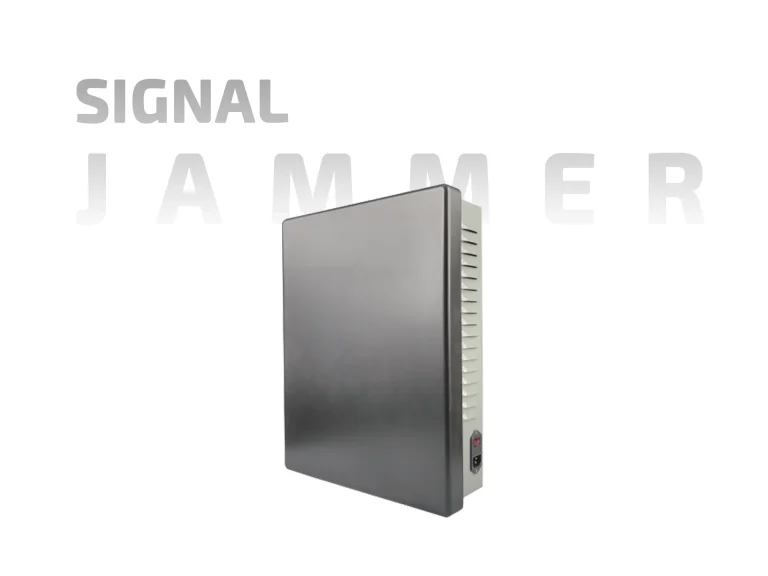
A high power jammer is not just an RF device; it is a power and thermal system. Buyers and authorized test teams often focus on output wattage, but the more practical question is where the input power goes. In real deployments, a large share of the electrical input is lost as heat before any RF energy leaves the antenna. That loss affects power supply sizing, cooling, duty cycle, battery runtime, and site safety.
For the receiver-level explanation of how jamming works, see How Does a Signal Jammer Work? RF, GPS, WiFi and Cellular Explained. For coverage planning, see Signal Jammer Range: What Actually Determines It?.

Why Input Power Is Not Output Power
RF amplifiers are not perfectly efficient. A device rated for a certain RF output may draw significantly more from the mains or battery. The difference appears as heat, conversion loss, and auxiliary loads such as fans, control electronics, and displays. This is why a “high power” label without an efficiency or thermal specification is incomplete.
| Power path | What happens | Practical consequence |
|---|---|---|
| AC/DC or DC/DC conversion | Input voltage is converted for the RF stage | Conversion losses add heat and draw |
| RF amplifier stage | DC power is converted to RF energy | Efficiency varies by frequency, bandwidth, and design |
| Filtering and combining | Unwanted products are rejected; paths are combined | Insertion loss reduces usable output |
| Cooling fans and controls | Thermal management and monitoring consume power | Auxiliary load can be significant at high power |
| Antenna feed | Cable and connector losses reduce radiated power | More input power may be needed for the same reach |
The Thermal Side of Power Consumption
High power jammer power consumption is closely tied to thermal design. If heat is not removed effectively, the amplifier may derate, shut down, or fail. Continuous operation at high output is often limited by heat sink capacity, airflow, ambient temperature, and duty cycle. In authorized test environments, teams should treat cooling as a primary design constraint, not an afterthought.
| Thermal factor | Effect on operation | Planning note |
|---|---|---|
| Ambient temperature | Higher ambient reduces cooling margin | Avoid enclosed hot spaces |
| Airflow and filtration | Dust and blockage reduce cooling | Schedule maintenance and monitoring |
| Duty cycle | Continuous use raises steady-state heat | Match operation to thermal rating |
| Heat sink and fan design | Determines heat removal capacity | Verify under realistic load |
| Enclosure and placement | Poor ventilation traps heat | Use controlled, ventilated test areas |
Duty Cycle and Battery Runtime
Battery-powered high power jammers face a simple energy budget: available watt-hours divided by average input power. Because high power draws are large, runtime is often short unless the duty cycle is low. Intermittent operation, lower output settings, and efficient antennas can reduce average power, but they also change the jamming effect. Authorized teams should measure actual input power rather than relying on a nominal label.
| Scenario | Average input power | Runtime consideration |
|---|---|---|
| Continuous high output | Highest draw | Shortest runtime; thermal limits dominate |
| Intermittent burst operation | Lower average draw | Runtime improves; effect may be intermittent |
| Lower output with high-gain antenna | Reduced amplifier draw | May preserve reach while lowering power use |
| Standby and control only | Low auxiliary draw | Not a jamming state; useful for planning only |
What Authorized Teams Should Check
Before any authorized use, teams should verify the input power requirement, connector and cable ratings, breaker or battery capacity, cooling plan, and shutdown procedure. They should also confirm legal authorization and containment. A power budget that ignores heat, duty cycle, and auxiliary loads is not a real budget.
Bottom Line
High power jammer power consumption is dominated by amplifier efficiency, conversion losses, cooling, and duty cycle. Output wattage alone does not describe the electrical or thermal load. Authorized teams should plan with measured input power, realistic runtime, and thermal limits—and should treat legal compliance and containment as non-negotiable.