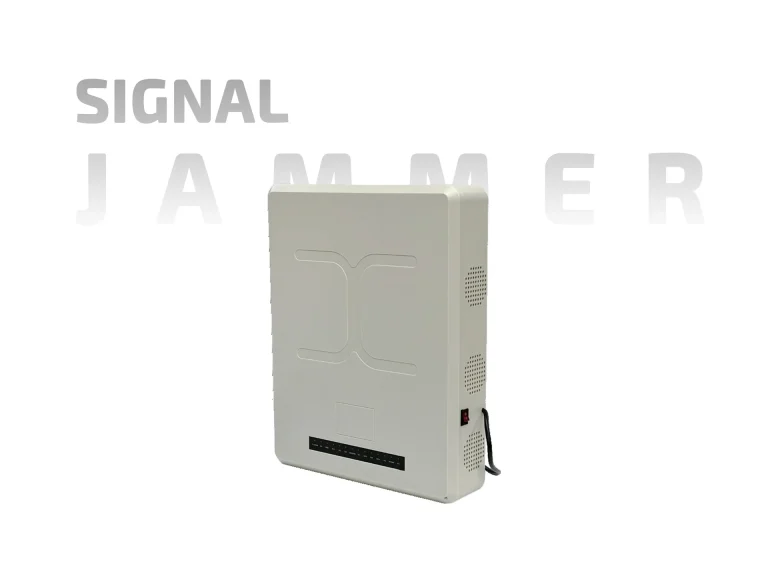
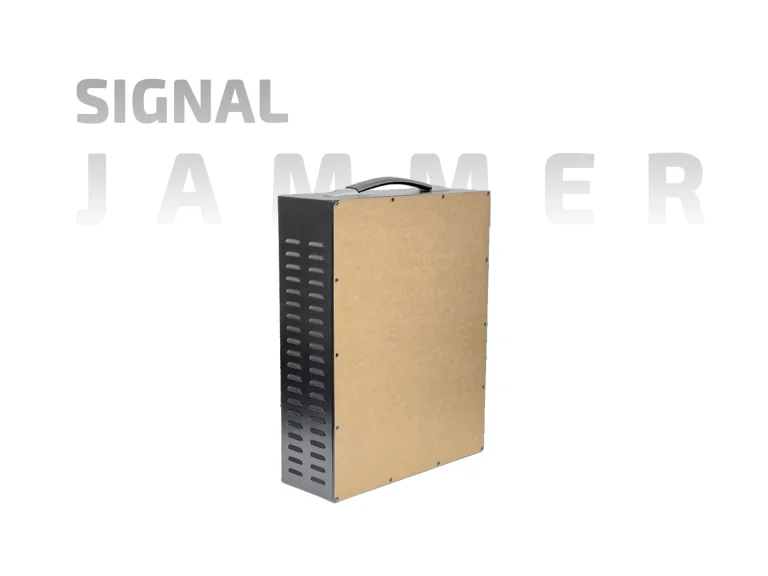
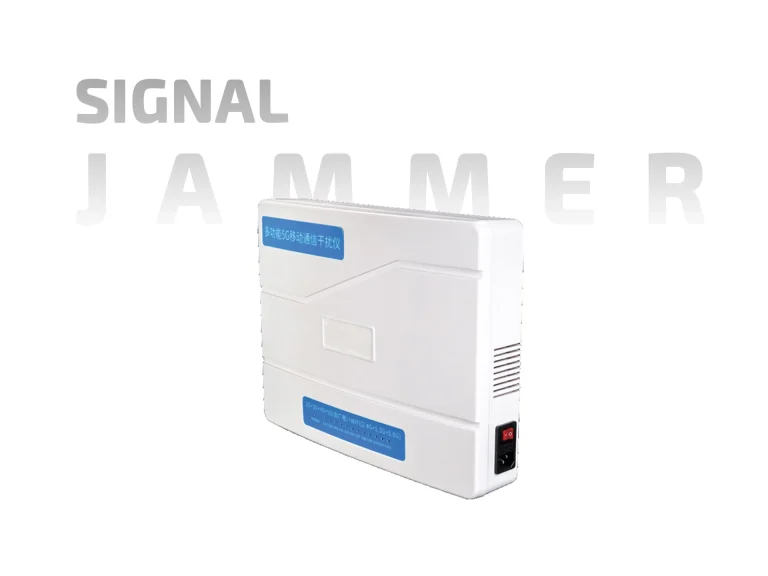
Searches for a “medium power signal jammer for sale” usually come from one of two people: a procurement officer trying to fill a defined gap, or a buyer who has been told that high power is excessive and low power is insufficient. Both are working from a category that sounds precise but is not. There is no industry-wide definition of “medium power.” One vendor may apply the label to a 20 W unit; another may use it for 100 W. The number alone tells you almost nothing about fit, safety, or legal standing. What matters is what the device is intended to do, where it will be operated, and whether the purchase is authorized at all.
For context on how the two extreme categories differ, see High Power vs Low Power Signal Jammer: Which Fits?. For the electrical realities that apply to any output class, see High Power Jammer Power Consumption Explained.

Why “Medium Power” Is a Marketing Term, Not a Spec
The label describes a position on a spectrum, not a measurable threshold. Because vendors define it differently, buyers should replace the category with concrete questions: What frequency bands are covered? What is the RF output per band? What is the antenna gain? What is the duty cycle? What thermal design supports continuous operation? A unit sold as “medium power” may be well-designed for a contained room and entirely unsuitable for a loading dock.
| What the label suggests | What the buyer actually needs to know |
|---|---|
| “More than low, less than high” | Exact output per band and bandwidth |
| “Balanced performance” | Antenna type, gain, and pattern |
| “Suitable for most sites” | Intended operating environment and containment |
| “Efficient” | Duty cycle, cooling design, and input power |
| “Professional grade” | Documentation, test data, and support terms |
Specifications Worth Putting Side by Side
When comparing listings, a structured table prevents apples-to-oranges mistakes. The rows below are the ones that most often change a purchase decision.
| Specification | Why it matters | Question to ask the vendor |
|---|---|---|
| Output per band | Total wattage can hide weak individual bands | Is power specified per frequency, or only in total? |
| Bandwidth per band | Wider bands spread energy and affect targeting | How wide is each band, and is it adjustable? |
| Antenna type and gain | Determines where energy actually goes | Are antennas included, and what is the pattern? |
| Duty cycle | Sets realistic continuous operation | Can it run continuously at rated output? |
| Cooling design | Directly limits uptime and longevity | What is the thermal rating at stated ambient? |
| Input power | Drives supply, breaker, and battery needs | What is the measured input draw, not just output? |
| Control and logging | Supports accountability and shutdown | Does it log operation and support a kill switch? |
| Documentation | Shows whether claims are testable | Are test reports and manuals provided? |
The Authorization Question Comes Before the Cart
In many jurisdictions, selling a jamming device is legal while operating it is not—or both are restricted. A purchase listing is not evidence of lawful use. Before placing an order, buyers should confirm the legal basis for the intended application, the site permissions required, and whether the use falls under government, military, laboratory, or other authorized categories. A medium power jammer is still a jammer; the output class does not change the regulatory picture.
| Purchase scenario | Key question | Typical outcome |
|---|---|---|
| Government or defense procurement | Is there a documented authorization and tender? | Proceed through formal channels |
| University or lab research | Is a shielded or licensed facility available? | Purchase may be viable with containment |
| Commercial facility security | Is there any legal basis for open-air use? | Usually no; pursue policy alternatives |
| Individual buyer | Is personal possession or use permitted? | Frequently restricted; verify locally |
| Reseller or integrator | Are end-use and destination documented? | Due diligence is required |
Red Flags in “For Sale” Listings
Certain patterns show up repeatedly in listings that should prompt caution. Vague power claims without per-band data, promises of “full-band” coverage, no thermal specifications, and claims of legality “in all countries” are all worth scrutinizing. So is any listing that omits the operating manual or refuses to provide test documentation. A legitimate supplier of authorized equipment will discuss constraints openly, because the constraints are part of the product.
A Practical Buying Sequence
A disciplined buyer moves through five steps: confirm authorization, define the protected zone and target signals, measure the ambient signal environment, compare specifications on a like-for-like table, and require documentation before payment. This sequence costs little and prevents the most expensive mistake in this category—buying a device that cannot legally or safely be used where it was intended.
The Takeaway
A medium power signal jammer for sale is not a shortcut around planning. The category is loosely defined, the specifications vary widely, and the legal boundary applies regardless of wattage. Buyers who start with authorization and measurement, and who demand per-band data and thermal documentation, will make better decisions than those who shop by label.