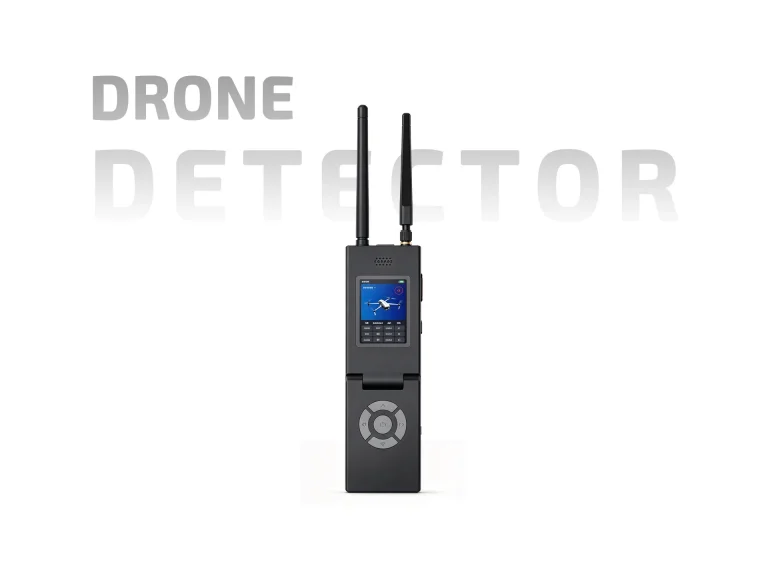
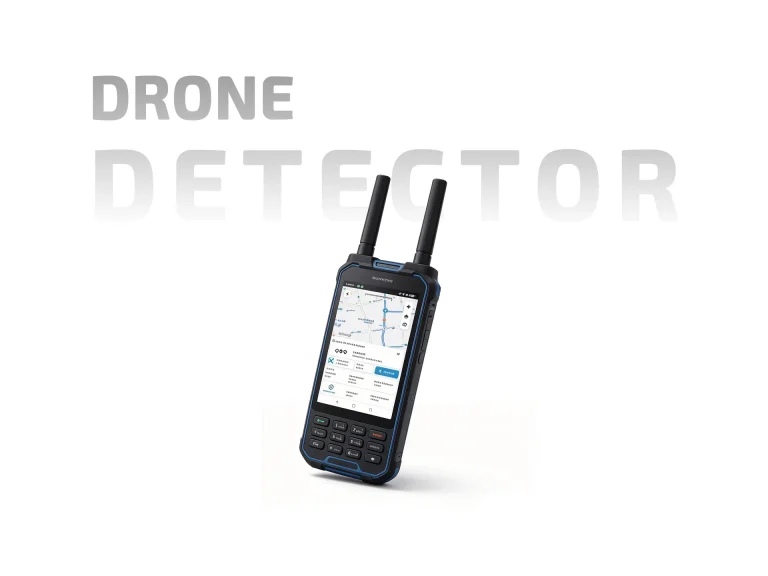
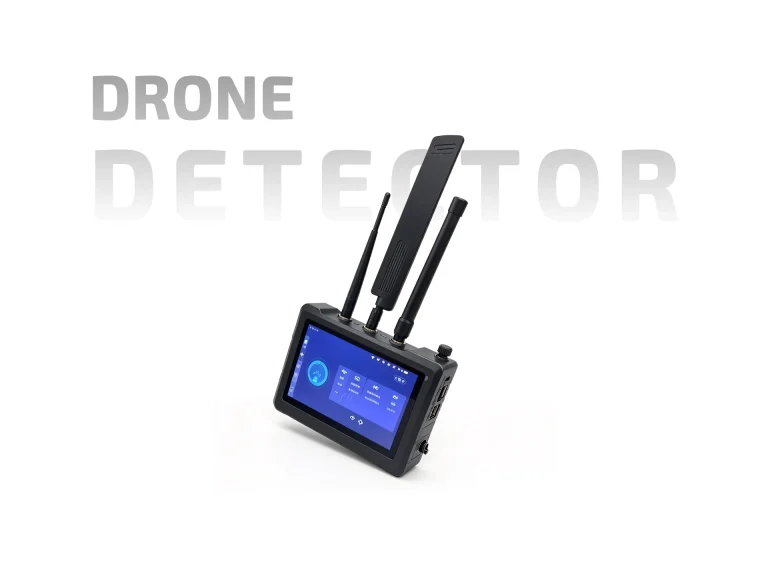
A lightweight handheld drone detector sounds like an easy requirement to write into a specification. Less weight means less fatigue, faster patrols, and easier deployment. That logic is sound—until weight reduction starts to compromise antenna performance, battery endurance, or screen visibility. Buyers who focus only on the number of grams often discover the trade-off during the first full shift.
This guide looks at lightweight handheld detectors from an operator’s perspective. It covers where weight savings help, where they hurt, and how to test a unit before committing. For a broader view of handheld detection tasks and limitations, our guide to handheld drone detection equipment covers ergonomics, training, and field validation in more detail.

Weight is a system property, not a single number
Handheld detector weight is usually quoted for the main unit only. In the field, the operator carries more: spare batteries, antennas, a carry case, a display device, and sometimes a tripod or mounting accessory. A detector that saves 100 grams but requires a heavier battery pack or an external screen may not reduce the actual load.
The table below shows where lightweight design helps and where it introduces trade-offs.
| Design choice | Field benefit | Potential trade-off |
|---|---|---|
| Smaller enclosure | Easier to carry on long patrols | Less room for antennas and thermal management |
| Lower-capacity battery | Reduces unit weight | Shorter scanning endurance; more spare batteries needed |
| Integrated display | Eliminates a separate device | Adds weight and may be hard to read in sunlight |
| Simplified antenna | Lighter and more compact | May reduce sensitivity or direction-finding accuracy |
| Plastic housing | Lower weight and cost | Less rugged in drops, heat, or rain |
| Fewer controls | Simpler operation | Limited configuration in the field |
A genuinely lightweight system is one where the complete carry kit—unit, battery, antenna, and case—is manageable for the intended patrol duration. Ask suppliers for the full kit weight, not just the device weight.
The hidden cost of cutting grams
Weight reduction often comes from the battery. A lighter battery may mean shorter continuous scanning time, which forces operators to carry spares or return to base. That can offset the ergonomic benefit. Similarly, a smaller antenna may be easier to carry but less effective at detecting weak signals or providing a stable bearing.
Thermal design is another factor. Compact units dissipate heat less efficiently. During continuous scanning in warm weather, a lightweight detector may throttle performance or become uncomfortable to hold. Buyers should ask about duty cycle and operating temperature, not just weight.
Field tests that reveal real usability
A lightweight detector should be tested over a realistic shift, not a five-minute demonstration. Run a half-day trial that includes walking, standing, and repeated scanning. Record:
-
Full-kit weight on the shoulder or in the hand.
-
Battery drain during continuous use.
-
Screen readability in direct sunlight.
-
Alert volume and vibration clarity in noisy environments.
-
Operator fatigue after two to three hours.
Procurement questions for lightweight claims
Ask suppliers to clarify:
-
What is the weight of the complete carry kit, including battery and antenna?
-
How long does the unit scan continuously on one battery?
-
What is the operating temperature range and duty cycle?
-
How is antenna performance affected by the compact design?
-
Is the display readable in bright sunlight?
-
What is the warranty policy for accidental drops or water ingress?
Bottom line
The best lightweight handheld drone detector is not the one with the lowest gram count. It is the one that keeps the full carry kit manageable while preserving battery life, antenna performance, and display readability. Define the patrol duration, test the complete kit, and compare lifecycle costs. That approach separates genuinely usable lightweight equipment from a specification that only looks good on paper.