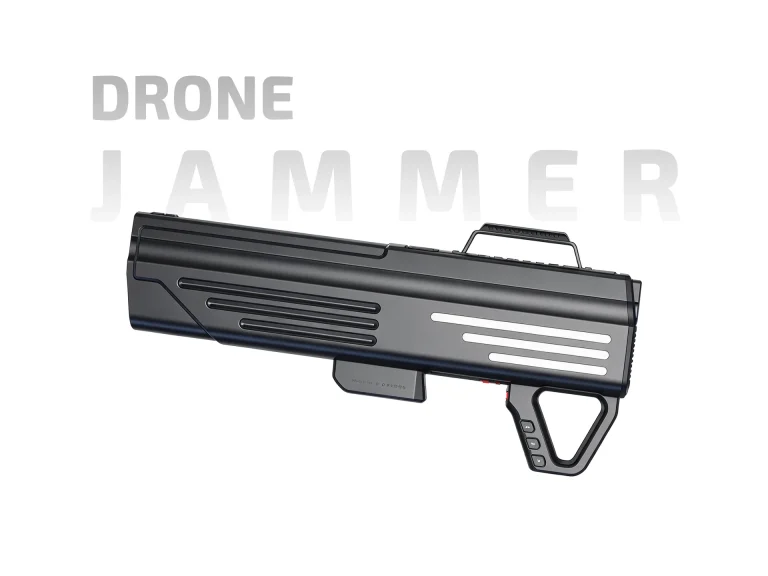
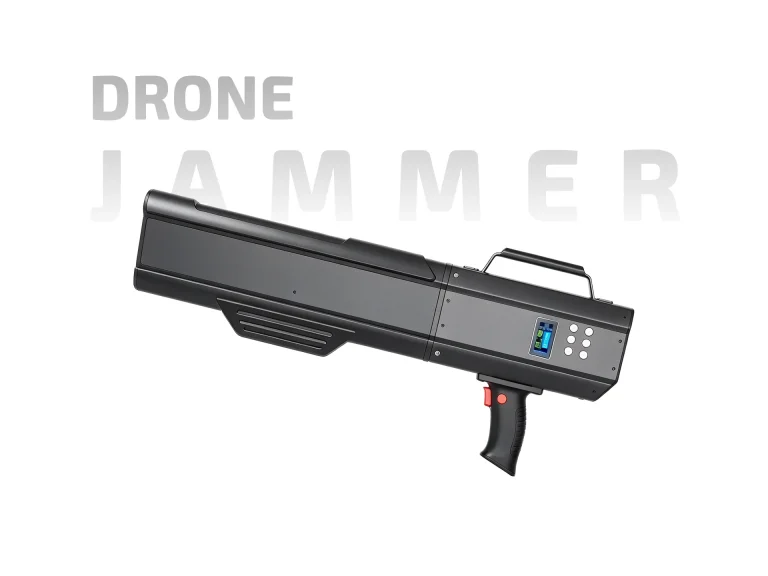
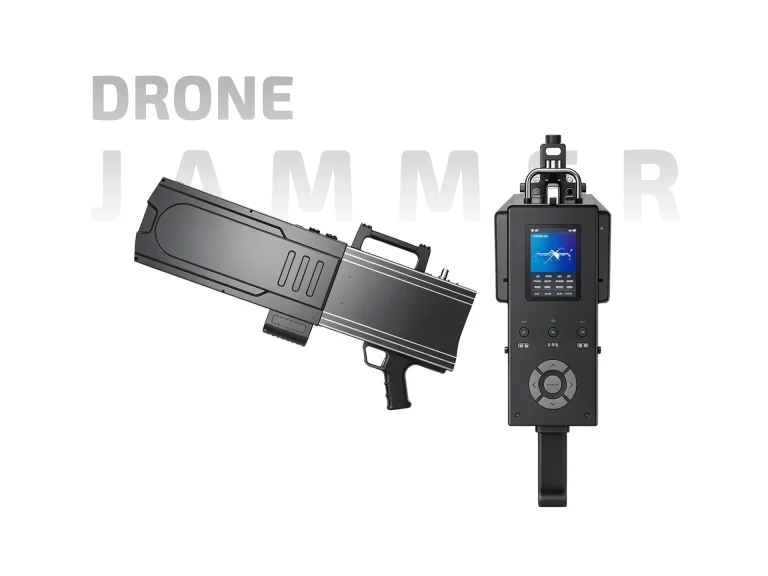
The multi-band drone jammer gun has moved from a niche counter-UAS concept into a more visible procurement category. Buyers are no longer asking only whether a device can disrupt a drone link; they are asking how many bands it covers, how quickly it can be reconfigured, how its use can be audited, and whether deployment is legally authorized in the target jurisdiction.
That shift matters. A multi-band drone jammer gun is not a generic consumer tool. In most markets it is controlled RF equipment, and its value depends as much on compliance, training, and integration as on raw hardware specifications.

Industry snapshot
Demand is being shaped by four pressures: wider drone threat profiles, tighter spectrum regulation, longer procurement cycles, and the need to document every counter-UAS action. Vendors are responding with modular band configurations, improved thermal design, and software controls that restrict unauthorized use.
At the same time, buyers are becoming more cautious about headline claims. “Effective range” figures can vary sharply with antenna design, terrain, weather, and the drone’s link budget. A credible evaluation therefore separates marketing range from tested performance.
Why the multi-band drone jammer gun conversation has shifted
Single-band tools can be adequate for narrow, well-understood scenarios. But modern drone operations may use multiple control links, telemetry paths, and navigation signals. A multi-band approach is intended to address that variability.
The trade-off is not simply “more bands is better.” Each added band increases size, weight, power, heat, cost, and regulatory complexity. It can also raise interference risk if the device is not properly managed.
| Band strategy | What it changes | Main trade-off |
|---|---|---|
| Single-band | Lower cost and simpler logistics | Limited adaptability to different link profiles |
| Fixed multi-band | Broader coverage in one configuration | Higher SWaP, heat, and unit cost |
| Modular multi-band | Configurable by mission and approval scope | Added calibration, inventory, and firmware governance |
| Wideband sweep | Faster response to unknown signals | Greater interference discipline and efficiency challenges |
Procurement checks that separate serious suppliers
Procurement teams should treat the multi-band drone jammer gun as a system, not a standalone item. The most useful vendor conversations focus on evidence: test conditions, authorization boundaries, RF safety, logging, and integration.
| Check | Why it matters | Evidence to request |
|---|---|---|
| Spectrum authorization | Use may be unlawful without approval | Country/band approvals and operator licensing guidance |
| Range definition | Vendor claims are often not comparable | Test conditions, antenna details, environment, and measurement method |
| Band modularity | Supports future mission changes | Module list, lockout controls, and firmware update policy |
| RF safety | Operator exposure must be managed | EMF assessment, training requirements, and usage limits |
| Audit logging | Supports accountability and investigations | Time-stamped logs, access controls, and export format |
| Integration | Detection-to-action workflow matters | API documentation, latency data, and command protocols |
| Export controls | Cross-border transfer can be restricted | Classification, end-user documentation, and licensing support |
Deployment reality: detection first, jamming last
In mature counter-UAS programs, jamming is rarely the first step. Detection, classification, tracking, and rules of engagement come first. A multi-band drone jammer gun is most defensible when it sits inside an approved workflow with clear authority, trained operators, and post-event reporting.
Operational teams should also plan for unintended effects. RF emissions can affect nearby systems, and the return link may behave differently from the control link. That is why field trials should include spectrum monitoring, safety review, and legal sign-off—not just a demonstration of disruption.
Compliance and risk controls
Regulators increasingly expect more than a hardware certificate. Depending on the market, deployment may require spectrum authorization, operator licensing, aviation coordination, environmental review, and strict record-keeping.
Practical controls include:
-
Written authorization for each band and operating location.
-
Role-based access to device activation.
-
Mandatory pre-use checks and post-use logs.
-
RF exposure training for operators.
-
Clear escalation rules for unidentified or non-hostile drones.
-
Export-control review before cross-border shipment or transfer.
This article is intended for industry education and does not authorize the use of jamming equipment. Local law always governs.
Market outlook
The category is likely to consolidate around three themes: modularity, evidence-based performance claims, and integration with wider counter-UAS command systems. Buyers will favor suppliers that can document spectrum compliance, support training, and provide audit-ready logs.
For vendors, the differentiator is no longer just band count. It is the ability to show that a multi-band drone jammer gun can be configured, controlled, and accounted for within a lawful operating framework. For buyers, the safest shortlist is the one that treats compliance and traceability as core specifications—not afterthoughts.