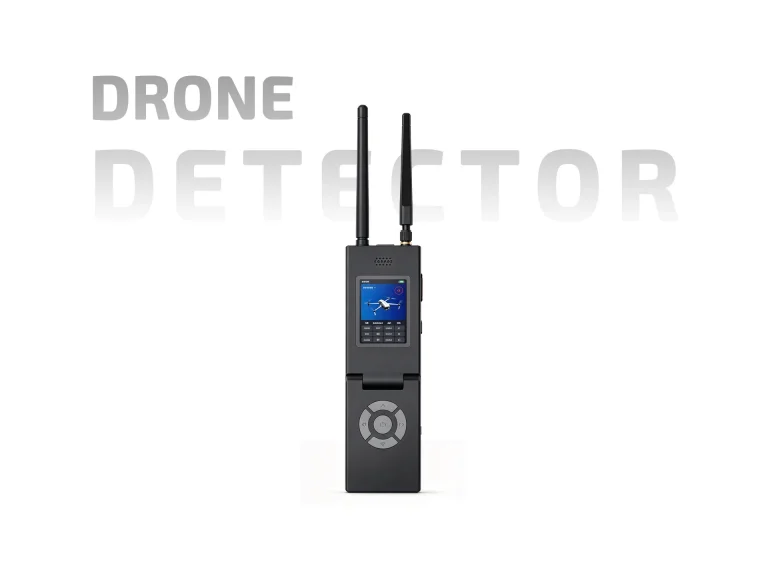
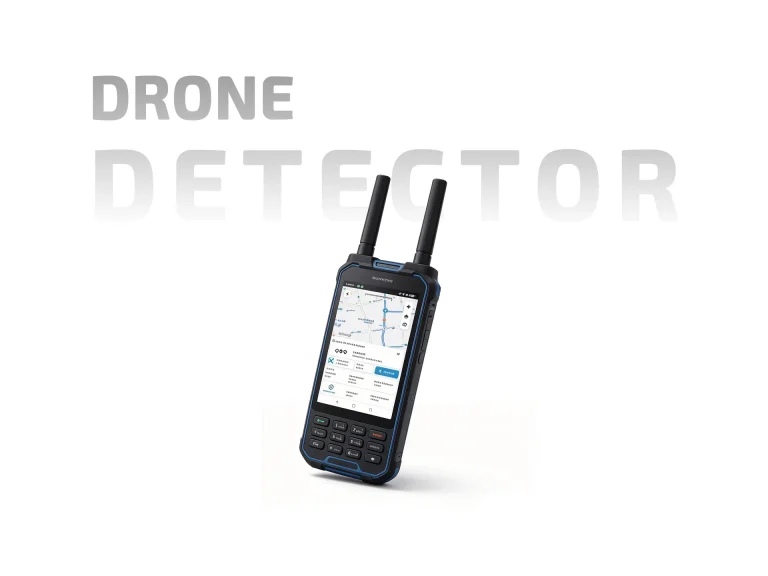
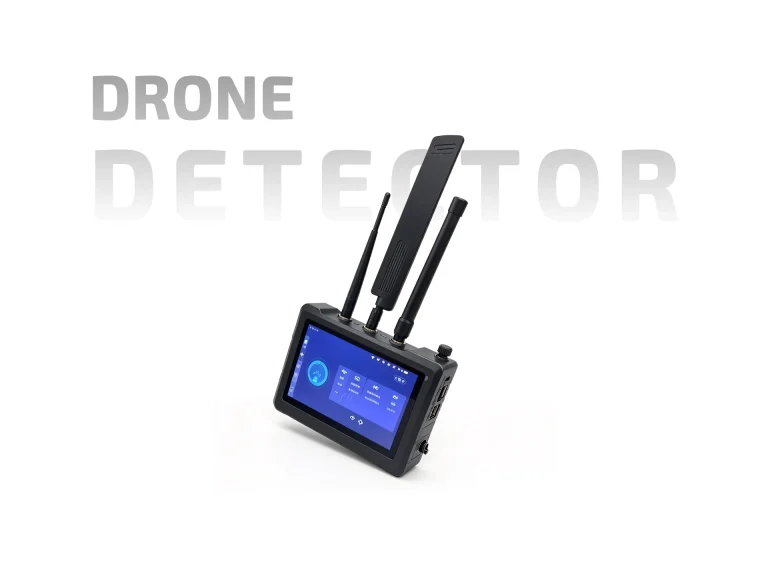
Handheld drone detection equipment is often marketed like a simple patrol accessory. In practice, it is an operator-dependent sensor. Two teams can carry the same unit and get very different results because performance depends on the RF environment, antenna handling, training, and how alerts are interpreted. Buyers who evaluate handheld detectors like fixed systems—by range alone—often end up with devices that stay in the kit bag.

Handheld detection is a different job
Fixed systems watch a known site continuously. Handheld detectors support a person on the move: checking a suspicious RF signature, verifying an alert from a fixed sensor, screening a short event, or helping a response team understand what is nearby. That means ergonomics and decision speed matter as much as sensitivity.
For a broader comparison of portable form factors, see our portable drone detection equipment field guide.
What handheld equipment does well—and where it stops
Handheld RF detectors are strong at close-range warning and pilot-link detection. They are less suited to wide-area early warning, autonomous-flight detection, or visual identification unless paired with other sensors.
| Operator task | What a handheld detector can deliver | Limitation to plan around |
|---|---|---|
| Patrol and close-range alert verification | Quick check of nearby control links and RF activity | Coverage depends on antenna and operator position |
| Direction finding | Rough bearing to a transmitter in trained hands | Multipath and reflections can mislead |
| Short event screening | Rapid deployment without infrastructure | Battery and body shielding affect results |
| Handoff to response team | Portable confirmation and log export | Without integration, data stays isolated |
| Visual identification | Usually not provided unless an EO add-on is used | RF detection is not visual evidence |
Ergonomics, battery, and training decide field value
A handheld detector is carried, not mounted. Weight, grip, screen visibility in sunlight, and alert sound design affect how long an operator can use it effectively. Battery life should be tested during realistic scanning, not standby. Training should cover antenna orientation, body shielding, and how to distinguish common control links from background noise. A unit that requires a laptop for configuration may be inconvenient on patrol.
Procurement questions that expose real differences
Ask suppliers:
-
What RF bands are covered, and how is sensitivity specified?
-
How does the unit behave in dense Wi-Fi or urban noise?
-
What is the battery endurance during continuous scanning?
-
Can alerts and logs be exported or integrated?
-
What training and firmware update policy is included?
-
What spare parts and warranty turnaround apply?
Also request a field demonstration in your own RF environment. Compare false-alert volume and the time it takes an operator to locate a signal.
A field validation routine
Run a half-day trial: baseline scan in a quiet area, then in a crowded RF area. Introduce known drone control links at varying distances. Record detection time, false alerts, bearing accuracy, and operator fatigue. Test log export and whether the unit can pass alerts to a wider platform. If the device cannot survive a realistic shift, it is not ready for deployment.
Final takeaway
The right handheld drone detection equipment is not the most sensitive box on the datasheet. It is the unit an operator can carry, understand, and act on under field conditions. Define the task, test in your RF environment, and confirm support terms. That turns a crowded market into a shortlist your team can actually use.