Project Background and Pain Points
A city in Shandong Province needed a reliable signal shielding plan for the annual Gaokao, China’s national college entrance examination. The exam sites were spread across several schools, with a mix of large assembly halls, standard classrooms, corridors, and small confidential rooms. The local education and security authorities had three main concerns.
First, coverage had to be consistent. Mobile signals in the area varied widely between carriers, and some exam rooms had weak indoor coverage while others sat close to strong outdoor base stations. A single device type would either overreach into nearby residential buildings or leave blind spots inside the exam rooms.
Second, the equipment had to run continuously for several days without failure. Exam schedules are fixed, and any downtime during a session could create a serious security gap. The customer also wanted scheduled on/off control and centralized monitoring rather than manual switching at each site.
Third, the solution needed to be layered. Large open areas required higher output, while small rooms and offices needed lower power to avoid unnecessary interference with surrounding networks.

Procurement and Equipment Mix
The project purchased three models to match different site types.
| Product | Model | Quantity |
|---|---|---|
| 120W High Power Signal Jammer | ETLD-MD16W | 20 |
| Medium Power Signal Jammer | ETLD-MD9X | 10 |
| Low Power Signal Blocker | ETLD-MD10 | 8 |
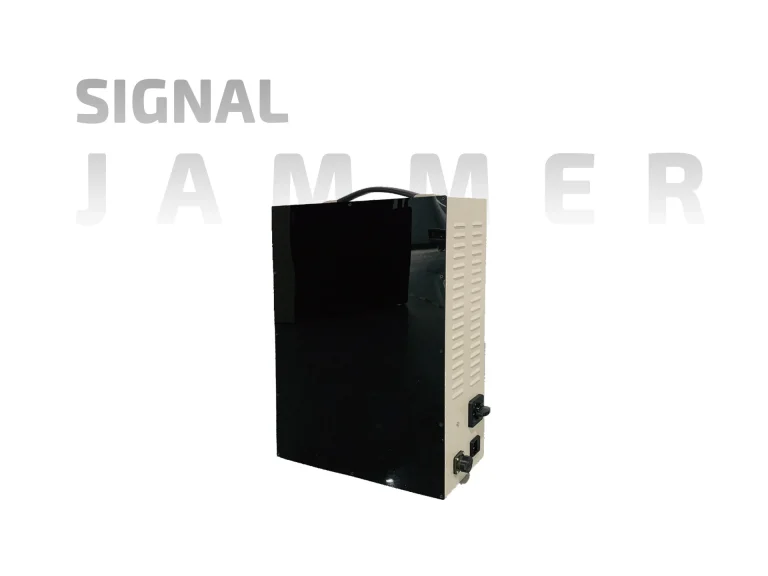
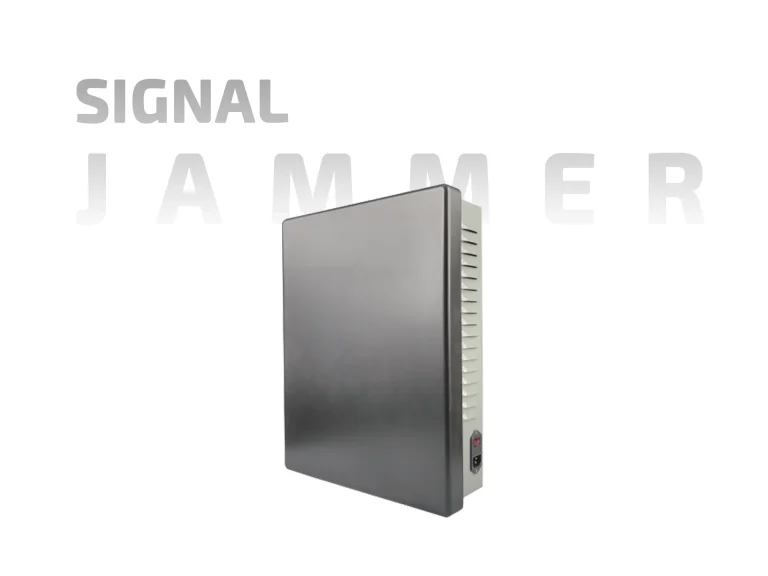
The ETLD-MD16W uses thirteen independent 16W modules and covers 2G, 3G, 4G, and 5G networks used by major carriers. It provides roughly 250 square meters of coverage under test conditions, with an effective shielding distance of 1 to 60 meters. Its dual industrial switching power supply design supports seamless power source switching for 24/7 operation.
The ETLD-MD9X delivers 28W output with 14 channels, covering cellular networks plus 2.4G and 5.8G Wi-Fi and Bluetooth. Its coverage is about 70 square meters, with a jamming radius of 1 to 30 meters. Each channel has independent power adjustment, and the unit supports network remote control and scheduled operation.
The ETLD-MD10 is a 20W, 11-channel low-power blocker with about 40 square meters of coverage and a 1 to 15 meter radius. It uses a built-in high-gain omni-directional antenna, weighs 1.5kg, and includes EPM energy management and ACOPS overheating prevention.
Deployment and Real-World Results
The deployment followed a simple rule: match power to space. The 20 high-power units were placed in large exam halls, entrance screening areas, and open corridors where signal strength was highest. The 10 medium-power units covered standard classroom blocks and medium-sized rooms. The 8 low-power units were reserved for confidential rooms, proctor offices, and small auxiliary spaces.
Before the exam, the team surveyed each site with a handheld signal analyzer. After installation, they measured residual signal levels at multiple points inside each room. In the covered zones, cellular and Wi-Fi signal levels dropped below the target threshold, and no unauthorized connectivity was detected during the exam sessions.
The equipment ran continuously for four days. The high-power units, using dual power redundancy, showed no interruption during a brief mains switch test. Surface temperatures remained within normal operating ranges thanks to the cooling design. The medium-power units’ remote management system allowed the control room to schedule shutdowns after each exam session, which reduced unnecessary transmission and saved energy. The low-power units were easy to reposition where room layouts changed.
The city’s exam authority reported no signal-related cheating incidents and no complaints from nearby residents about excessive interference. The layered approach kept coverage inside the exam perimeter while limiting spillover into surrounding buildings.
Project Value
This project showed that exam signal shielding does not need to rely on a single high-power device. By combining 120W, 28W, and 20W units, the city achieved consistent coverage across very different room types without over-jamming neighboring areas. The modular design of the ETLD-MD16W simplified maintenance, while the remote management features of the ETLD-MD9X reduced manual workload. The compact ETLD-MD10 filled the small-room gap at low cost.
The equipment mix is also reusable. Outside the Gaokao period, the units can support other high-security events, confidential meetings, and temporary examination sites. For future expansion, the city can add more medium-power units to new school buildings or integrate the existing devices into a broader campus security platform.
Conclusion
The Shandong Gaokao signal shielding project combined careful site planning with a three-tier equipment strategy. The ETLD-MD16W, ETLD-MD9X, and ETLD-MD10 each played a clear role, and the field results matched the design goals: stable operation, controlled coverage, and no disruption beyond the exam perimeter. It is a practical reference for other cities planning large-scale exam security.