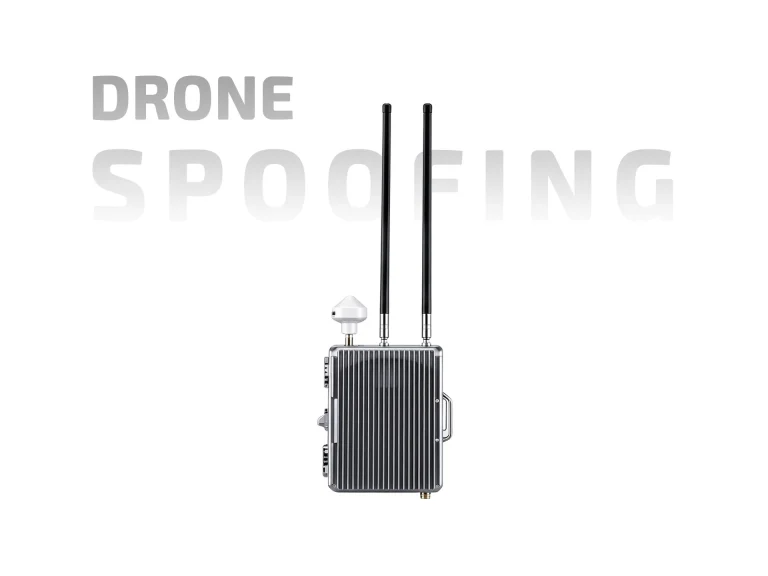
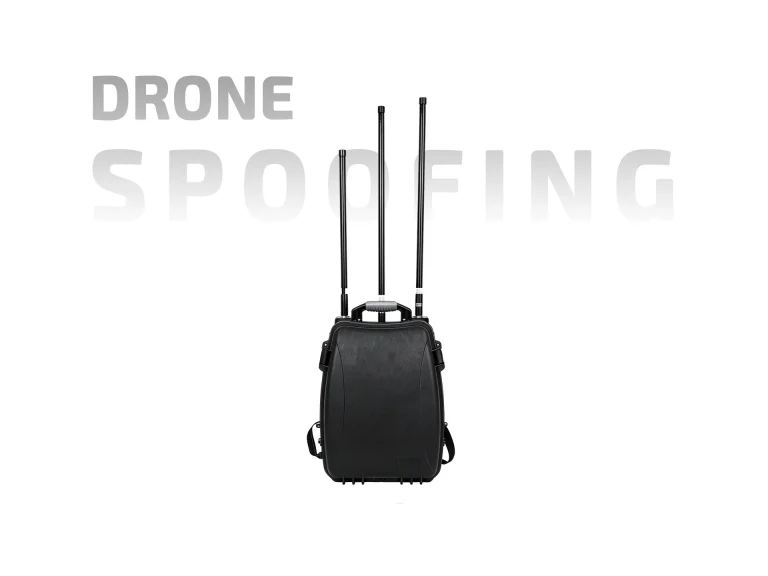
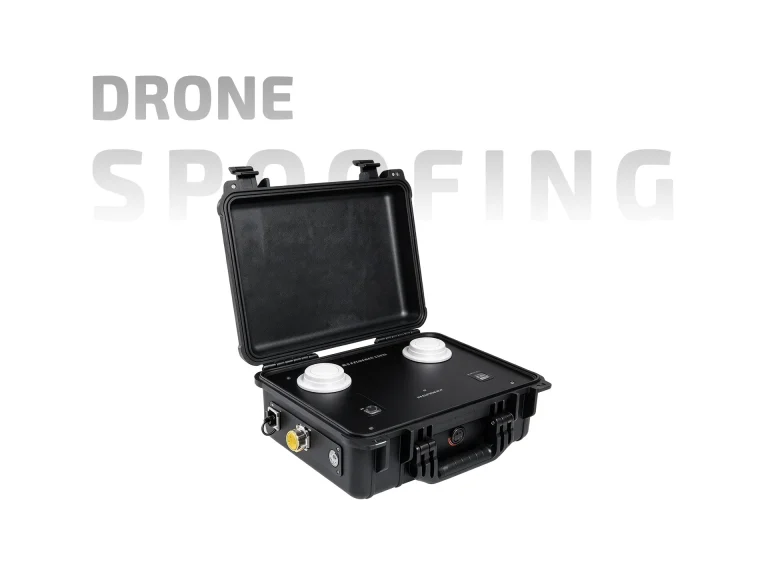
GPS spoofing drone attacks are often described as a silent way to take control of a UAV. The idea is simple: send fake GPS signals, make the drone believe it is somewhere else, and watch it drift off course.
In practice, a GPS spoofing drone attack is a race against timing, signal strength, and modern receiver logic. Some drones fall for it. Many do not.
This article explains the mechanics, the failure points, and the defensive playbook. It is written for security teams, UAV operators, and procurement specialists who need realistic answers—not marketing promises.

GPS Spoofing Drone: The Core Mechanism
A GPS spoofing drone attack targets the GPS receiver inside the UAV. The attacker transmits a counterfeit GPS signal that resembles the real one. If the receiver locks onto the fake signal, it calculates a false position or time.
The drone then acts on that false data. It may:
-
Drift from its planned route
-
Hover in the wrong location
-
Trigger a false return-to-home
-
Cross a geofence without warning
-
Land in an unsafe area
But the receiver must believe the fake signal. That is the hard part.
What the Drone Sees
A GPS receiver does not “see” satellites. It sees radio signals. It checks:
-
Frequency
-
Modulation
-
Ranging code
-
Timing
-
Doppler shift
-
Signal strength
If the fake signal is inconsistent, the receiver may reject it or flag an error.
What the Attacker Must Control
| Parameter | Requirement | Failure Mode |
|---|---|---|
| Frequency | Match GPS band, such as L1 at 1575.42 MHz | Receiver filters it out |
| Modulation | Mimic GPS waveform | No correlation, no lock |
| Timing | Align with real signal or drift carefully | Sudden jumps break lock |
| Power | Strong enough to reach antenna | Too weak or too obvious |
| Doppler | Match expected motion | Receiver detects anomaly |
| Multi-band | Cover all bands the drone uses | Cross-check rejects fake data |
A GPS spoofing drone system that ignores any of these is likely to fail.
The Attack Chain: From Fake Signal to Flight Behavior
A realistic GPS spoofing drone attack follows a sequence. Skipping steps reduces success.
1. Signal Acquisition
The attacker must first match the real GPS signal. If the drone already has a strong lock, the spoofer must ease in without causing a sudden jump.
2. Pull-Off
Once the receiver accepts the fake signal, the attacker slowly shifts the reported position. A gradual change is harder to detect than a sudden one.
3. Navigation Error
The drone’s flight controller now believes it is somewhere else. It adjusts its motors to “correct” the error.
4. Flight Response
Depending on the drone’s firmware and mode, it may:
-
Continue flying with a false position
-
Switch to attitude mode
-
Trigger return-to-home
-
Land immediately
-
Ignore GPS and rely on other sensors
This is where many attacks break down. Modern drones do not trust GPS alone.
Why GPS Spoofing Drone Attacks Often Fail
A GPS spoofing drone attack is not a universal key. It works best against older, GPS-dependent UAVs. It struggles against layered navigation systems.
Multi-Constellation Receivers
Many drones receive GPS, Galileo, GLONASS, and BeiDou at the same time. If one constellation says “you are here” and another says “you are there,” the receiver may reject the inconsistent source.
Inertial and Visual Navigation
Inertial measurement units, visual odometry, and optical flow provide independent position estimates. If GPS says “move east” but the IMU and camera say “stay still,” the flight controller may ignore GPS.
Encrypted or Authenticated GPS
Some modern GPS signals include authentication. A GPS spoofing drone that cannot reproduce the authentication code will be rejected.
RTK and Correction Services
RTK drones use correction data for centimeter accuracy. A simple spoofer may not generate consistent corrections that match the drone’s expected movement.
| Drone Class | Navigation Backup | GPS Spoofing Vulnerability |
|---|---|---|
| Older consumer GPS drone | Minimal | High |
| Mid-range consumer drone | GPS + IMU | Moderate |
| Enterprise RTK drone | RTK + IMU + compass | Low to moderate |
| Autonomous inspection drone | Visual + inertial + GPS | Low |
| Military encrypted UAV | Encrypted GNSS + anti-jam | Very low |
For a deeper comparison, see Do Drone Spoofers Work?.
Legal and Safety Exposure
Transmitting fake GPS signals is not a harmless prank. It can affect aircraft, ships, telecom networks, and power grids that rely on GPS timing.
In most countries, GPS spoofing is illegal outside authorized government or defense testing. Civilian use can lead to fines, criminal charges, and equipment seizure.
| Region | General Position | Practical Risk |
|---|---|---|
| United States | FCC prohibits jamming and spoofing | Severe penalties |
| United Kingdom | Wireless Telegraphy Act controls interference | Prosecution possible |
| European Union | National regulators enforce spectrum rules | Authorization required |
| Most nations | GNSS interference is a safety issue | High liability |
This article is for education and defense planning. It is not legal advice.
Detecting a GPS Spoofing Drone Attack
Defenders can catch spoofing before the drone flies away. The key is to monitor both the RF environment and the drone’s navigation data.
RF Spectrum Monitoring
A spectrum analyzer can detect unexpected transmissions on GPS bands. Jamming raises the noise floor. Spoofing adds a structured signal that should not be there.
GNSS Anomaly Metrics
Watch for:
-
Sudden position jumps
-
Unrealistic speed changes
-
Timing errors
-
Signal strength anomalies
-
Satellite count drops
These are warning signs of a GPS spoofing drone attack.
Multi-Sensor Fusion
Radar, optical, acoustic, and RF sensors can confirm the drone’s real position. If GPS says one thing and three other sensors disagree, trust the majority.
Encrypted GNSS and Anti-Jam Antennas
For high-value operations, use receivers with authenticated signals and anti-jam antennas. These raise the cost and complexity of a successful attack.
For frequency-specific details, see Drone Spoofer Frequency.
Defense Matrix: What Security Teams Should Deploy
No single tool stops every GPS spoofing drone attack. Layered defense works better.
| Layer | Tool | Outcome |
|---|---|---|
| Detect | RF spectrum monitoring | Identify spoofing vs jamming |
| Verify | Radar and optical tracking | Confirm real drone position |
| Harden | Anti-jam antenna, encrypted GNSS | Reject fake signals |
| Respond | Geofence and flight rules | Limit mission impact |
| Train | Operator procedures | Faster manual recovery |
Final Takeaway
A GPS spoofing drone attack can work—but only under specific conditions. It is most effective against older, GPS-dependent UAVs with weak receiver protection.
Modern drones use multi-constellation receivers, inertial navigation, visual odometry, and encrypted signals. These layers make spoofing unreliable.
For security teams, the practical path is detection, verification, and legal mitigation. GPS spoofing awareness matters, but it should not be your only defense.