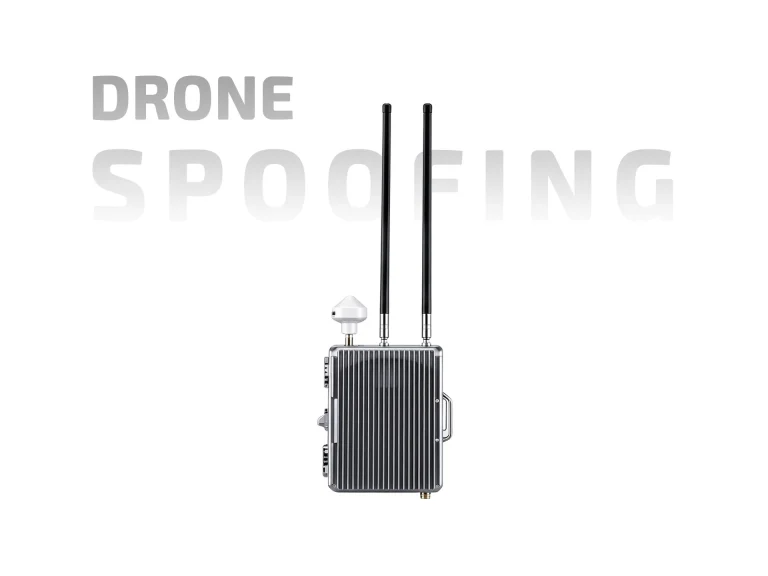
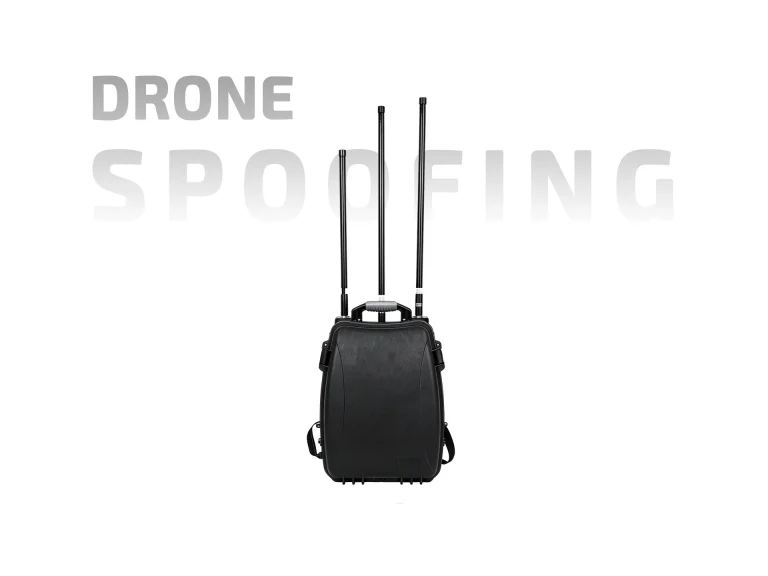
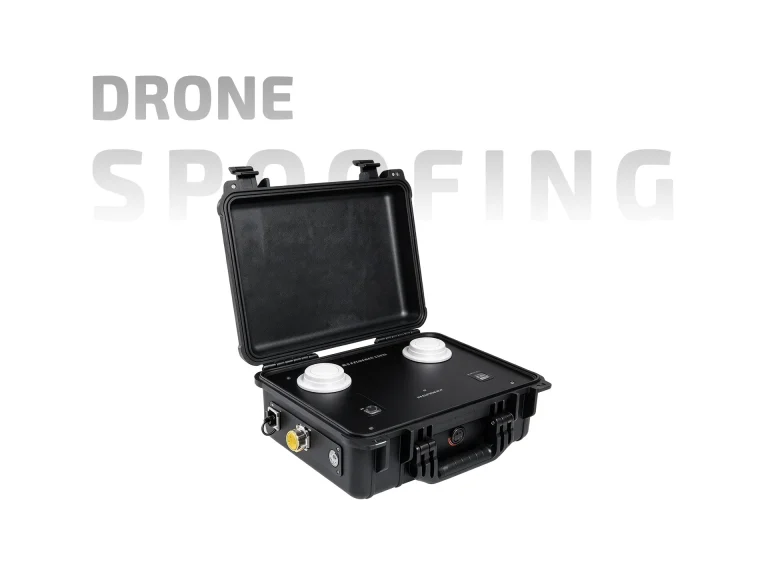
Drone spoofer frequency is the foundation of any GNSS spoofing attempt. If the frequency does not match the target receiver, the spoofed signal is simply ignored. That one fact explains why spoofing is far more complex than many people assume.
A drone’s GNSS receiver listens on specific frequencies. It expects specific modulation, timing, and signal structure. A spoofer must replicate all of that—or at least enough of it—to fool the receiver.
This article breaks down the frequency bands used by drone spoofers, the challenges of multi-band spoofing, legal risks, and how defenders can detect frequency-based attacks.

What Is Drone Spoofer Frequency?
Drone spoofer frequency refers to the radio frequency a spoofing device transmits on to mimic legitimate GNSS signals. GNSS includes GPS, Galileo, GLONASS, and BeiDou. Each system uses one or more frequency bands.
A spoofer must transmit on the same frequency as the target signal. Otherwise, the drone’s receiver will not process it. This is why spoofers are often designed for specific GNSS bands.
For example, GPS L1 is centered at 1575.42 MHz. A GPS L1 spoofer must transmit at that frequency with the correct modulation. If it transmits at a different frequency, the receiver filters it out.
Why Frequency Matching Matters
Frequency matching is necessary but not sufficient. The spoofer also needs:
-
Correct signal modulation
-
Proper timing and code phase
-
Adequate power to reach the drone
-
Consistent Doppler shift if the drone is moving
If any of these are wrong, the receiver may reject the signal or flag an anomaly.
Common Drone Spoofer Frequency Bands
Different GNSS constellations use different frequencies. Most modern drones receive multiple bands. That makes spoofing harder.
| GNSS System | Signal | Frequency (MHz) | Typical Use | Spoofing Difficulty |
|---|---|---|---|---|
| GPS | L1 C/A | 1575.42 | Civil navigation | Moderate |
| GPS | L2 | 1227.60 | Precision/dual-band | High |
| GPS | L5 | 1176.45 | Safety-of-life | High |
| Galileo | E1 | 1575.42 | Civil navigation | Moderate |
| Galileo | E5 | 1191.795 | High accuracy | High |
| GLONASS | L1 | ~1602 | Civil navigation | Moderate |
| GLONASS | L2 | ~1246 | Precision | High |
| BeiDou | B1 | 1561.098 | Civil navigation | Moderate |
| BeiDou | B2 | 1207.14 | Precision | High |
A single-band spoofer might target GPS L1 only. That can work against older drones that rely solely on GPS L1. But against a drone receiving GPS L1, Galileo E1, and BeiDou B1 simultaneously, a single-band attack is easy to detect.
Single-Band vs. Multi-Band Spoofers
Single-band spoofers are simpler and cheaper. They transmit on one frequency. They may work on consumer drones with basic GPS receivers.
Multi-band spoofers are more complex. They must transmit on multiple frequencies at once. They also need to keep signals synchronized. If one band says the drone is in one place and another band says something different, the receiver may reject both.
Multi-band spoofing is more effective against advanced drones. But it requires more power, better hardware, and deeper technical knowledge.
How Drone Spoofer Frequency Selection Works
Choosing the right frequency is only the first step. The drone spoofer must also consider power, timing, and modulation.
Power and Distance
The spoofed signal must be strong enough to reach the drone’s antenna. But if it is too strong, the drone may detect an unusually high signal-to-noise ratio. That can trigger an alarm.
Power also affects range. Higher power means longer range, but also higher risk of detection and interference with other GNSS users.
Timing and Synchronization
GNSS receivers use timing to calculate position. A spoofer must align its timing with the real signal—or gradually drift it. If the timing jumps suddenly, the receiver may lose lock.
Modulation and Code
Each GNSS signal uses specific modulation and ranging codes. A spoofer must replicate these. Otherwise, the receiver will not correlate the signal.
For a deeper look at how spoofing works in practice, see Do Drone Spoofers Work?.
Legal and Operational Risks of Drone Spoofer Frequency Use
Transmitting on GNSS frequencies is illegal in most countries outside authorized testing. The risks go beyond legal penalties.
| Risk | Impact |
|---|---|
| Legal penalties | Fines, criminal charges, equipment seizure |
| Interference with aviation | Safety risk for aircraft and emergency services |
| Disruption of critical infrastructure | Timing errors in telecom, finance, power grids |
| Unintended drone behavior | Crash, flyaway, or dangerous maneuver |
| Detection and attribution | Spectrum monitoring can locate the spoofer |
Even in defense or government contexts, spoofing requires careful coordination. Civilian use is almost always prohibited.
Detecting Drone Spoofer Frequency Attacks
Defenders can detect spoofing by monitoring the RF spectrum and GNSS signal quality.
RF Spectrum Monitoring
A spectrum analyzer can detect unexpected transmissions on GNSS bands. It can also distinguish jamming from spoofing. Jamming raises the noise floor. Spoofing adds a structured signal.
GNSS Signal Quality Checks
Receivers can monitor:
-
Signal strength (C/N0)
-
Timing consistency
-
Position jumps
-
Number of satellites tracked
If these values change unexpectedly, spoofing may be underway.
Multi-Sensor Fusion
Radar, optical, and acoustic sensors can confirm the drone’s real position. If GNSS says one thing and other sensors say another, the GNSS data may be false.
Encrypted GNSS
Some modern GNSS signals include authentication. This makes spoofing much harder because the receiver can verify the signal source.
Conclusion
Drone spoofer frequency is not a single number. It is a set of bands, modulations, and timing requirements. A spoofer that works on one drone may fail on another because of frequency differences, multi-band reception, or encryption.
For security teams, the key takeaway is simple: do not rely on spoofing as a counter-drone tool. Focus on detection, multi-sensor tracking, and legal mitigation. Frequency awareness helps you understand the threat—but it is only one part of the puzzle.