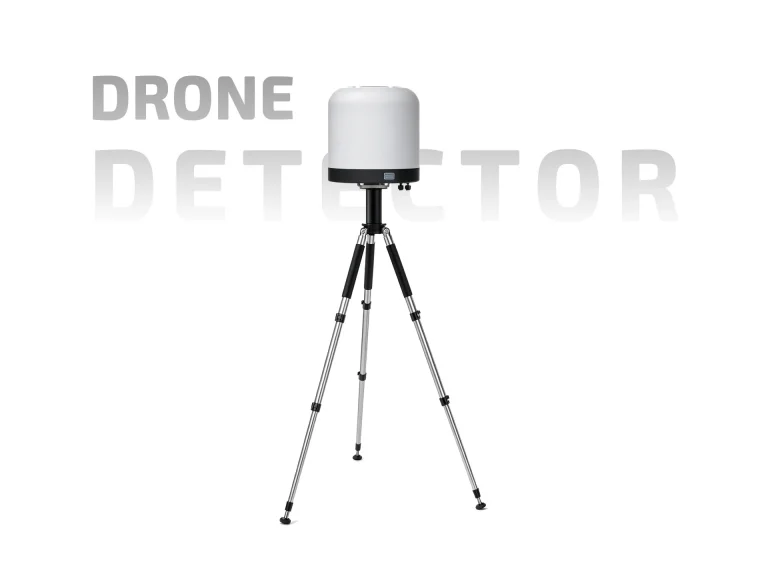
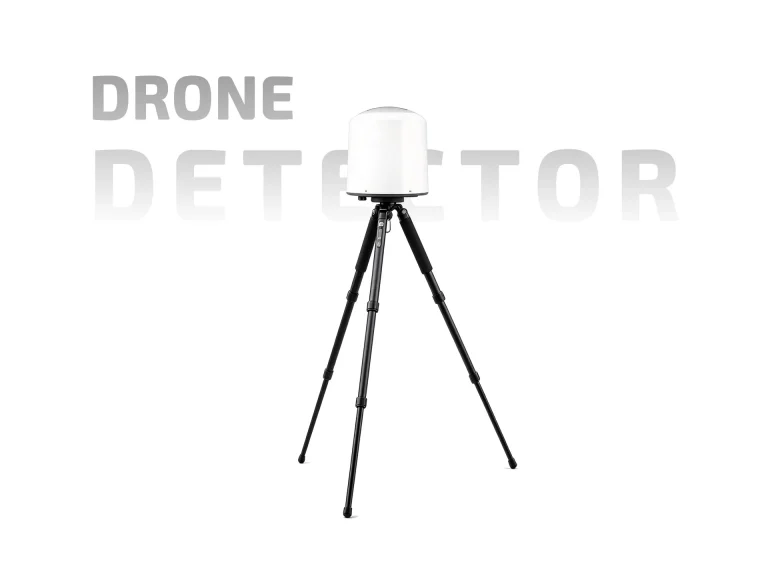
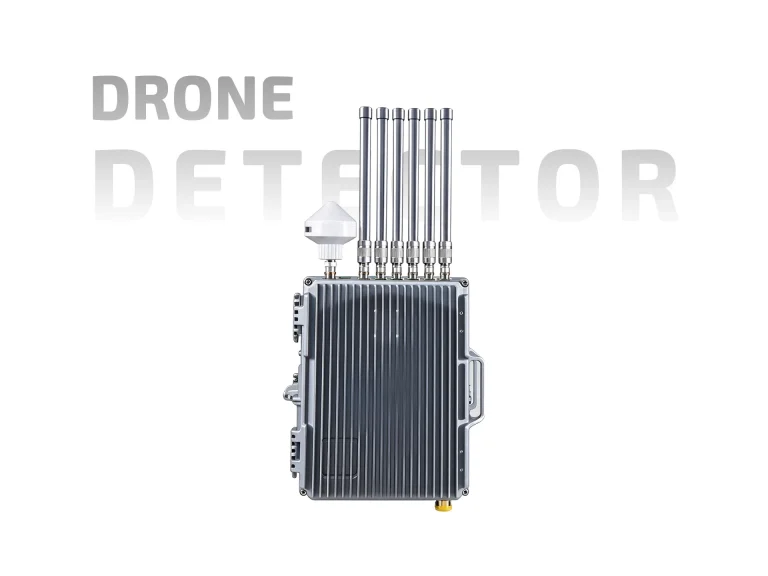
Not all fixed drone detection system manufacturers build the same product, even when datasheets look similar. The differences usually appear later: in calibration discipline, integration depth, false-alarm behavior, and how quickly support responds after installation. Buyers who treat manufacturer selection as a simple price comparison often discover those gaps during commissioning—or worse, during an incident.

The manufacturer landscape is not one market
The phrase “manufacturer” covers several business models. Some companies design and produce RF sensors, radar heads, or camera modules in-house. Others assemble systems from third-party modules and add software. A third group integrates detection hardware into a broader command-and-control platform.
Each model has trade-offs. An OEM with in-house RF design may offer tighter control over detection performance but less flexibility on third-party integrations. An integrator may provide better VMS and PSIM connectivity but depend on upstream suppliers for firmware fixes. Neither model is automatically better. The key is to know which model you are evaluating and where the critical technology actually comes from.
Five due diligence areas for fixed drone detection system manufacturers
A useful evaluation goes beyond detection range. The table below focuses on capabilities that affect long-term operation.
| Evaluation area | What to verify | Why it affects deployment |
|---|---|---|
| Production consistency | Calibration records, batch testing, firmware version control | Prevents unit-to-unit performance drift across sites |
| Sensor and RF design | In-house vs outsourced modules, documented tolerances | Determines reliability in cluttered RF and urban environments |
| Environmental engineering | IP-rated enclosures, thermal testing, EMC compliance | Reduces outdoor failures and weather-related false alarms |
| Integration capability | APIs, SDKs, VMS partnerships, cyber hardening | Avoids costly custom work and network security gaps |
| Support and lifecycle model | Spare parts, RMA turnaround, remote diagnostics, update cadence | Protects uptime and total cost of ownership after installation |
Ask each shortlisted manufacturer to map these areas to your site. A supplier that cannot explain its calibration process or firmware update policy is a risk, regardless of the headline specifications.
Validate from sample to site
Manufacturer claims should be tested in stages. First, request a documented factory or production overview—not a sales deck. Second, test a sample unit in a representative environment, ideally with the same mounting height, nearby metal structures, and Wi-Fi density as your site. Third, define acceptance criteria before installation, including alert volume, classification accuracy, and integration response times.
If you are still defining the operational requirement, start with our buyer’s guide for fixed drone detectors for sale before shortlisting manufacturers. It covers coverage geometry, alarm workflow, and total ownership cost—three inputs that make manufacturer comparisons more meaningful.
Contract and lifecycle questions
Fixed detection systems are long-lived infrastructure. The purchase agreement should clarify firmware ownership, update frequency, data retention, cybersecurity responsibilities, and spare-parts availability. Ask what happens if a critical module reaches end-of-life. Also confirm whether remote diagnostics are included or sold as a separate service tier.
Manufacturers that plan for a five- to seven-year lifecycle usually provide clearer answers. Those that focus only on the initial shipment often leave integration and maintenance gaps to the buyer.
Common sourcing mistakes
Three mistakes appear repeatedly. First, comparing manufacturers on detection range alone without testing in the target environment. Second, ignoring the integration burden—especially API limits and cyber requirements. Third, failing to define acceptance testing, which makes it difficult to enforce performance after delivery.
A fourth, less obvious mistake is choosing a manufacturer without checking its upstream dependencies. If a key sensor or software component comes from a single supplier, ask about continuity planning and alternative sourcing.
Final thought
Selecting among fixed drone detection system manufacturers is ultimately a risk-management exercise. The right partner will document production quality, support realistic testing, and stay engaged through integration and maintenance. Use the evaluation areas above to separate credible manufacturers from those that simply assemble hardware and disappear after the invoice is paid.