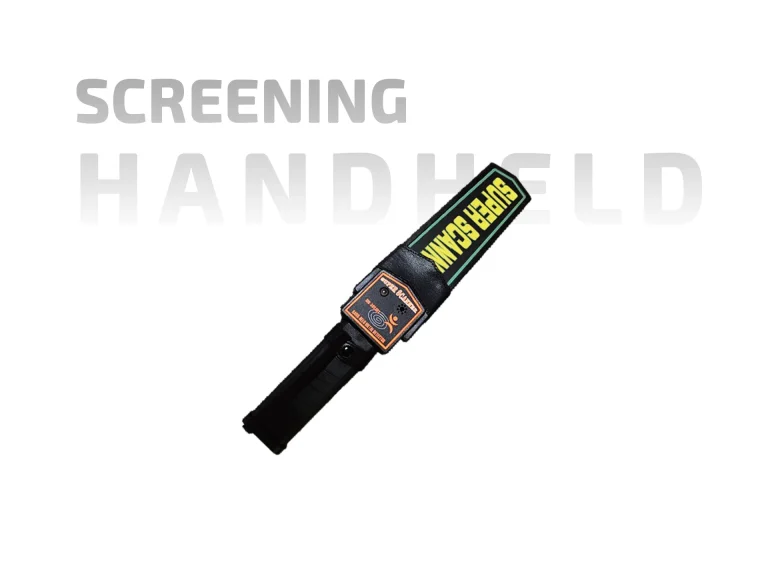
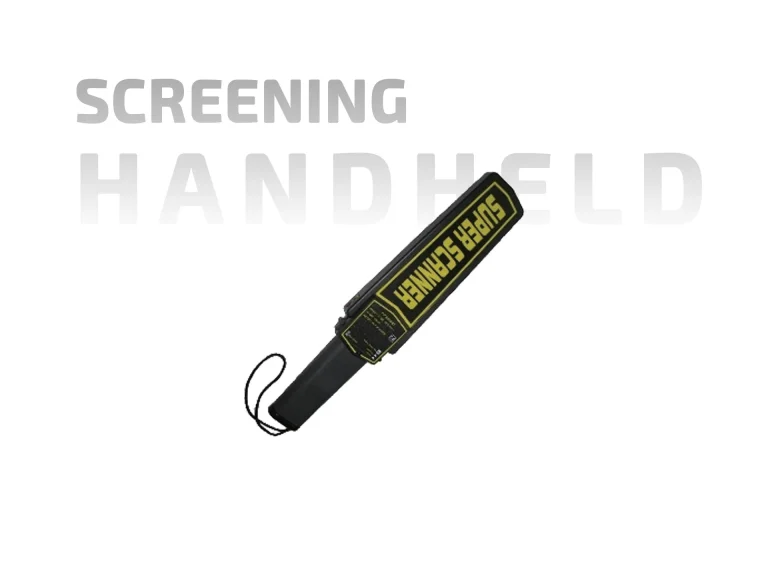
Searching for a handheld metal detector for sale can feel straightforward until the results page fills with near-identical product photos and wildly different prices. Some units cost less than a hundred dollars; others run into the thousands. Some are marketed for security checkpoints, others for hobbyists, and a few claim to do both.
This guide is written for buyers who need a working security tool, not a gadget. It covers the main market segments, what price bands typically include, the checks that separate a reliable unit from a fragile one, and the purchasing mistakes that show up after delivery.

Start with the job, not the product listing
Before comparing models, define what the detector must do. A handheld unit used to resolve walk-through gate alarms at a concert has different requirements from one used at a courthouse entrance or a warehouse exit. Four questions narrow the field quickly:
-
What is being checked? People, bags, packages, or vehicles each call for different search heads and procedures.
-
Who will use it? Trained security staff, event stewards, or occasional users.
-
How often? Daily checkpoint duty, occasional events, or standby use.
-
What environment? Indoor, outdoor, dusty, wet, or near strong electrical interference.
A detector that suits occasional event use may not survive daily checkpoint duty. A rugged unit built for daily use may be overkill for a small venue.
The main market segments
Handheld metal detectors for sale generally fall into four segments. The table below is a starting point for comparison, not a ranking.
| Segment | Typical price range (USD) | Common use | What distinguishes it |
|---|---|---|---|
| Basic security wand | $30–$120 | Small venues, occasional events, low-risk entrances | Simple controls, limited sensitivity adjustment, plastic housing |
| Professional checkpoint wand | $120–$400 | Daily checkpoint duty, events, corporate security | Better sensitivity control, durable housing, rechargeable batteries, audio/vibration alerts |
| High-performance security detector | $400–$1,200 | High-security facilities, airports, border control | Advanced signal processing, precise alarm indication, robust construction, compliance documentation |
| Specialised or multi-function unit | $1,000+ | Specific threat profiles, integration with other screening equipment | Application-specific features, training packages, service agreements |
Prices vary by region, order volume, and included accessories. A low-cost wand may be adequate for a low-risk site with a well-managed lane, but it is unlikely to hold up to daily professional use.
What the price actually includes
A listed price may cover only the detector and a basic charger. Buyers should confirm what else is included or required.
| Item | Often included? | Why it matters |
|---|---|---|
| Rechargeable battery and charger | Sometimes | Disposable batteries add ongoing cost and waste |
| Holster or carry case | Sometimes | Protects the unit during transport and storage |
| Test piece | Usually | Needed for start-of-shift function checks |
| Training or user manual | Manual usually; training rarely | Operators need to understand settings and sweep technique |
| Warranty and service terms | Varies widely | A short warranty on a low-cost unit can cost more over time |
| Compliance or certification documents | Rarely at low price points | Required in some regulated environments |
A useful habit is to ask for a total cost estimate covering three years, including batteries, replacement parts, and any service agreement.
Checks that separate a reliable unit from a fragile one
Product listings tend to emphasise features. The checks below focus on how the unit will behave after months of use.
| Check | Why it matters | How to verify |
|---|---|---|
| Sensitivity adjustment range | Determines whether the unit can be tuned to the site’s threat profile | Ask for the adjustment method and test with representative items |
| Alarm type | Audio, vibration, or both; affects usability in noisy environments | Test in a realistic noise level |
| Battery life and type | Affects shift planning and ongoing cost | Confirm runtime and whether batteries are replaceable |
| Build quality | Impacts durability and repair frequency | Inspect housing, joints, and search head |
| Water and dust resistance | Matters for outdoor and event use | Check the stated rating and ask about real-world use |
| Weight and balance | Affects operator fatigue over a full shift | Handle the unit if possible |
| Warranty and spare parts | Affects downtime and lifecycle cost | Ask about response time and parts availability |
| Test piece and test procedure | Supports consistent daily checks | Confirm both are supplied and documented |
Buyers who cannot handle the unit before purchase should ask for a demonstration video showing the detector in use, not just a product photo.
Purchasing mistakes to avoid
| Mistake | Why it happens | Better approach |
|---|---|---|
| Buying on price alone | Low prices are visible; lifecycle costs are not | Compare total cost over three years |
| Assuming higher sensitivity is better | Marketing emphasises detection power | Match sensitivity range to the actual threat profile |
| Ignoring the operating environment | Product listings rarely mention site conditions | Check dust, water, and interference tolerance |
| Skipping the test piece | It looks like an accessory | Confirm a test piece and procedure are included |
| Overlooking training | The unit seems simple to use | Ask what training or guidance is provided |
| No plan for spare units | Budget focuses on the initial purchase | Consider one spare unit for critical lanes |
Where sensitivity settings fit after purchase
Buying the right unit is only the first step. Once it is in service, the sensitivity setting and testing routine determine how well it performs. Our guide to handheld metal detector sensitivity covers how to set, test, and record the detector’s sensitivity so the unit you buy performs as expected in daily use.
Final takeaway
Handheld metal detectors for sale range from basic wands under $100 to specialised units costing over $1,000. The right choice depends on the screening task, the operating environment, and the total cost of ownership—not the lowest listed price. Define the job first, compare what each price band actually includes, verify build quality and support, and plan for sensitivity testing after purchase. That approach turns a crowded product market into a manageable procurement decision.