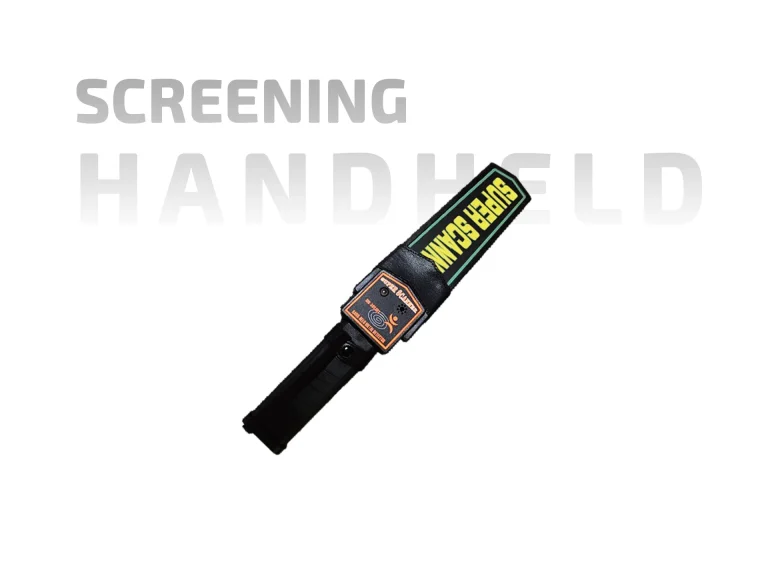
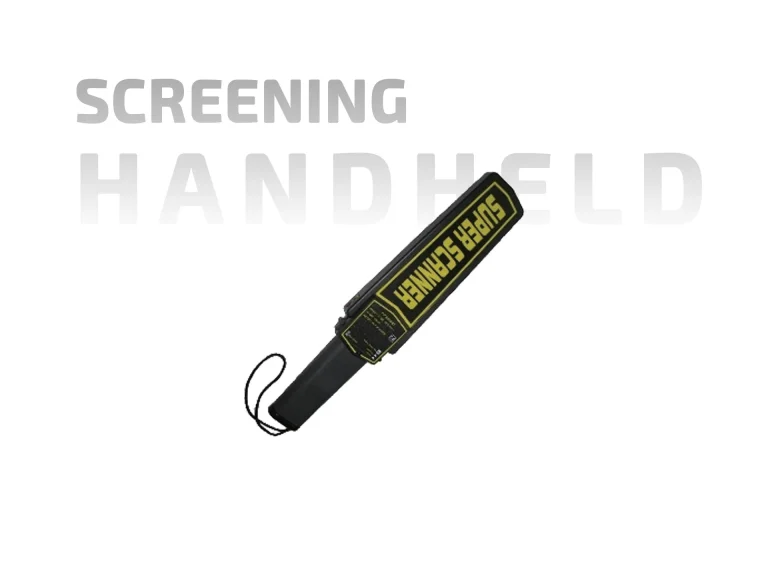
Handheld metal detector prices can look confusing from the outside. A quick search returns units at $40, $150, $600, and beyond, often with similar product photos and broad claims. The gap is not random. It reflects differences in build quality, sensitivity control, battery systems, environmental tolerance, and the level of service behind the product.
This guide is written for buyers who need to budget for a working security tool, not a one-off gadget. It breaks the market into practical price bands, explains what pushes a unit from one band to the next, and highlights the costs that often appear after the purchase order is signed.

The price bands, in plain terms
The table below offers indicative ranges for planning discussions. It is not a vendor quotation, and prices vary by region, order volume, and included accessories.
| Price band | Typical range (USD) | What it usually covers | Common use |
|---|---|---|---|
| Budget wand | $30–$120 | Basic detection, simple controls, plastic housing, limited sensitivity adjustment | Small venues, occasional events, low-risk entrances |
| Professional checkpoint unit | $120–$400 | Better sensitivity control, durable housing, rechargeable battery, audio and vibration alerts | Daily checkpoint duty, corporate security, event lanes |
| High-performance security detector | $400–$1,200 | Advanced signal processing, precise alarm indication, robust construction, compliance documentation | Airports, border control, high-security facilities |
| Specialised or integrated unit | $1,000+ | Application-specific features, training packages, service agreements | Specific threat profiles, integration with other screening equipment |
A budget wand can be adequate for a low-risk site with a well-managed lane. It is unlikely to hold up to daily professional use, where battery life, durability, and consistent sensitivity matter more than the initial price.
What moves a unit up a price band
Several factors separate a basic wand from a professional detector. The table below groups the main drivers.
| Price driver | Effect on price | Why it matters in the field |
|---|---|---|
| Sensitivity adjustment range | Up | Allows the unit to be tuned to the site’s threat profile |
| Alarm modes (audio, vibration, both) | Up | Affects usability in noisy or quiet environments |
| Battery system and runtime | Up | Longer runtime and replaceable batteries reduce mid-shift downtime |
| Build quality and environmental sealing | Up | Impacts durability, repair frequency, and outdoor use |
| Test piece and documented procedure | Slightly up | Supports consistent daily function checks |
| Compliance or certification documents | Up | Required in some regulated environments |
| Warranty length and service terms | Up | Affects lifecycle cost and downtime response |
Buyers should match the price band to the operational role, not to a general preference for “better” equipment. A unit used mainly to resolve gate alarms at occasional events has different requirements from one used at a fixed checkpoint every day.
Costs that often sit outside the quoted price
The listed price may cover only the detector and a basic charger. The following items frequently appear later and should be budgeted explicitly.
-
Spare rechargeable batteries or replacement battery packs
-
Holster, carry case, or designated storage
-
Additional test pieces
-
Training for operators and supervisors
-
Extended warranty or service agreement
-
Replacement search heads or repair parts
-
Charging station or power protection
-
Spare unit for critical lanes
A useful habit is to ask for a three-year total cost estimate that includes batteries, service, and a spare unit where downtime is not acceptable.
How to compare quotes without being misled
Quotes for handheld detectors are easier to compare when vendors itemise the same categories: detector unit, battery and charger, accessories, training, warranty, and service. Ask each vendor to state what is included and what is excluded. A lower quote that omits a test piece, a spare battery, or a service agreement is not necessarily the better value.
It also helps to ask two practical questions:
-
What is the recommended test routine, and is a test piece supplied? A detector without a documented test routine is harder to trust on shift.
-
What happens if the unit fails? Response time and spare-parts availability matter more than a marginal difference in purchase price.
For a broader view of how to select a unit for a defined operational role, see our guide to security handheld detectors. It covers selection criteria, field positioning, and testing routines that sit alongside the price decision.
Final takeaway
Handheld metal detector prices range from under $100 for a basic wand to over $1,000 for a specialised security unit. The right choice depends on the screening task, the operating environment, and the total cost of ownership—not the lowest listed price. Define the role first, compare what each price band actually includes, budget for batteries and service, and confirm the test routine before purchase. That approach turns a crowded price market into a manageable procurement decision.