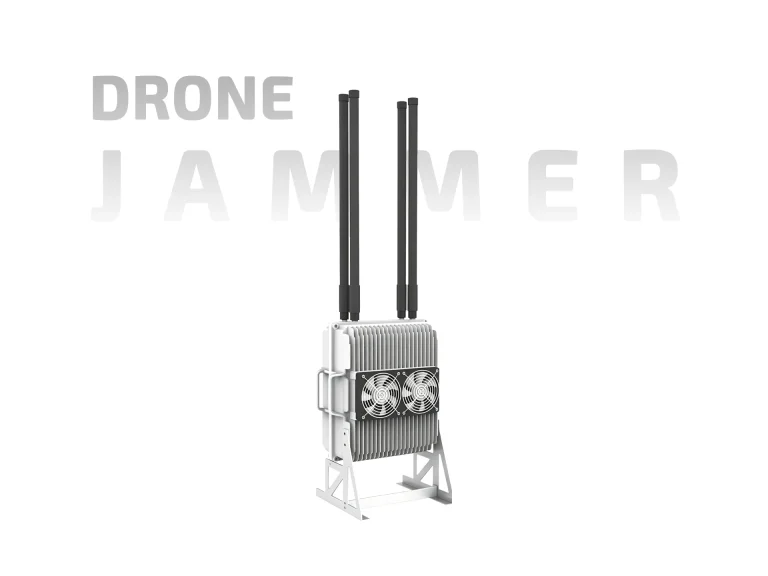
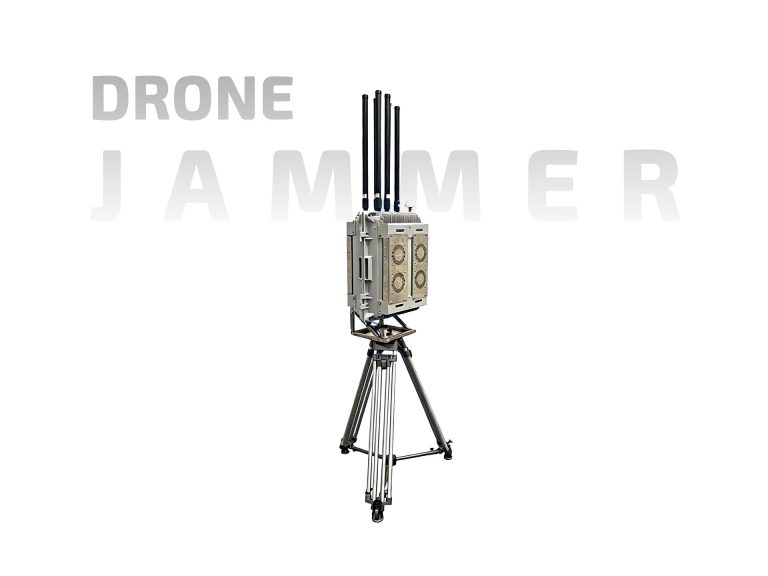
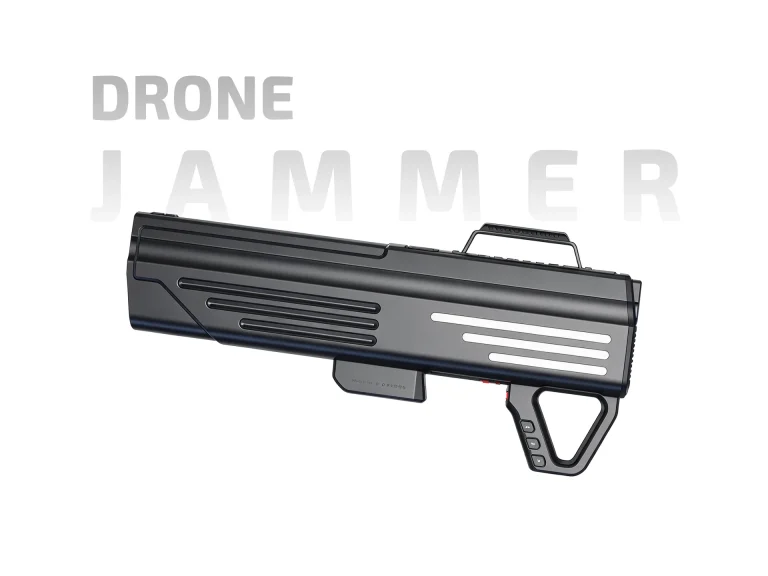
A drone jammer does not “hack” a drone or take over its software. Instead, it uses electromagnetic energy to overwhelm the radio signals a drone depends on. If the drone’s receiver cannot separate the real signal from the noise, communication, video, or navigation can fail.
That sounds simple, but real-world jamming is a layered problem. A drone may use RF for command and control, WiFi for video, and GNSS for position and timing. Each link behaves differently when interference appears. This article explains how drone jammers affect RF, GPS, WiFi, and GNSS—and why the legal and practical limits matter just as much as the technology.

The Core Principle: Winning the Signal-to-Noise Battle
Every wireless receiver needs a usable signal-to-noise ratio. The signal is the meaningful transmission. Noise is everything else competing for the receiver’s attention. A jammer raises the noise floor on a target frequency so the receiver can no longer decode the original signal.
Think of two people talking in a quiet room. Now imagine a loud generator starts running beside them. They may still be speaking, but the listener cannot understand the words. A drone jammer works in a similar way: it does not necessarily destroy the drone; it destroys the receiver’s ability to hear clearly.
Effectiveness depends on several factors: frequency, bandwidth, output power, distance, antenna direction, obstacles, and the drone’s own anti-interference design. This is why a jammer that works against one drone may fail against another.
| Drone Subsystem | Common Bands | What Jamming Does | Typical Drone Reaction |
|---|---|---|---|
| Command and control RF | 2.4 GHz, 5.8 GHz, some sub-GHz | Raises noise on the control link | Failsafe: hover, land, or return-to-home |
| Video and telemetry | 2.4/5.8 GHz, sometimes LTE | Causes packet loss and latency | Video loss; operator loses situational awareness |
| GPS / GNSS | L1, L2, L5 and related bands | Prevents satellite lock | Position drift; no reliable return-to-home |
| WiFi | 2.4 GHz and 5 GHz channels | Forces retries and dropped packets | Control or video loss; failsafe triggered |
RF Jamming: Cutting the Invisible Leash
Most drones rely on radio frequency links for command and control. The controller sends stick inputs, flight mode changes, and sometimes camera commands. The drone sends back telemetry, battery status, and video.
A jammer targeting RF does not need to understand the protocol. It can simply transmit noise or a stronger competing signal on the same frequency. If the drone’s receiver hears more interference than valid data, the link breaks.
However, modern drones often use frequency hopping spread spectrum, or FHSS. The link jumps between many channels every second. A narrowband jammer may only block one channel at a time. A wideband jammer can cover more spectrum, but it wastes power and increases the risk of disrupting other devices.
| Jamming Approach | How It Works | Main Advantage | Main Drawback |
|---|---|---|---|
| Narrowband / spot | Targets a specific frequency | Efficient use of power | Fails against frequency hopping |
| Barrage | Covers a wide band | Hits multiple channels | High power demand; more collateral interference |
| Sweep | Moves quickly across frequencies | Can catch hopping links | May miss fast changes |
| Protocol-aware | Listens and targets active traffic | More precise | Complex; less effective against encryption and hopping |
GPS and GNSS: Why the Distinction Matters
People often say “GPS jamming,” but GPS is only one constellation. GNSS, or Global Navigation Satellite System, includes GPS, GLONASS, Galileo, BeiDou, and regional systems. A jammer aimed at GNSS can affect multiple satellite services at once.
GNSS signals arrive from orbit with very low power by the time they reach Earth. That weakness is useful for receivers, but it also makes them vulnerable to interference. A jammer can transmit noise in the same band, preventing the drone from locking onto satellites.
When GNSS is lost, a drone may not fall from the sky immediately. Many drones use inertial sensors, visual positioning, or barometers for short-term stability. But without GNSS, the drone may drift, lose its return-to-home point, or fail to respect geofencing.
| Feature | Jamming | Spoofing |
|---|---|---|
| Goal | Block or overwhelm signals | Deceive the receiver with false signals |
| Method | Noise or strong interference | Fake but valid-looking signals |
| Receiver effect | Loss of lock | Incorrect position or time |
| Drone effect | Drift, hover, or failsafe | Wrong navigation, false return-to-home |
| Detection | Sudden signal loss | Inconsistent position or timing data |
WiFi Jamming: The Crowded Highway
Many consumer drones use WiFi for video streaming, control, or both. WiFi operates in crowded bands, especially 2.4 GHz. A jammer can make a WiFi channel unusable by raising interference above the level the receiver can tolerate.
WiFi uses carrier sense and retransmission. When interference appears, devices wait, retry, and slow down. Video becomes choppy. Control inputs arrive late. In severe cases, the link drops entirely.
The problem is that WiFi jamming is rarely isolated. The same 2.4 GHz and 5 GHz bands are used by phones, laptops, routers, cameras, and smart home devices. A jammer may affect far more than the intended drone, which is one reason regulators treat jamming as a serious interference risk.
Why Real-World Jamming Is Messy
A drone jammer is not a magic switch. Real-world performance depends on many variables:
-
Distance: Interference weakens with distance, just like the original signal.
-
Antenna direction: Directional antennas can focus energy, but they require aiming.
-
Obstacles: Buildings, trees, and terrain can block or reflect signals.
-
Protocol resilience: FHSS, spread spectrum, and adaptive modulation make jamming harder.
-
Multi-band operation: A drone may use one band for control and another for video. Blocking one may not stop the flight.
-
Failsafe design: Some drones hover; others land, return home, or continue on inertial navigation.
This is why counter-drone systems usually combine detection, identification, and mitigation. Jamming alone may be unreliable, and it can create safety and legal problems.
Legal Reality Check
In many countries, operating a drone jammer is illegal for private citizens. Jamming can disrupt aviation, emergency communications, cellular networks, GPS timing, and public safety systems. Even a low-power device can cause harmful interference beyond the intended target.
Authorized military, law enforcement, and security agencies may use counter-drone systems under specific legal frameworks. For everyone else, understanding how jamming works is useful for defense awareness—but building or using a jammer is not a lawful option in most jurisdictions.
Final Takeaway
So, how does a drone jammer work? It overwhelms the receivers a drone relies on. RF jamming attacks command and control. WiFi jamming disrupts video and data links. GPS and GNSS jamming blocks satellite navigation. The drone’s response depends on which link fails and how its failsafe is configured.
The technology is powerful, but it is not precise, predictable, or legal in most civilian situations. The better path for counter-drone planning is detection, legal mitigation, and layered security—not uncontrolled interference.