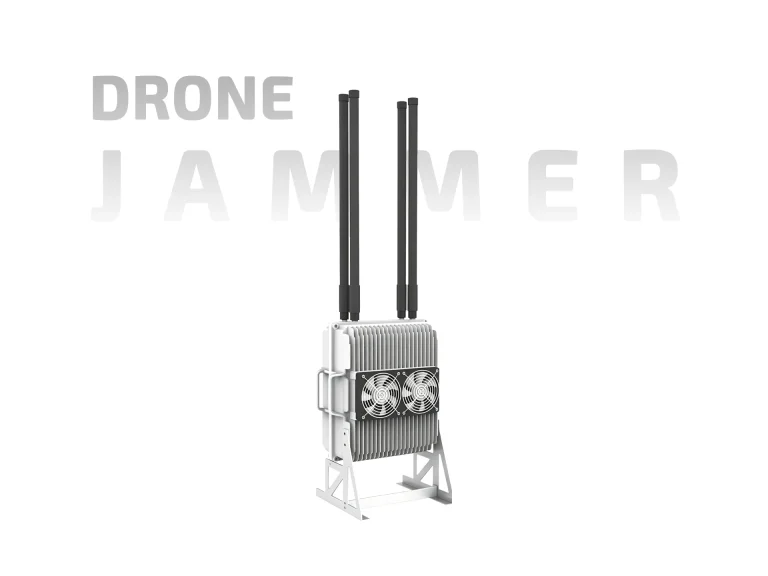
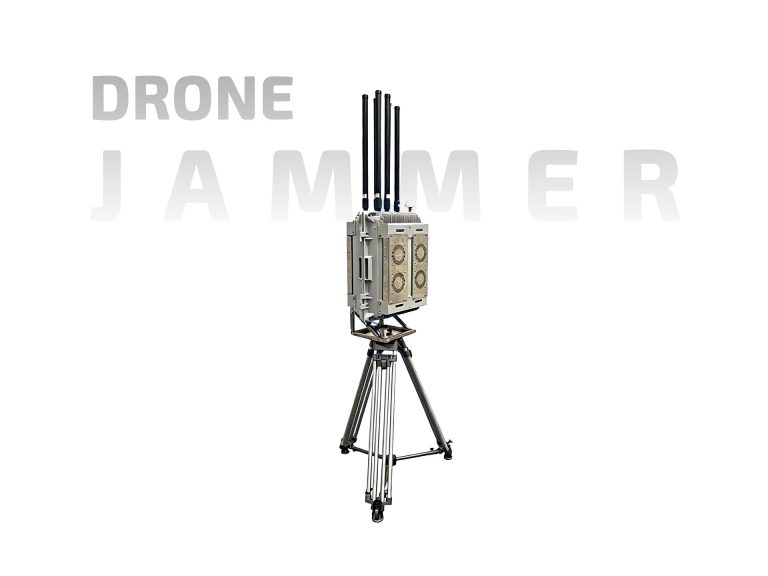
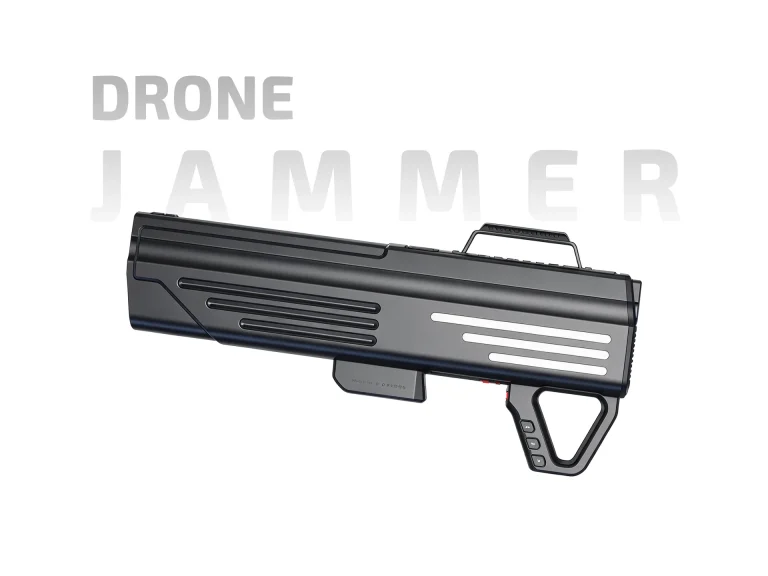
A drone jammer device is often described as if it were a simple black box: point it at a drone, press a button, and the link drops. Field experience is less tidy. The device sits inside a detection-to-decision chain, and its usefulness depends on antenna behavior, spectrum rules, thermal limits, operator training, and the target drone’s control architecture. That is why two devices with similar headline output power can perform very differently in an operational setting.
This article looks at selection and integration issues that tend to surface after the demonstration, when the equipment is exposed to heat, dust, vibration, and real radio environments.

What the device does—and does not do
A drone jammer device typically transmits RF energy in bands used by drone control links, video downlinks, or navigation receivers. In authorized use, it may disrupt command and control, reduce video quality, or complicate navigation. It does not automatically defeat every drone. Pre-programmed autonomous flight, fiber-optic control, and certain inertial navigation approaches can reduce or bypass the effect of RF jamming. That makes detection and classification essential: the operator needs to know what kind of drone is being addressed before selecting a mitigation path.
This is also why jammer selection should not be separated from the wider C-UAS architecture. For a procurement-level view of sensors, command and control, and mitigation layers, see Military Anti-Drone Systems: C-UAS Buyer’s Guide.
Device formats and mission fit
The same RF module can be packaged for very different users. The packaging determines who can carry it, how quickly it can be deployed, and how much sustained output is realistic.
| Format | Best fit | Strengths | Field constraints |
|---|---|---|---|
| Handheld directional device | Dismounted security, checkpoint response, rapid visual cue | Fast to aim, portable, intuitive for trained operators | Limited duty cycle, battery dependence, line-of-sight aiming pressure |
| Manpack or backpack system | Patrols and temporary sites | Higher power potential than handheld, flexible placement | Weight, antenna setup time, operator fatigue |
| Vehicle-mounted system | Convoy escort and mobile response | Higher sustained power, integration with vehicle power and sensors | Vibration, thermal management, antenna placement, crew workload |
| Fixed-site installation | Persistent base or critical-site defense | Stable power, layered antennas, integration with fixed sensors | Infrastructure cost, coverage gaps, civil spectrum coordination |
| Distributed hybrid | Mixed fixed and mobile operations | Flexible cueing and layered coverage | Integration complexity, common operating picture, training consistency |
A common error is to compare only output power. A lower-power directional device with good antenna gain and stable thermal design may be more useful at a checkpoint than a higher-power omnidirectional unit that creates unnecessary spectrum spread and operator uncertainty.
Specifications that matter after the demo
Vendor demonstrations often happen in clean RF conditions and short bursts. Operational use exposes different priorities.
| Specification area | Why it matters | Field question |
|---|---|---|
| Frequency coverage | Drone links vary by manufacturer, region, and model | Does the device cover the bands actually observed in the area, without assuming one universal set? |
| Output power and antenna gain | Effective radiated power depends on both | Is the claimed performance based on the antenna supplied, or on a laboratory setup? |
| Directionality | Affects selectivity and collateral spectrum impact | Can the operator aim and confirm the affected sector? |
| Duty cycle and thermal design | Sustained operation generates heat | What is the realistic continuous operating time at specified ambient temperature? |
| Power source | Batteries and vehicle power impose limits | How many operational cycles are available, and how long does recharge or swap take? |
| Control interface | Operators make decisions under time pressure | Are controls clear, logged, and resistant to accidental activation? |
| Detection integration | Jamming without classification invites mistakes | Can the device receive cues from RF, radar, or EO/IR sensors? |
| Compliance and logging | Authorization and accountability matter | Does the system record activation, duration, and operator identity? |
The integration gap
A drone jammer device becomes more valuable when it is not treated as an isolated tool. Integration can mean a simple cue from an RF detection sensor, a common track picture, or a controlled workflow that requires operator confirmation before transmission. The goal is not to automate engagement blindly; it is to reduce the time between recognizing a threat and choosing an authorized response.
Integration also affects training. If the jammer uses a different interface, power standard, and reporting process from the rest of the C-UAS stack, operators will either ignore it or use it inconsistently. Procurement teams should ask how the device fits existing command-and-control workflows, how firmware updates are managed, and whether activation logs can be exported for review.
Compliance and spectrum discipline
RF transmission is a regulated activity. A device that performs well technically may still be unsuitable if it lacks the required approvals, creates unacceptable interference, or cannot be used within the organization’s rules of engagement. Buyers should examine spectrum authorization, export controls, training requirements, safety procedures, and the process for coordinating with civil aviation or local regulators. These are not administrative details; they determine whether the device can actually be used in the intended environment.
Procurement signals worth noticing
Mature suppliers tend to talk about operating conditions rather than only peak power. They provide realistic duty-cycle data, antenna patterns, power budgets, maintenance intervals, and clear assumptions about what the device can and cannot defeat. They also separate detection from mitigation and acknowledge that a drone jammer device is one layer in a broader counter-drone system.
Less mature offerings often rely on vague range claims, omit thermal and power details, or present jamming as a universal solution. Those gaps tend to become expensive after deployment, when operators discover that the device works well in a demonstration but not in a hot, dusty, or spectrum-congested environment.
Closing perspective
Selecting a drone jammer device is less about finding the highest number on a specification sheet and more about matching format, RF behavior, thermal endurance, integration, and compliance to the mission. The device should support a trained operator inside a layered C-UAS architecture—not replace the architecture itself.