Before you add a drone jammer to your shopping cart, stop. In most countries, buying and using a jammer is not like buying a radio or a security camera. It is a regulated activity that can land you in serious legal trouble. This guide is written for security professionals, procurement officers, and government buyers who need to understand the market. It is not an invitation to break the law.
If you are a private citizen hoping to protect your property, read the legal section first. You may discover that a jammer is the wrong tool for your situation.

The First Question: Are You Legally Allowed to Buy One?
This is not a minor detail. It is the single most important factor in any drone jammer buying decision. Radio spectrum is public infrastructure. Jamming it can disrupt emergency calls, aviation, and critical communications.
| Region | Private purchase | Private use | Government use |
|---|---|---|---|
| United States | Generally illegal | Illegal | Federal agencies under strict rules |
| European Union | Illegal in most states | Illegal | Authorized agencies only |
| United Kingdom | Illegal | Illegal | Police and military with authorization |
| Australia | Prohibited | Prohibited | Limited government use |
| Middle East / Asia | Varies widely | Often restricted | Security forces and military |
If you are a private company, your legal path is usually detection, tracking, and coordination with law enforcement. Do not buy a jammer unless your legal counsel confirms you have the authority to operate one.
Know What You Are Actually Buying
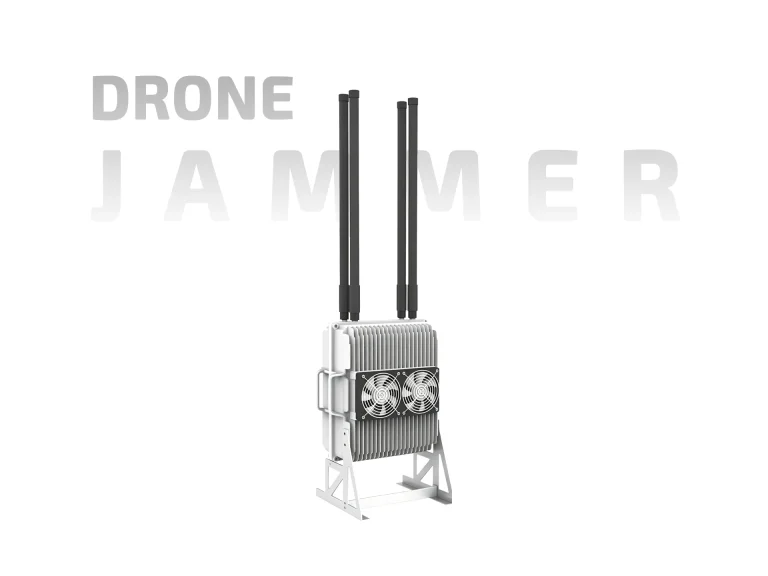
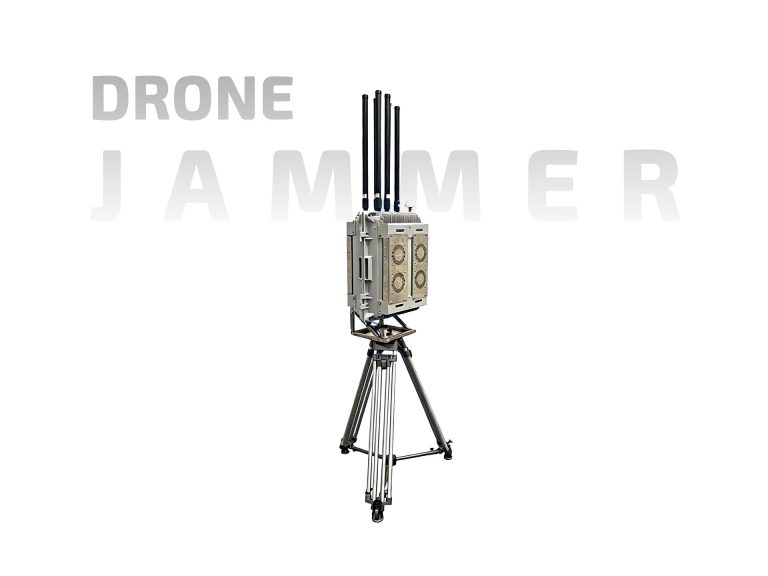
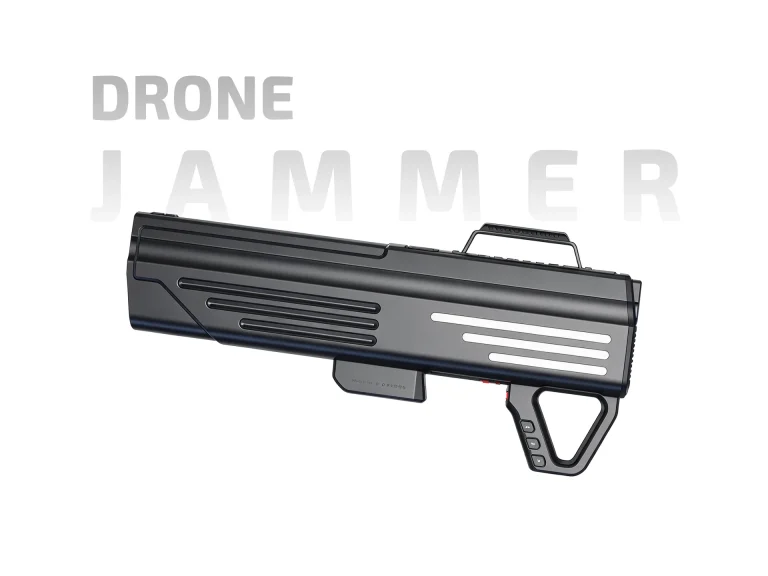
The term “drone jammer” covers a wide range of devices. Some are handheld units that look like walkie-talkies. Others are vehicle-mounted systems or fixed installations that cost more than a car. Before comparing prices, decide which category fits your operational need.
| Type | Form factor | Typical range | Best for | Watch out for |
|---|---|---|---|---|
| Handheld | Pistol grip or briefcase | 100–500 m | Close protection, convoys | Short battery life, limited power |
| Vehicle-mounted | Roof or trunk | 500 m–2 km | Mobile patrols, border units | Power draw, cooling needs |
| Fixed-site | Mast or building | 1–5 km+ | Airports, prisons, bases | High cost, regulatory hurdles |
| Multiband | Combined unit | Varies | Comprehensive disruption | Complexity, collateral interference |
| GNSS-only | Targeted satellite | Varies | Anti-navigation | Does not stop manually flown drones |
A handheld jammer may be enough for a single guard post. A prison perimeter needs a fixed system with continuous power and integration with detection sensors.
Frequency Bands: The Spec That Matters Most
A jammer is only effective if it targets the frequencies the drone actually uses. Most consumer drones use 2.4 GHz and 5.8 GHz. Long-range or custom drones may use 433 MHz, 868 MHz, or 915 MHz. Navigation depends on GPS, GLONASS, Galileo, or BeiDou.
| Band | Common use | Jamming difficulty |
|---|---|---|
| 2.4 GHz | Control, video, telemetry | Easy, widely covered |
| 5.8 GHz | Video, high-bandwidth links | Moderate |
| 433 / 868 / 915 MHz | Long-range control | Varies by region |
| GPS L1 | Navigation | Easy, but affects other GPS users |
| Multiband GNSS | Navigation | Complex, higher cost |
Do not buy a jammer that covers only one band unless you know your threat uses only that band. Multiband jammers cost more but handle more scenarios.
Power, Range, and Realistic Expectations
Marketing materials love to promise long range. Real-world jamming range depends on many factors, and the number on the box is often measured under ideal conditions.
| Factor | Effect on range |
|---|---|
| Transmitter power | Higher power generally means longer range |
| Antenna type | Directional antennas focus energy and extend range |
| Terrain | Open fields extend range; buildings and hills reduce it |
| Weather | Heavy rain and humidity can absorb signals |
| Drone receiver | More sensitive receivers are harder to jam |
| Drone autonomy | Autonomous drones may ignore jamming entirely |
A jammer rated for 1 km may only achieve 200–300 meters in a dense urban environment. Ask vendors for test data in conditions similar to yours, not laboratory numbers.
Legal, Safety, and Ethical Considerations
Even if you are legally authorized, jamming carries risks. You can interfere with:
-
Emergency services and police radios
-
Aviation communication and navigation
-
Nearby Wi-Fi and Bluetooth devices
-
Medical telemetry and industrial control systems
A jammer does not discriminate. It affects any device operating on the same frequency. This is why jamming is usually a last resort, not a first response. Many counter-drone programs prefer detection, tracking, and protocol takeover because they are more targeted and create fewer collateral problems.
Total Cost of Ownership
The purchase price is only the beginning. Budget for installation, training, maintenance, and legal compliance.
| Cost category | Typical share of five-year TCO |
|---|---|
| Hardware | 40–60% |
| Installation and mounting | 10–20% |
| Training | 5–10% |
| Maintenance and spares | 10–15% |
| Legal and compliance | 5–10% |
| Staffing | Often the largest cost |
A cheap jammer that breaks after six months is not a bargain. Buy from a manufacturer that offers support, spare parts, and software updates.
Vendor Evaluation Checklist
Use this checklist when comparing suppliers.
| Question | Why it matters |
|---|---|
| Do you have references in my region and industry? | Local experience reduces risk |
| Can you provide test data in similar environments? | Lab numbers are often misleading |
| What is the software update policy? | Drone technology changes quickly |
| What training is included? | Operators need to know how to use it safely |
| What is the warranty and support response time? | Downtime is a security gap |
| Are all features legal in my jurisdiction? | Protects you from fines and criminal charges |
| Can you provide a five-year TCO estimate? | Reveals hidden costs |
A vendor that cannot answer these questions is not ready for a serious procurement.
Common Mistakes to Avoid
-
Buying on price alone without checking legal status.
-
Assuming one jammer covers all drones and frequencies.
-
Ignoring collateral interference with nearby systems.
-
Skipping a site survey before installation.
-
Failing to train operators on rules of engagement.
-
Buying a jammer when detection would solve the problem.
The most common mistake is treating a jammer as a standalone solution. In reality, it works best as part of a layered system that includes detection, tracking, and clear standard operating procedures.
Final Recommendations
If you are legally authorized to buy a drone jammer, follow these steps:
-
Confirm your legal authority in writing.
-
Define the threat and the frequencies involved.
-
Choose the right form factor for your site.
-
Request test data and references.
-
Insist on a pilot or trial period.
-
Budget for five-year total cost of ownership.
-
Train operators on legal and safety limits.
-
Integrate the jammer with detection and tracking systems.
If you are not legally authorized, do not buy one. Invest in detection, tracking, and coordination with law enforcement instead. That is the path that keeps you compliant and effective.