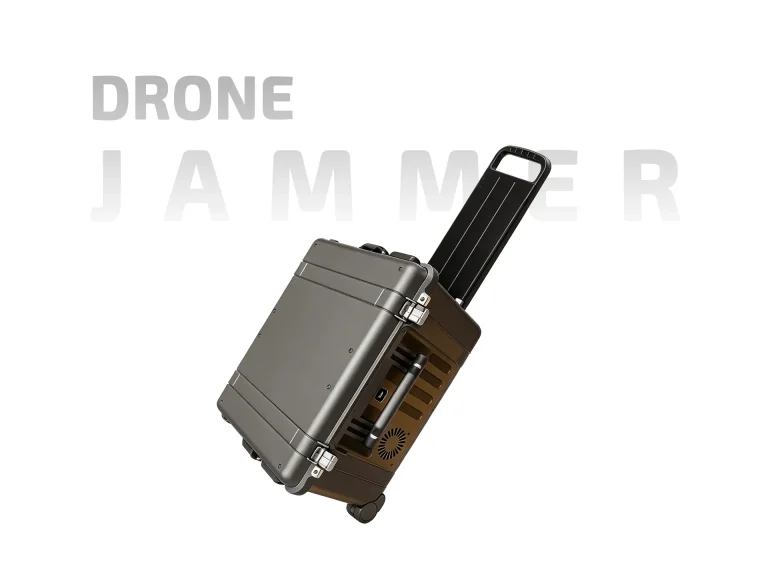
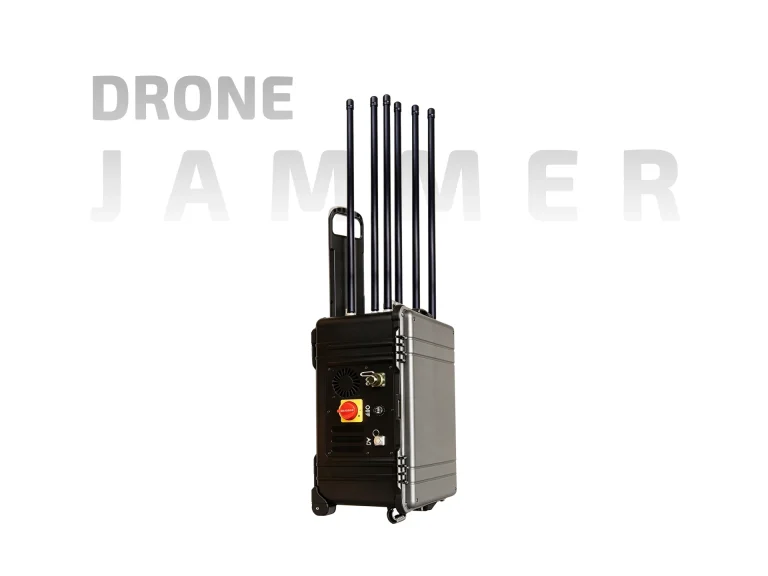
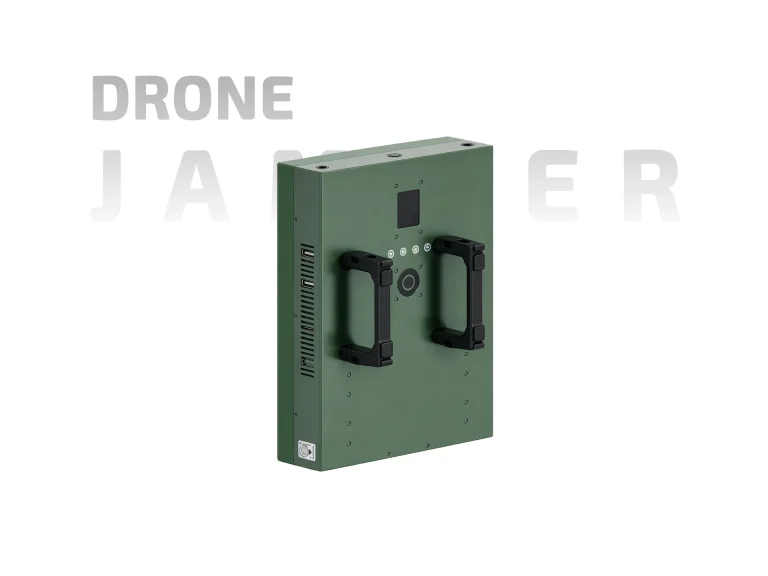
The portable drone jamming system has emerged as a critical tool for security forces worldwide. As unauthorized Unmanned Aerial Systems (UAS) become more sophisticated, the need for mobile, on-the-go defense mechanisms has skyrocketed. Unlike stationary towers, these handheld or backpack-sized devices offer flexibility where fixed infrastructure fails.

What is a Portable Drone Jamming System?
At its core, a portable drone jamming system is a mobile electronic warfare device designed to disrupt the communication link between a drone and its remote controller. By emitting high-power radio frequency (RF) noise in specific bands—typically 2.4 GHz and 5.8 GHz—the device forces the drone to either land vertically or initiate a Return-to-Home (RTH) protocol.
These systems are distinct from their vehicle-mounted or fixed-site counterparts due to their form factor. They are designed for a single operator to carry and deploy rapidly, often weighing under 10 kilograms.
Key Frequency Bands Disrupted
To understand the efficacy of these devices, one must look at the spectrum they target. Most commercial drones rely on specific frequencies for control and video transmission.
| Frequency Band | Primary Function | Jamming Effect |
|---|---|---|
| 2.4 GHz | Remote Control (RC) & Telemetry | Severs the pilot’s control link; triggers fail-safe landing. |
| 5.8 GHz | Video Feed Transmission | Blinds the operator; eliminates real-time surveillance. |
| 1.5 GHz (GPS L1) | Global Positioning System | Prevents waypoint navigation and prevents RTH (forcing hover/landing). |
| 433 MHz / 868 MHz | Long-range Control (Industrial) | Disrupts low-frequency command links for specialized UAVs. |
Note: Effective operation requires precise targeting of these bands without interfering with local critical communications.
Why Mobility Matters in Modern Defense
Fixed-site systems are excellent for permanent assets like prisons or airports. However, the battlefield and civilian security landscapes are dynamic. A portable drone jamming system fills the gap for mobile patrols, VIP protection details, and rapid response teams.
Use Case Scenarios
-
Border Control: Patrol units can carry the system in a vehicle and activate it only when a smuggling drone is spotted.
-
VIP Convoys: A vehicle-mounted portable system can create a moving “safe bubble” around a motorcade.
-
Prison Security: Guards on foot patrol can use handheld units to stop contraband deliveries in blind spots.
For a deeper comparison between fixed and mobile solutions, you can read our guide on [fixed-site counter-drone technologies].
The Technology Inside: How RF Disruption Works
It is important to clarify that a portable drone jamming system does not “hack” the drone. It is not a cyber-attack tool. Instead, it is a brute-force Electronic Countermeasure (ECM).
The device floods the specific frequency bands with white noise. When the Signal-to-Noise Ratio (SNR) drops below the drone’s operational threshold, the command link is lost.
Key Components of a Portable Unit
To achieve military-grade reliability in a lightweight package, these systems typically include:
-
Directional Antennas: To focus energy on the target and reduce collateral interference.
-
Solid-State Amplifiers: For efficient power consumption and durability.
-
Thermal Management: Heat sinks and fans are crucial for sustained operation.
-
Battery Packs: Lithium-ion or LiFePO4 batteries providing 30–60 minutes of continuous jamming.
Video Insight: [Placeholder for Video: “Field Test: Portable Drone Jamming System in Action”] – Watch how a handheld unit forces a DJI Phantom to land in a controlled environment.
Selecting the Right Equipment
Not all jammers are created equal. When procuring a portable drone jamming system, buyers must look beyond the price tag. The market ranges from low-cost “criminal” jammers (which are illegal in many jurisdictions) to professional-grade tactical gear.
Evaluation Criteria Table
| Feature | Low-End Civilian | Professional Tactical |
|---|---|---|
| Range | 100–300 meters | 1,000–2,000+ meters |
| Cooling | Passive (Heats up fast) | Active Liquid/Fan Cooling |
| Bands | 2.4/5.8 GHz only | Multi-band (incl. GPS, 433, 900) |
| Build | Plastic casing | Ruggedized Aluminum/MIL-STD |
| Response Time | 5–10 seconds | < 2 seconds |
| Regulation | Often illegal to use | Licensed for Gov/Military |
The Importance of Cooling
One of the biggest differentiators is thermal management. A powerful portable drone jamming system generates significant heat. If the device overheats, the amplifiers shut down to protect themselves, leaving you vulnerable. Look for systems with active cooling systems that allow for continuous operation.
Regulatory and Legal Landscape
It is crucial to note that the use of a portable drone jamming system is strictly regulated. In the United States, for example, the FCC prohibits the operation of jammers by private citizens. Only federal agencies (like the DHS or DOJ) have the authority to deploy this technology.
However, many countries in Europe and Asia allow licensed security firms to use these devices for critical infrastructure protection. Always verify local laws before purchasing. For a deeper dive into the regulations, visit our [compliance and legal resource page].
Future Trends: AI and Portability
The future of portable counter-drone tech lies in automation. Currently, an operator must visually acquire the drone and aim the jammer. Future systems will feature integrated RF detectors that automatically aim the jammer in the direction of the threat, even before the naked eye can see it.
Furthermore, we are seeing a push toward “RF-cyber” hybrid systems. These portable units will not only jam the signal but also attempt to take over the drone using protocol vulnerabilities, allowing for a controlled landing rather than just a “drop.”
Conclusion
The portable drone jamming system is a vital asset in the evolving world of airspace security. Whether you are protecting a forward operating base or a high-profile event, the ability to disrupt enemy surveillance and potential payload delivery is invaluable. As drones become cheaper and more autonomous, the technology to counter them must become faster, lighter, and smarter.