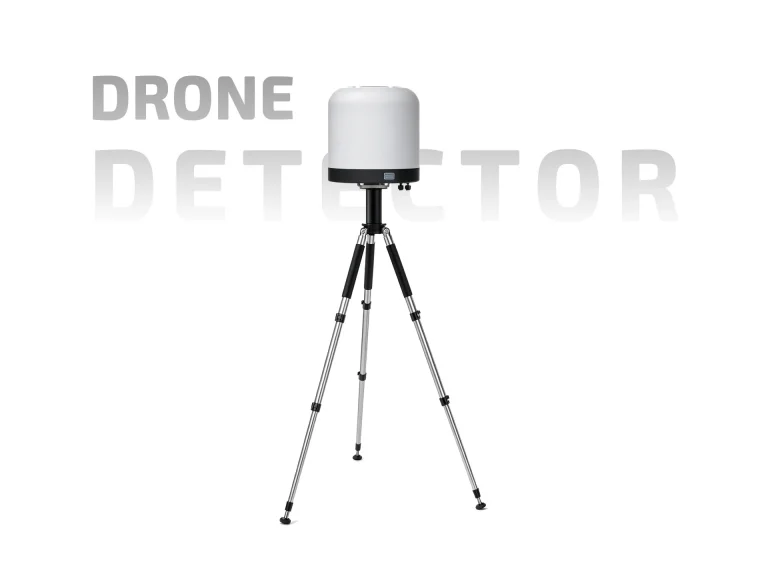
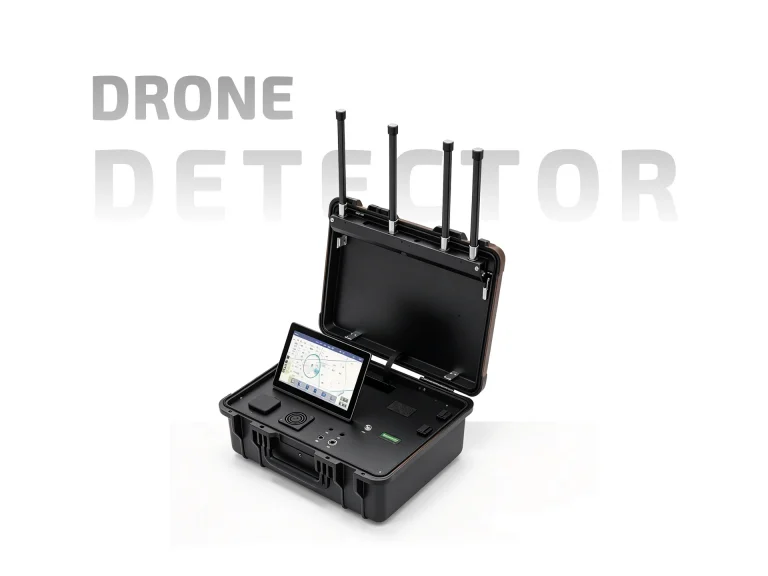
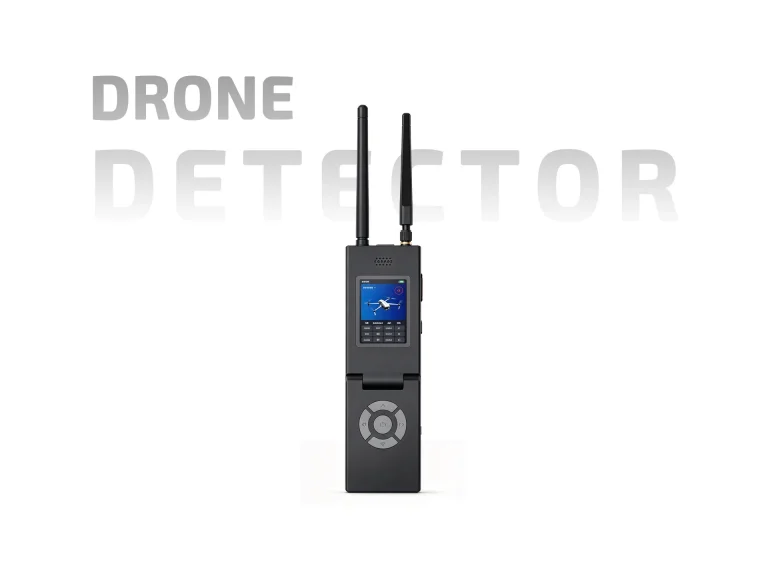
Ask three vendors which drone detection technology is best, and you will get three confident answers. Each will be correct—for the specific threat and environment that vendor knows best. The real question is not which sensor wins in a lab. It is which sensor, or combination of sensors, fits your airspace, your budget, and your legal authority.
Radar, RF, and acoustic detection each work on a different physical principle. They see different things, fail in different conditions, and cost different amounts to deploy. Understanding those differences is the only way to avoid buying the wrong system.

The Honest Answer: It Depends on the Mission
There is no universal best drone detection technology. A radar that performs brilliantly around an airport may be overkill for a small private estate. An RF sensor that identifies a drone model and locates the operator may be completely blind to an autonomous drone flying a pre-programmed route. An acoustic array that hears a quadcopter in a quiet rural area may be useless next to a highway.
Most serious counter-drone deployments use more than one sensor. The goal is to cover each technology’s blind spots with another technology’s strengths.
Radar: The Active Tracker
Radar transmits radio waves and listens for reflections. When a drone moves through the beam, the radar calculates range, speed, direction, and sometimes altitude. Because it does not rely on the drone transmitting anything, radar can detect autonomous drones that emit no control or video signals.
Radar is strongest when you need wide-area coverage and reliable tracking of moving objects. It is also the best option for detecting drones that have gone silent or are flying a fixed route.
Its weaknesses are equally important. Small consumer drones have a tiny radar cross-section, which makes them hard to see at long range. Ground clutter, buildings, trees, and even heavy rain can create false alerts. High-quality radar is expensive, and in some countries its use requires licensing.
| Radar Strengths | Radar Weaknesses |
|---|---|
| Detects autonomous and silent drones | Struggles with small, low-flying drones |
| Provides range, speed, and heading | Affected by clutter and weather |
| Works day and night | High cost for good performance |
| Wide-area coverage | May require frequency licensing |
| Does not rely on drone emissions | Limited model identification |
RF: The Passive Listener
RF detection listens for the radio signals a drone uses to communicate. These include command-and-control links, video downlinks, and telemetry. Because it is passive, RF detection does not transmit anything. It simply monitors the spectrum.
The biggest advantage of RF is information. A good RF system can identify the drone protocol, sometimes the model, and often the direction of the signal. With multiple receivers or direction-finding antennas, it can estimate the operator’s location. That is extremely valuable for security teams who need to respond, not just observe.
The biggest limitation is also obvious: if the drone is not transmitting, RF cannot detect it. Autonomous drones, drones in radio silence mode, and drones using pre-programmed waypoints may be invisible to RF sensors. Urban RF noise can also reduce performance, and privacy rules may restrict how RF data can be collected and stored.
| RF Strengths | RF Weaknesses |
|---|---|
| Passive and low interference risk | Blind to silent or autonomous drones |
| Can identify protocol and model | Performance drops in noisy RF environments |
| Can locate the operator | Privacy and data rules apply |
| Lower cost than radar | Limited range in cluttered areas |
| Works well in populated areas | Requires known signal libraries |
Acoustic: The Close-Range Ear
Acoustic detection uses microphones to pick up the sound of drone propellers. It is passive, relatively inexpensive, and can detect drones that emit no RF signals. In quiet environments, an acoustic array can provide useful warning at short range.
The problem is noise. Cities, highways, industrial sites, wind, and rain all mask propeller sounds. Acoustic systems also have limited range compared with radar and RF. They are best used as a supplementary layer, not as a primary detection method.
| Acoustic Strengths | Acoustic Weaknesses |
|---|---|
| Passive and low cost | Very short range |
| Detects some silent drones | Easily masked by ambient noise |
| Useful in quiet, fixed sites | Poor performance in cities |
| Low power consumption | Limited tracking capability |
| Can confirm visual/radar alerts | Affected by wind and weather |
Head-to-Head Comparison
The table below summarizes the practical differences between the three technologies.
| Criteria | Radar | RF | Acoustic |
|---|---|---|---|
| Detection principle | Active radio reflections | Passive radio listening | Passive sound detection |
| Detects autonomous drones | Yes | No | Sometimes |
| Identifies drone model | Limited | Strong | No |
| Locates operator | No | Often yes | No |
| Typical range | Long | Medium | Short |
| Urban performance | Moderate | Good | Poor |
| Rural performance | Strong | Strong | Good |
| Weather impact | Moderate to high | Low | High |
| Relative cost | High | Medium | Low |
| Best role | Wide-area tracking | Identification and operator location | Close-range confirmation |
Matching Technology to the Mission
Different sites need different primary sensors. The table below offers a starting point.
| Scenario | Primary Technology | Why | Useful Add-On |
|---|---|---|---|
| Airport perimeter | Radar | Wide-area tracking of all moving targets | RF for identification |
| Prison | RF | Detects control links and operator location | Radar for silent drones |
| Corporate campus | RF | Lower cost, good urban performance | Acoustic for confirmation |
| Critical infrastructure | Radar + RF | Covers both emitting and silent drones | EO/IR cameras |
| Temporary event | RF | Fast setup, portable, low interference | Acoustic |
| Rural border | Radar | Long-range coverage | RF |
| Quiet private estate | Acoustic + RF | Low cost, low power | Camera |
Where Each Technology Fails
Every sensor has a failure mode. Knowing them prevents unpleasant surprises.
| Technology | Common Failure Mode |
|---|---|
| Radar | Misses small drones at long range; false alarms from clutter |
| RF | Misses autonomous or silent drones; struggles in dense spectrum |
| Acoustic | Masked by noise; very limited range |
| Any single sensor | Cannot provide complete situational awareness alone |
The Case for Sensor Fusion
If budget allows, the strongest approach is sensor fusion. Radar detects the moving object. RF identifies the protocol and points to the operator. Acoustic or EO/IR confirms the target visually. Software correlates the data and reduces false alarms.
Fusion is not just about adding more hardware. It is about combining different physical measurements so the system can make better decisions. A radar track with no RF signal may indicate an autonomous drone. An RF alert with no radar track may indicate a drone behind a building. Together, the picture is clearer.
Procurement Notes
Before choosing a technology, ask these questions:
-
What drone threats are most likely in your area?
-
Do you need to detect silent or autonomous drones?
-
Do you need to locate the operator?
-
What is your coverage area and terrain?
-
How noisy is the RF and acoustic environment?
-
What does local law allow you to detect, record, and store?
-
Who will monitor the system, and how will they respond?
-
What is your total budget, including installation and maintenance?
Bottom Line
Radar is best for wide-area tracking and silent drones. RF is best for identification and operator location. Acoustic is best for short-range, low-cost confirmation in quiet environments. No single technology is best in every situation.
If you can only choose one, choose based on your primary threat. If you can afford two, combine RF with radar or RF with acoustic. If you are protecting a high-value site, use a multi-sensor fusion platform. The best drone detection technology is not the most powerful one—it is the one that gives your team reliable, actionable information at the moment it matters.