October 22, 2026
50W LoRa Drone Jammer Module: Design & Compliance
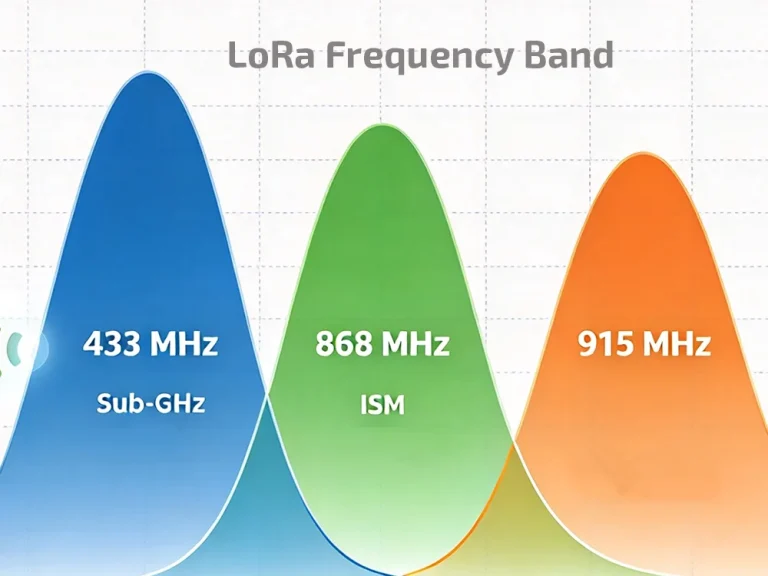
A practical industry overview of 50W LoRa drone jammer modules: RF design, thermal management, EMC, compliance, and authorized deployment.

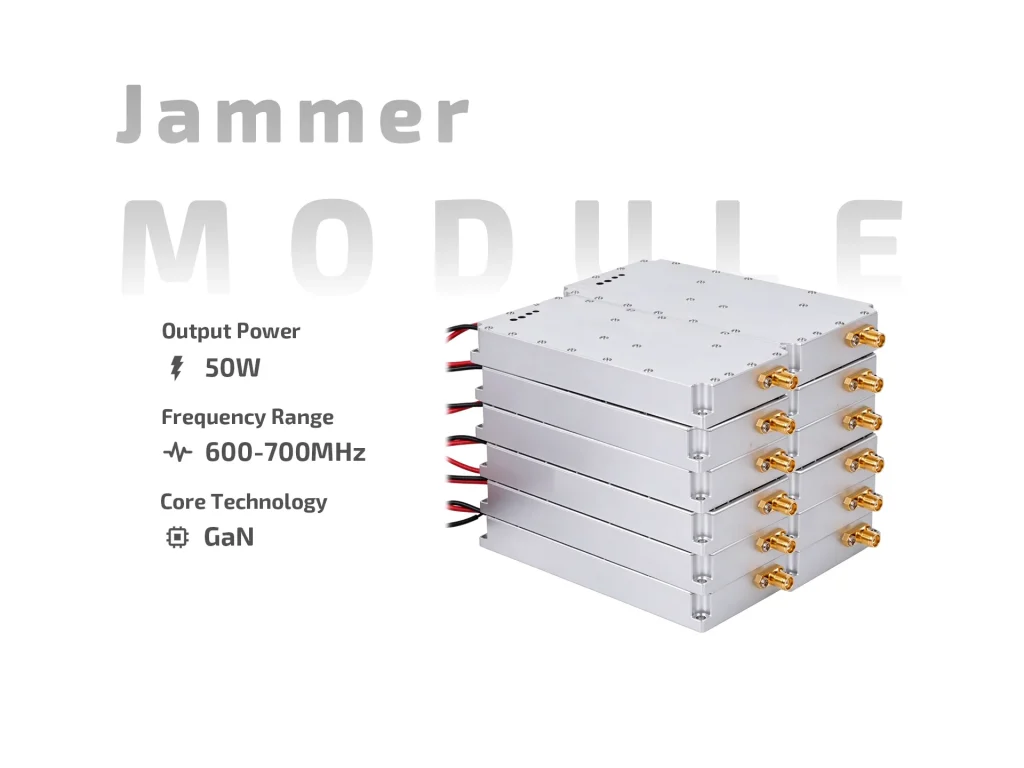
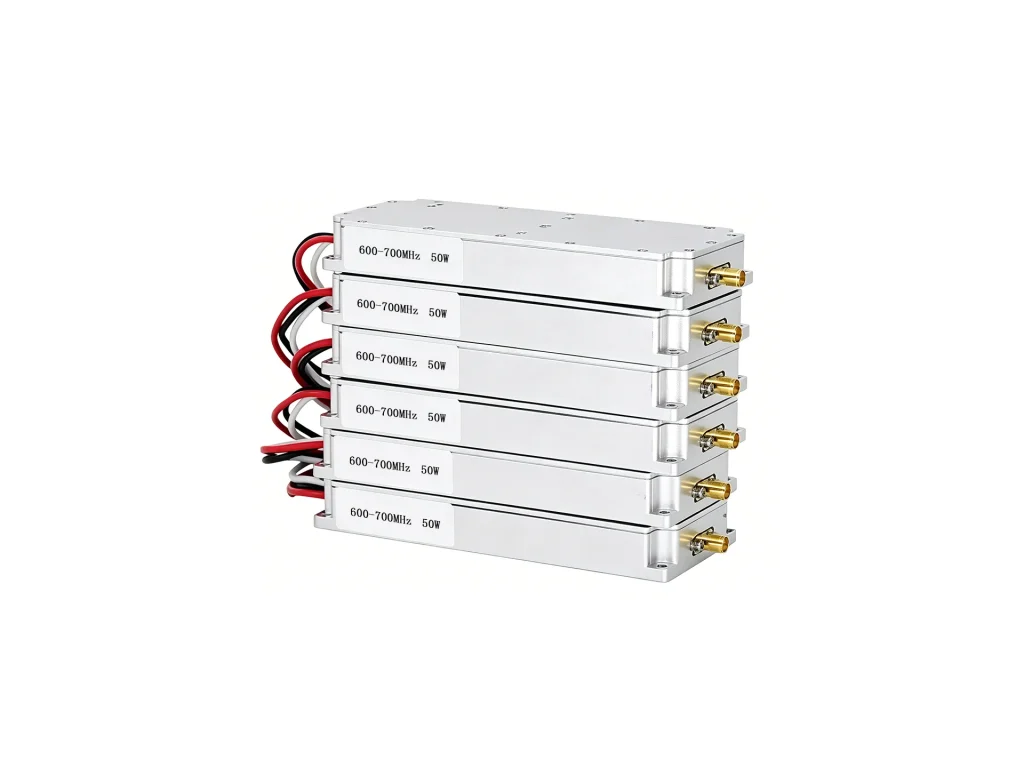
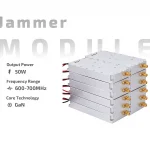
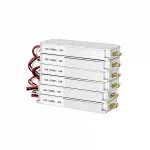
JM0607G50 50W anti-drone jammer module covers 600-700MHz with 47±1dBm output, 28V input, 270KHz scan, SMA female, and custom options.
The JM0607G50 is a 50W anti-drone jammer module built for 600–700MHz countermeasure work. It combines a GaN power stage with an internal high-speed noise modulation source, giving integrators a compact block for video transmission and signal shielding tasks. The module is aimed at OEM users who need stable RF output in a small housing, not a finished consumer device.

At the core is a 47±1dBm output stage, equivalent to about 50W. The 600–700MHz band is often used by analogue and digital video links, so the module can be paired with directional antennas or sector housings. GaN devices keep the package small while handling the thermal load. Output should be terminated correctly and never run without a suitable load or antenna.
The unit runs from 24–28V, with 28V as the nominal figure. Current draw is ≤3.2–4.5A depending on operating conditions and output setting. A built-in high-speed noise modulation source removes the need for an external baseband generator in many builds. For OEM projects, the source can be customized as VCO, DDS or SDR. LED status covers power, overvoltage and over-temperature.
Scanning speed is 270KHz as standard, and 100–500KHz is available on request. That range helps systems cover different sweep patterns without changing the RF front end. The SMA female connector keeps cable choice simple. Measuring 117*58*18mm and weighing about 300g, the module fits handheld, vehicle and fixed installations where space is tight.
Operating temperature is -20 to +65°C. Good thermal contact to the enclosure is important because 50W modules concentrate heat in a small area. Use a heatsink or metal chassis, keep airflow paths clear, and respect the over-temperature indicator. For outdoor housings, protect the SMA joint and manage condensation.
The JM0607G50 can be adapted for different integration needs. Frequency range, scanning speed, signal source, connector layout and dimensions can be discussed. This makes the 50W anti-drone jammer module suitable for system builders who want a known RF block rather than a full box. Early discussions should cover antenna VSWR, duty cycle, power supply ripple and thermal design.
GaN transistors tolerate higher power density than older silicon parts in the same footprint. In this 50W anti-drone jammer module, that helps keep the 117*58*18mm body practical while leaving room for the modulation board. The benefit is not just raw output; it also supports cleaner assembly and easier thermal coupling to a metal case. Integrators should still derate the module for continuous duty and check junction temperatures in the final housing.
The standard input is an internal high-speed noise modulation source. Some projects prefer VCO, DDS or SDR control instead, and these can be quoted as options. The choice affects sweep shape, repeatability and interface design. Noise modulation is straightforward for wideband masking, while DDS and SDR offer more flexible patterns when the system needs defined steps or software control. Match the source to the mission and the available control board.
Mount the module on a flat metal surface using the fixing points shown in the final drawing. Keep the SMA female connector free of strain and use a short, low-loss cable where possible. Check VSWR before applying full power; a poor antenna can reflect energy back into the GaN stage. Add DC fuse and reverse-polarity protection in the host system. These small steps improve service life and reduce avoidable returns.
Confirm the target band, required sweep rate and control interface before ordering. The 50W anti-drone jammer module is not a plug-and-play finished product; it needs a proper RF path, DC protection and mechanical support. Test with a power meter and suitable attenuator, not a direct receiver. Keep emissions within local rules and use the module only in authorized applications.
When requesting a quote for JM0607G50, state band, output, scan rate, source type, connector and housing needs. Custom work is easier when antenna gain and duty cycle are known. Samples can be discussed for qualified projects.
| Parameter | Specification | Notes |
| Frequency range | 600–700MHz | Module supports customization |
| Operating voltage | 28V | 24–28V |
| Operating current | ≤3.2–4.5A | At 50W output |
| Output power | 47±1dBm | 50W |
| Scanning speed | 270KHz | Customizable 100–500KHz |
| Input signal source | Built-in high-speed noise modulation source | Customizable VCO, DDS, SDR |
| Operating temperature | -20~+65℃ | Normal operation |
| Connector | SMA female | |
| LED indicators | Power switch, overvoltage, over-temperature | |
| Dimensions | 117*58*18mm | Customizable |
| Weight | 300g | - |
A practical industry overview of 50W LoRa drone jammer modules: RF design, thermal management, EMC, compliance, and authorized deployment.
Explore 5.8GHz 50W drone jammer module design: band physics, EIRP, thermal challenges, antenna matching and integration checkpoints.
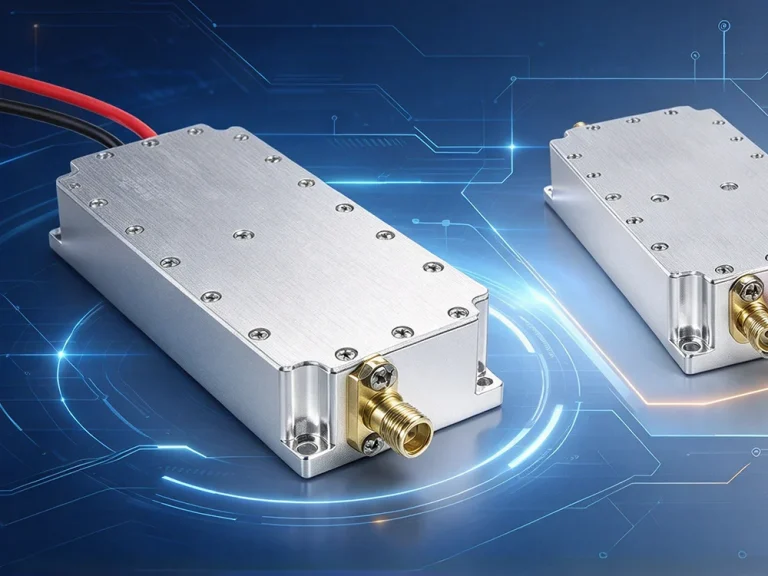
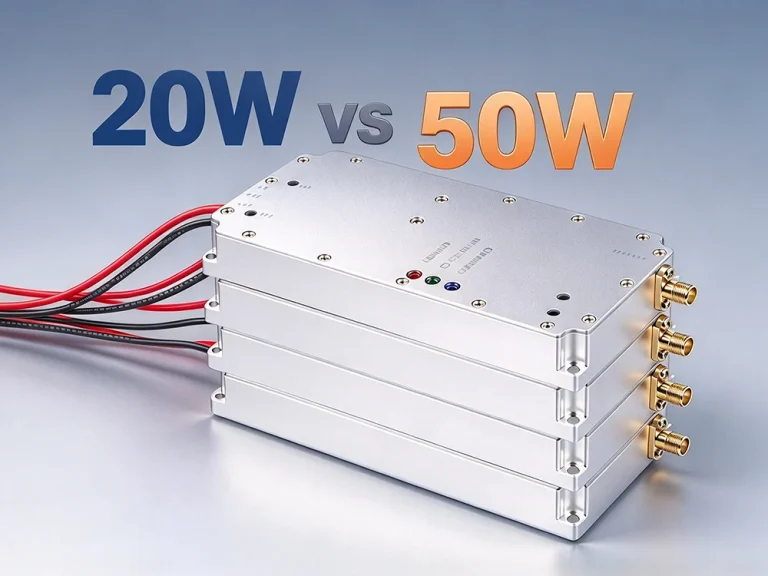
Compare 20W vs 50W drone jammer modules by range, heat, power and deployment. Choose the right counter-drone module with practical tips.