October 22, 2026
50W LoRa Drone Jammer Module: Design & Compliance
A practical industry overview of 50W LoRa drone jammer modules: RF design, thermal management, EMC, compliance, and authorized deployment.

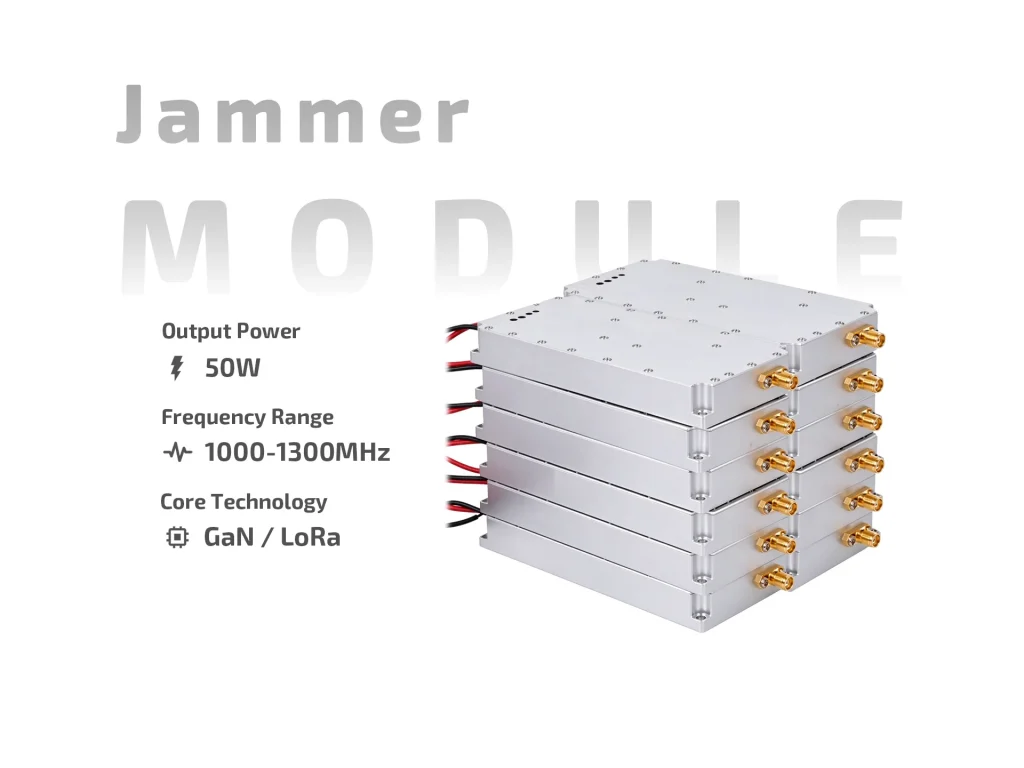
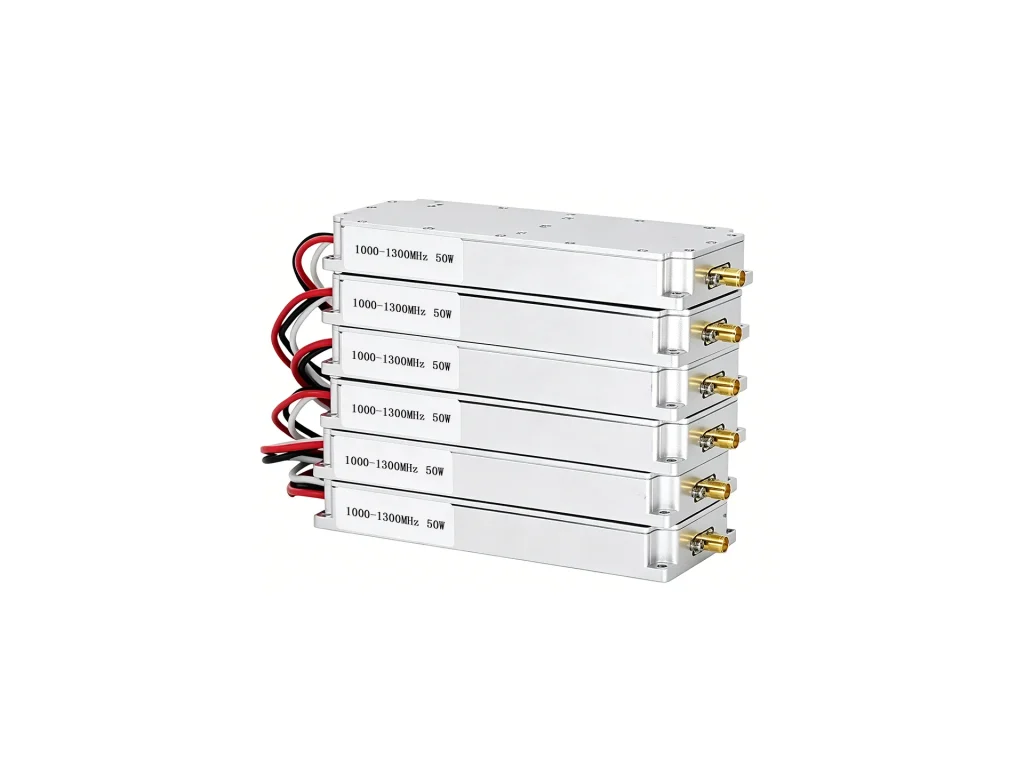
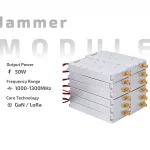
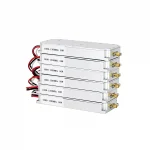
JM1013G50 50W GaN LoRa drone jammer module: 1000-1300MHz, 28V, 47±1dBm, 270KHz scan, SMA female, 117x58x18mm.
The JM1013G50 is a 50W GaN LoRa drone jammer module for 1000-1300MHz countermeasure and video-link blocking projects. It pairs a high-speed noise modulation source with a GaN output stage in a compact aluminum housing. System integrators can use it as a ready RF building block instead of designing the transmitter from scratch. The module is not a finished consumer product; it is a component for OEM equipment.

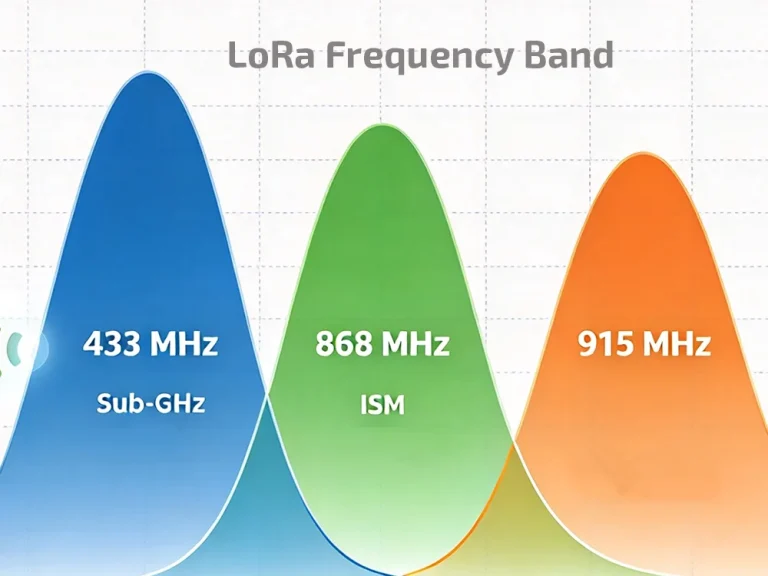
The operating band covers 1000-1300MHz, a range often used by LoRa links and video transmitters. Output power is 47±1dBm, about 50W, with a supply draw of ≤3.2-4.5A at 28V. The internal high-speed noise source produces a wideband modulated signal without an external exciter. Scanning speed is 270KHz by default and can be set from 100-500KHz for different test or system needs. Keep antenna VSWR low to protect the output stage and maintain stable power.
The module accepts 24-28V and is rated for normal operation from -20 to +65°C. At 117×58×18mm and about 300g, it fits small gimbals, portable cases, and fixed installations with tight space. The host design should provide a clean supply and a metal mounting surface for heat spreading. Long transmit periods need extra cooling, especially in closed enclosures. On-board LEDs report power on, over-voltage, and over-temperature conditions for quick checks.
RF output uses an SMA female connector. Mount the module on a flat plate with good contact and route the supply wiring away from RF lines. Keep the antenna at a reasonable distance from the LoRa radio and control board to reduce feedback. The outline can be customized for volume builds, including connector placement and mounting holes. Check torque on the SMA joint and strain-relief the cable so movement does not stress the PCB.
The standard version includes a built-in high-speed noise modulation source. For teams with their own waveform chain, VCO, DDS, and SDR input options can be discussed. This flexibility helps match different modulation styles and scanning patterns without changing the whole RF block. If you plan to drive the module from an external source, confirm level and impedance before connection. Factory settings should be noted so replacement units can be swapped without retuning.
Band edges, scanning speed, connector type, and mechanical size can be adapted for qualified projects. LoRa support is available for 1000-1300MHz deployments, and sub-band versions can be reviewed against local rules. Provide your target frequency plan, supply range, duty cycle, and mounting limits before ordering. A sample test lets both sides verify output power, current draw, and thermal behavior in the actual housing. Keep a short acceptance checklist for incoming units.
Never run the module without a suitable load or antenna. Check supply polarity and inrush current before first power-up. Use a current-limited source for bench tests and monitor temperature during initial runs. The JM1013G50 is a 50W GaN LoRa drone jammer module for professional integration, not for casual use. Proper filtering and shielding keep the host system within its own EMC design goals. Store spare units in anti-static bags and protect the SMA interface from dust and impact.
Before full deployment, run a short bench test at the intended supply voltage. Record current draw at idle and under modulation, confirm output with a calibrated power meter and attenuator, and check the SMA mating surface for damage. Let the unit warm up for several minutes and watch the over-temperature LED behavior. If the 50W GaN LoRa drone jammer module is installed in a sealed box, repeat the check after final assembly because airflow changes the thermal result. Keep test logs by serial number for traceability.
| Parameter | Specification | Notes |
| Frequency range | 1000-1300 MHz | LoRa band support; custom options available |
| Operating voltage | 28 V | 24-28 V input range |
| Operating current | ≤3.2-4.5 A | At 50 W output |
| Scanning speed | 270 KHz | Custom 100-500 KHz available |
| Output power | 47±1 dBm | Approx. 50 W |
| Input signal source | Built-in high-speed noise modulation source | VCO, DDS, SDR options available |
| Operating temperature | -20 to +65°C | Normal operation |
| Connector | SMA female | RF output |
| LED indicators | Power switch, over-voltage, over-temperature | Status and protection indication |
| Dimensions | 117 x 58 x 18 mm | Custom sizes available |
| Weight | Approx. 300 g | Varies with options |
A practical industry overview of 50W LoRa drone jammer modules: RF design, thermal management, EMC, compliance, and authorized deployment.
Explore 5.8GHz 50W drone jammer module design: band physics, EIRP, thermal challenges, antenna matching and integration checkpoints.
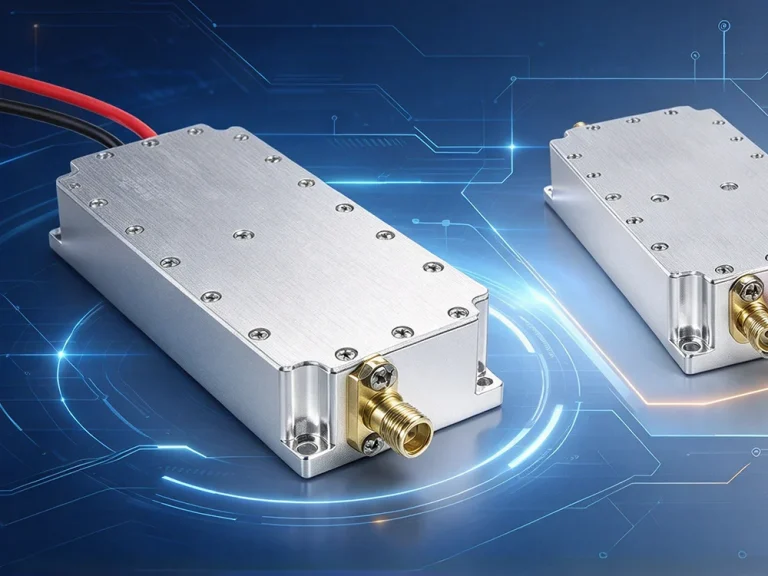
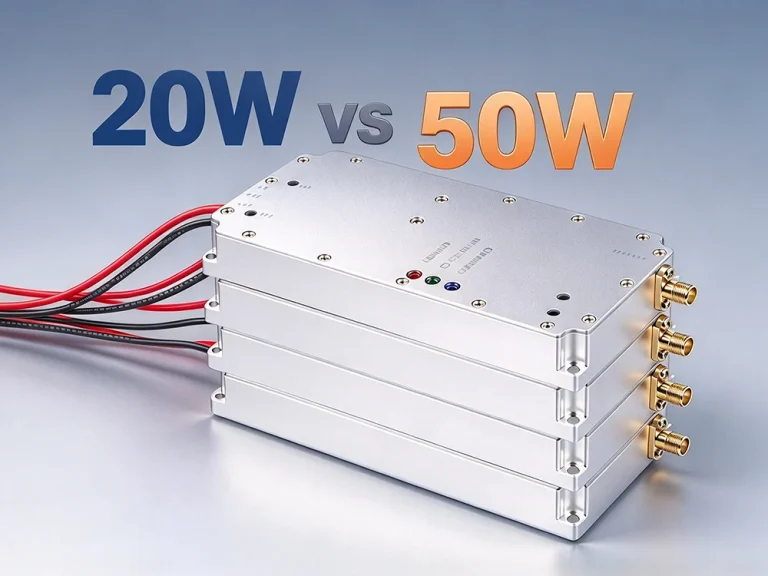
Compare 20W vs 50W drone jammer modules by range, heat, power and deployment. Choose the right counter-drone module with practical tips.