October 22, 2026
1.2GHz 60W Anti-Drone Module: Buyer’s Checklist
A procurement-focused look at 1.2GHz 60W anti-drone modules: band planning, thermal limits, interfaces, test data, and authorized deployment.
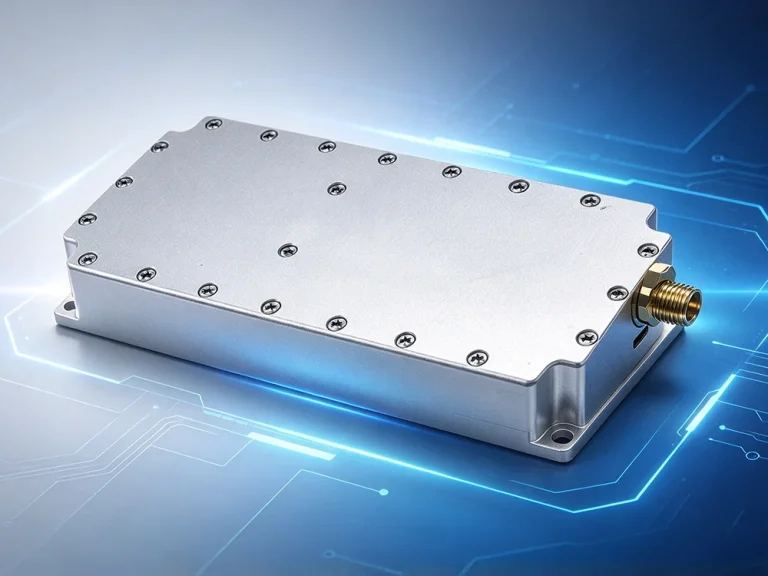

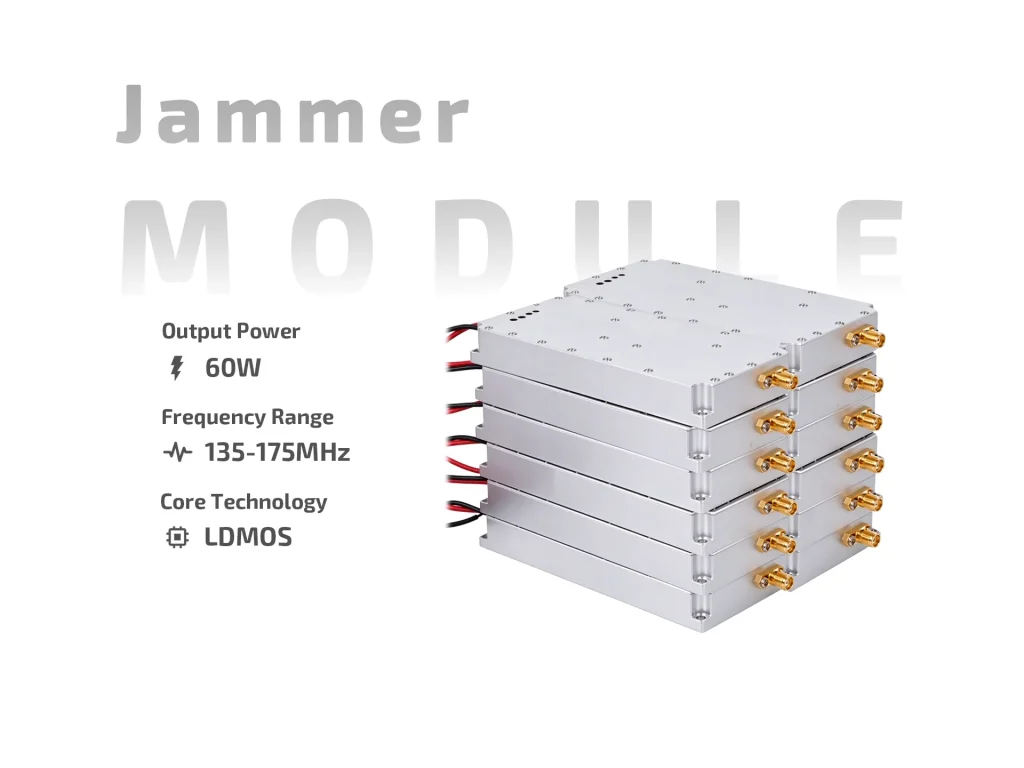
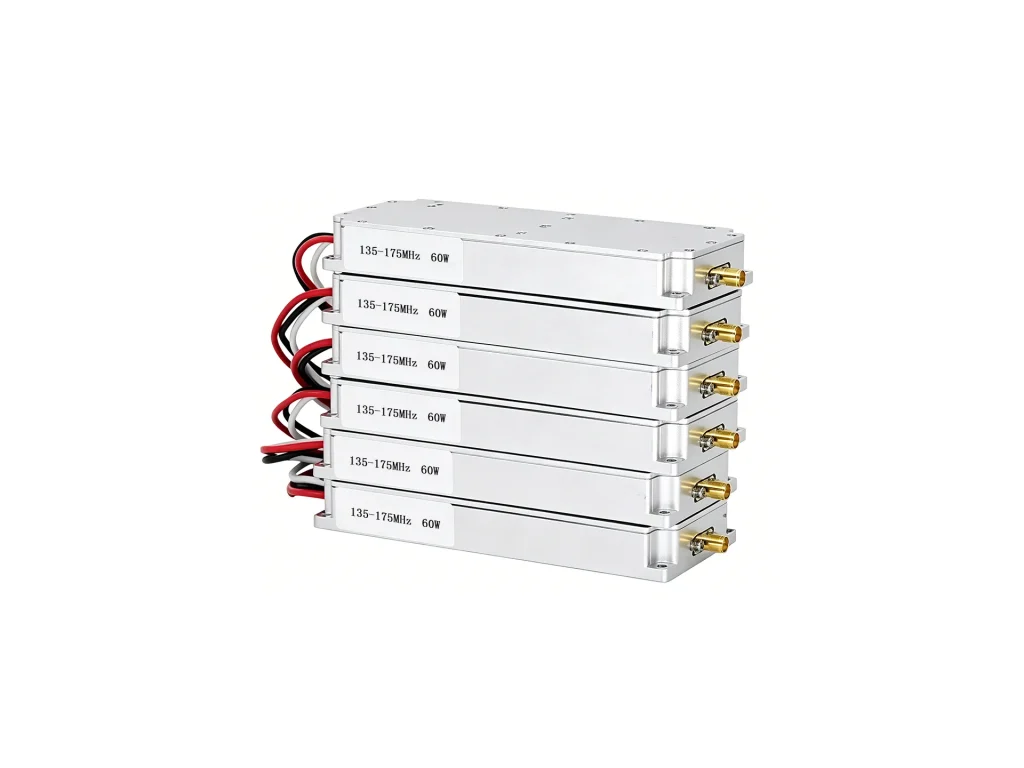
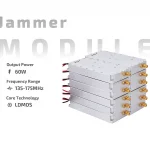
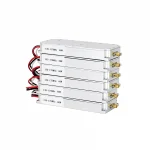
ETLD-JM0101L60 60W LDMOS jammer module: 135–175MHz, DC12–14V, 12A max, ≥40% efficiency, SMA female, built-in high-speed sweep source.
The ETLD-JM0101L60 is a 60W LDMOS jammer module for the 135–175 MHz VHF band. It is made for system integrators who need a self-contained RF block rather than a bare amplifier. Inside the housing, a high-speed sweep source feeds the LDMOS output stage. That means the host system only has to supply DC power and a simple on/off logic signal. The module is suited to UAV countermeasure work and remote control denial. Its SMA female output and compact body fit rugged enclosures.

LDMOS has a long history in VHF and UHF power design. It is rugged, well understood, and relatively tolerant of load mismatch. In the 135–175 MHz range, a 60W LDMOS stage can deliver solid output without the cost and complexity of some higher-frequency technologies. The module’s ≥40% efficiency helps keep current draw and heat within practical limits for vehicle, portable, and fixed installations. The supply range is DC12V–14V, which matches common battery and regulated bus systems. At full output, maximum current is 12A, so wiring and fusing should be sized with margin.
The 135–175 MHz band is used by many legacy remote controls, telemetry links, and low-band drone control paths. The built-in high-speed sweep source moves across the band continuously. This creates a wideband interference profile rather than a single narrow tone. For counter-UAV use, that can be more effective against frequency-hopping or wideband links. It also saves space and cost because no external signal generator is required. The sweep rate and pattern are set inside the module; the user does not need to program a source.
Output power is typically 60W. The module is designed for a 50-ohm RF path, and output VSWR is specified at ≤2.0. A well-matched antenna is important. High reflected power will reduce reliability and can damage the output stage over time. Before running full power, check the antenna with a VSWR meter or network analyzer. A dummy load is strongly recommended for first power-up. Keep coaxial cables short and use connectors rated for the power level.
The switch control is simple: +5V or floating turns the module on, while grounding turns it off. This interface is easy to drive from a microcontroller, relay board, or remote switch. The control pin should not be exposed to voltages above the logic level. If the host uses an open-drain output, it can pull the pin low for off and release it for on. Add a series resistor if the control line runs near RF or noisy power cables.
The 60W LDMOS jammer module measures 138 × 50.5 × 17 mm and weighs about 0.22 kg. Its flat metal base is intended to transfer heat into a chassis or heatsink. Do not run 60W continuously with the module sitting in free air. Use thermal paste or a thermal pad between the module and the mounting surface. Keep the heatsink fins clear. In enclosed cases, forced air may be needed. Vibration and shock are also worth considering for vehicle or drone-mounted systems.
This is a component, not a finished jammer. The integrator is responsible for antennas, power protection, cooling, and legal compliance. RF output limits and jamming rules vary by country. The 135–175 MHz band includes licensed and safety-related services in some regions, so filtering and power control may be required. Always test in a shielded environment or with a dummy load before going on air.
Common uses include low-band UAV jamming, remote control denial, border and facility protection, convoy security, and RF research. The drone jammer module also works as a 60W LDMOS source for VHF testing. Its internal sweep source makes it a practical choice for teams that want faster integration and fewer external parts.
The ETLD-JM0101L60 delivers 60W LDMOS output, built-in sweeping, and a compact mechanical package for the 135–175 MHz band. It is a straightforward RF building block for professional counter-drone and VHF denial systems.
| Parameter | Specification | Notes |
| Working frequency | 135–175 MHz | Covers low-band VHF UAV and remote control links |
| Output power | 60W | Typical RF output |
| Output VSWR | ≤2.0 | Designed for 50-ohm systems |
| Working voltage | DC12V–14V | Common battery and regulated bus range |
| Maximum current | 12A | At full load |
| Efficiency | ≥40% | Lower heat load |
| Switch control | +5V or floating = ON; grounding = OFF | Simple logic interface |
| Output connector | SMA female | Standard RF interface |
| Jammer source | Built-in high-speed sweep source | No external source required |
| Dimensions | 138 × 50.5 × 17 mm | L × W × H |
| Weight | 0.22 kg | Approx. |
A procurement-focused look at 1.2GHz 60W anti-drone modules: band planning, thermal limits, interfaces, test data, and authorized deployment.
Sizing a 60W jammer module heatsink depends on efficiency, duty cycle, airflow, ambient, and enclosure. Use a thermal budget, not a wattage rule.

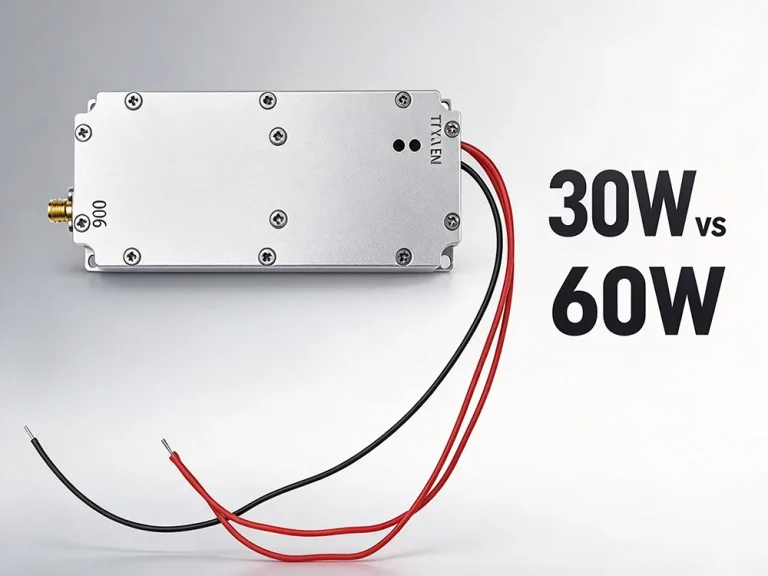
Compare 30W vs 60W drone jammer module by deployment scenario, thermal load, power budget and lifecycle cost. Choose the right tier.