October 22, 2026
1.2GHz 60W Anti-Drone Module: Buyer’s Checklist
A procurement-focused look at 1.2GHz 60W anti-drone modules: band planning, thermal limits, interfaces, test data, and authorized deployment.
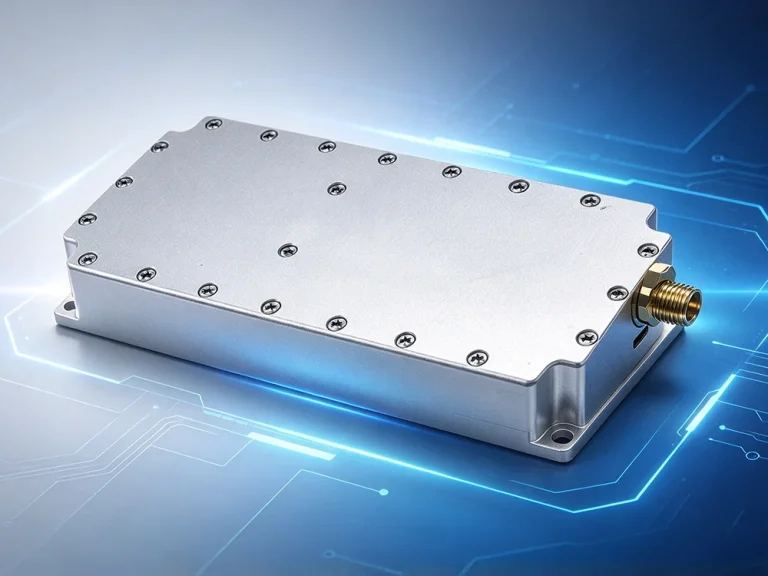

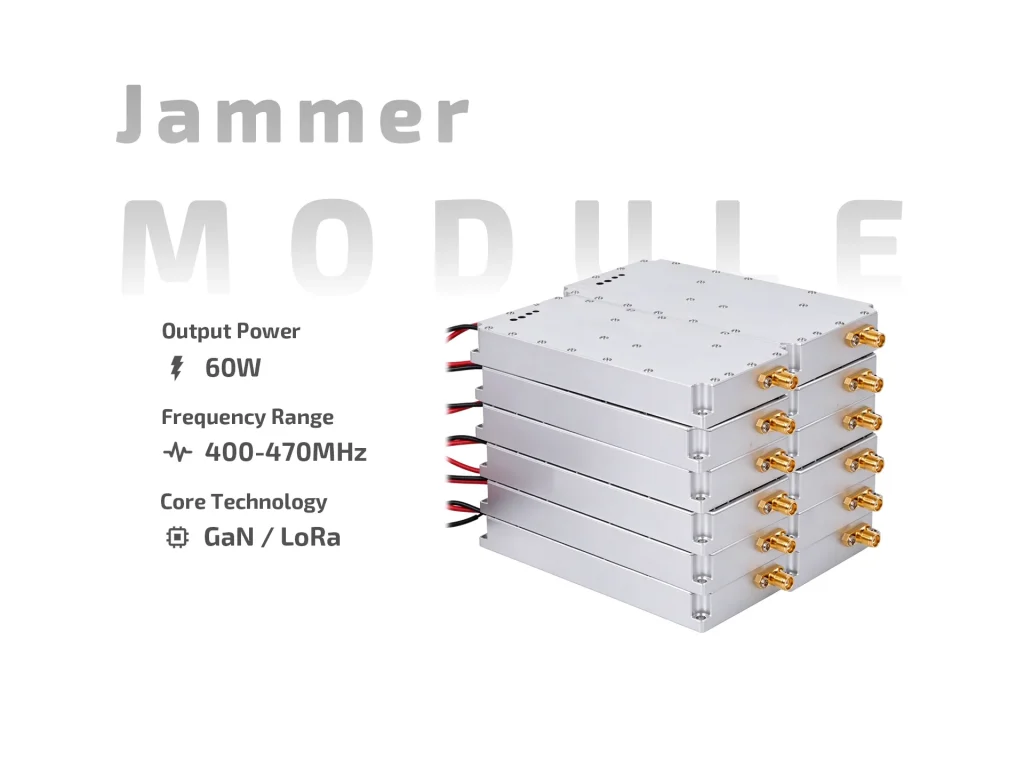
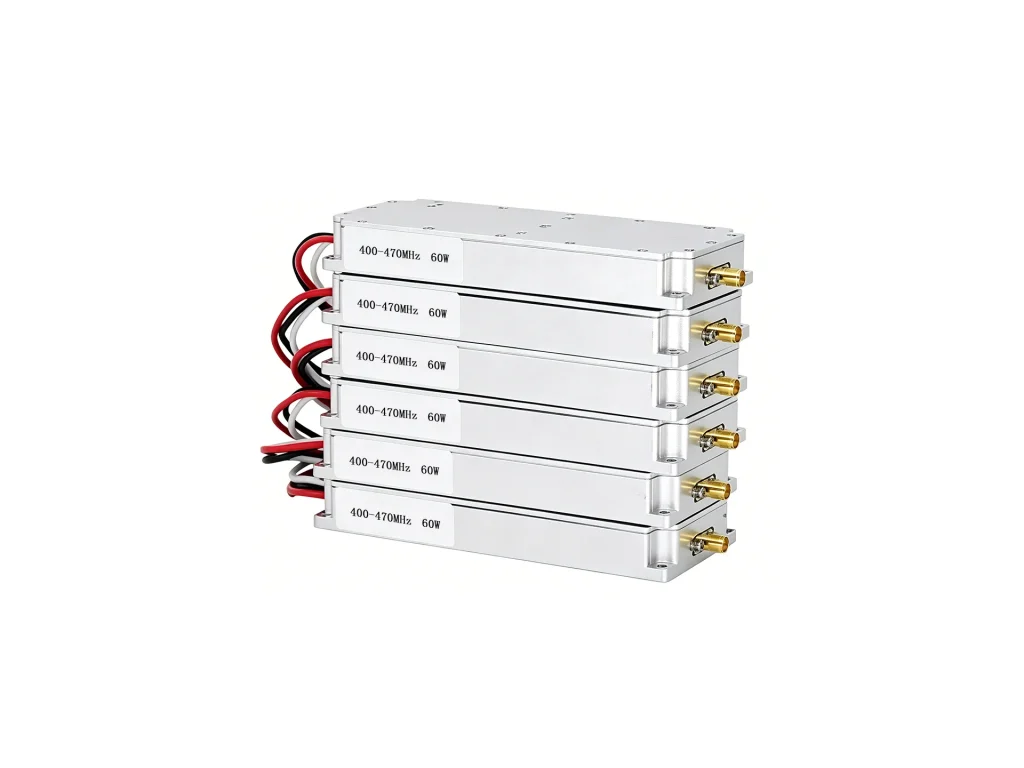
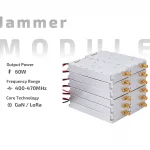
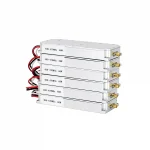
60W LoRa FPV jamming module ETLD-JM0404G60 covers 400–470MHz with GaN output, DC12–14V, 13A max, ≥40% efficiency, SMA female, built-in sweep.
60W LoRa FPV jamming module ETLD-JM0404G60 is a GaN-based RF block for the 400–470MHz band. It combines a 60W output stage with an internal high-speed sweep source. System builders can use it for LoRa, FPV, and other low-band UAV links without adding a separate signal generator. The module runs from DC12V–14V and uses a simple +5V or ground control interface. Its SMA female output and compact 138 × 50.5 × 17mm body fit many counter-drone housings.

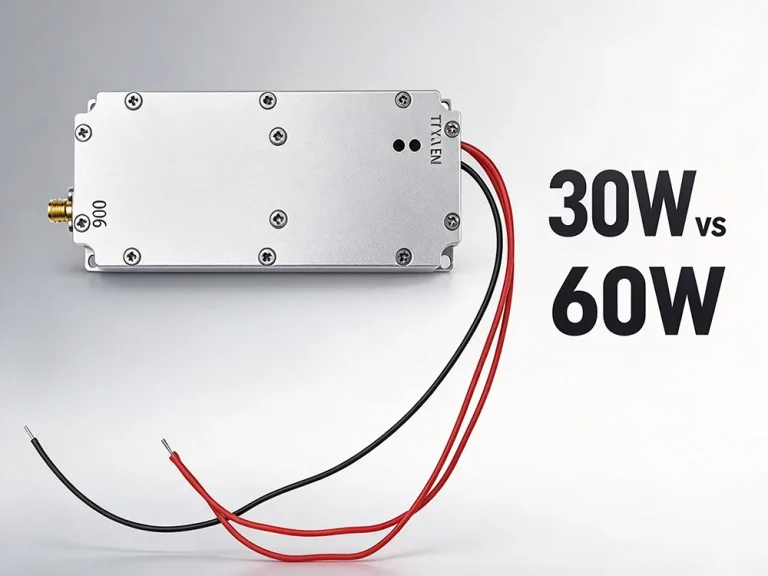
This is not a finished jammer. It is a component for professional RF systems. The ETLD-JM0404G60 takes DC power and a switch signal, then produces a swept 60W signal across 400–470MHz. That range covers many LoRa links, FPV control channels, telemetry paths, and low-band drone radios. For teams already working with our 30W UAV jammer module, this unit adds more power in a similar mechanical format.
GaN devices offer high power density and good thermal performance. In this module, the GaN stage delivers 60W typical output with VSWR ≤2.0. The design targets a 50-ohm path, so antenna matching matters. A poor match raises reflected power and heat. Before full-power tests, check the antenna and use a dummy load. The 400–470MHz band is widely used, so filtering and power control may be needed in some countries.
The internal high-speed sweep source moves energy across the band. That creates a wideband interference profile instead of a single tone. For LoRa and FPV links, which may use different channels or hopping schemes, sweeping can be more effective than a fixed frequency. The sweep source is already inside the module. The host controller does not need to generate or modulate an RF signal. This saves integration time and reduces parts count.
The module runs from DC12V–14V and draws up to 13A at full load. Efficiency is ≥40%, which helps limit heat compared with lower-efficiency amplifiers. Even so, 60W continuous operation requires a heatsink or metal chassis. Use thermal paste or a thermal pad between the module base and the mounting surface. Keep airflow around the fins. In sealed enclosures, forced air may be necessary. Check current, temperature, and output power after 10–15 minutes of operation.
Switch control is simple: +5V or floating turns the module on; grounding turns it off. This logic works with microcontrollers, relays, or remote switches. The RF output is SMA female. The module measures 138 × 50.5 × 17mm and weighs about 0.22kg. That size fits handheld, vehicle, and fixed-site enclosures. Keep RF cables short and route them away from control lines. For a lower-band option, see our 60W drone jammer module.
This module is an RF component, not a consumer device. The integrator is responsible for antennas, cooling, power protection, and legal compliance. Jamming rules vary by country. In the United States, for example, the FCC enforces strict rules on jammer use. LoRa and FPV bands may also include licensed or safety-related services. Test in a shielded room or with a dummy load before going on air. For general LoRa technical details, see the LoRa Alliance.
Common uses include LoRa denial, FPV control disruption, drone detection plus mitigation, border protection, convoy security, and RF research. The module also works as a 60W GaN source for lab testing. Its built-in sweep source makes it practical for teams that want faster deployment and fewer external modules.
The ETLD-JM0404G60 offers 60W GaN output, 400–470MHz coverage, an internal sweep source, and a compact metal package. It is a straightforward building block for counter-UAV and low-band RF denial systems. If you need a different band or power level, review our other jammer modules or contact us.
The 60W LoRa FPV jamming module ETLD-JM0404G60 is designed for engineers who want predictable power, simple control, and a small mechanical footprint. It is a professional RF block for serious integration work.
| Parameter | Specification | Notes |
| Working frequency | 400–470MHz | Covers LoRa, FPV, and low-band UAV links |
| Output power | 60W | Typical RF output |
| Output VSWR | ≤2.0 | Designed for 50-ohm systems |
| Working voltage | DC12V–14V | Common battery and regulated bus range |
| Maximum current | 13A | At full load |
| Efficiency | ≥40% | Lower heat load |
| Switch control | +5V or floating = ON; grounding = OFF | Simple logic interface |
| Output connector | SMA female | Standard RF interface |
| Jammer source | Built-in high-speed sweep source | No external source required |
| Dimensions | 138 × 50.5 × 17 mm | L × W × H |
| Weight | 0.22 kg | Approx. |
A procurement-focused look at 1.2GHz 60W anti-drone modules: band planning, thermal limits, interfaces, test data, and authorized deployment.
Sizing a 60W jammer module heatsink depends on efficiency, duty cycle, airflow, ambient, and enclosure. Use a thermal budget, not a wattage rule.

Compare 30W vs 60W drone jammer module by deployment scenario, thermal load, power budget and lifecycle cost. Choose the right tier.