October 22, 2026
1.2GHz 60W Anti-Drone Module: Buyer’s Checklist
A procurement-focused look at 1.2GHz 60W anti-drone modules: band planning, thermal limits, interfaces, test data, and authorized deployment.
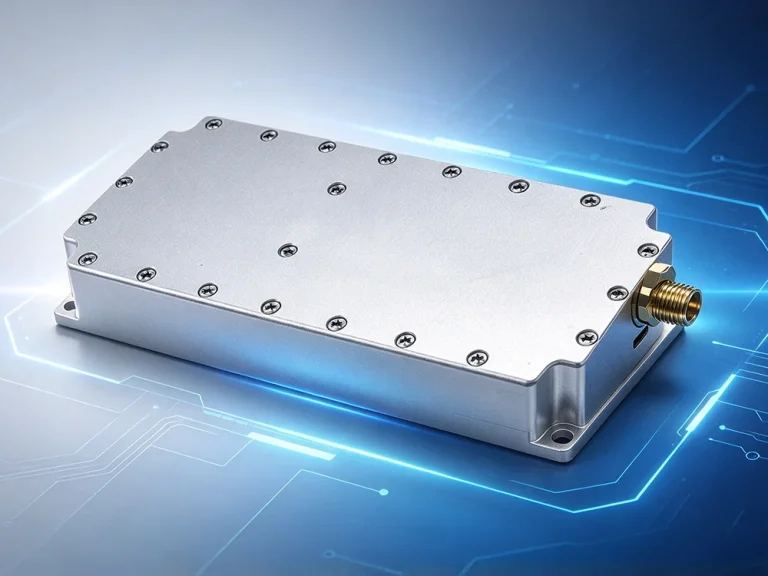

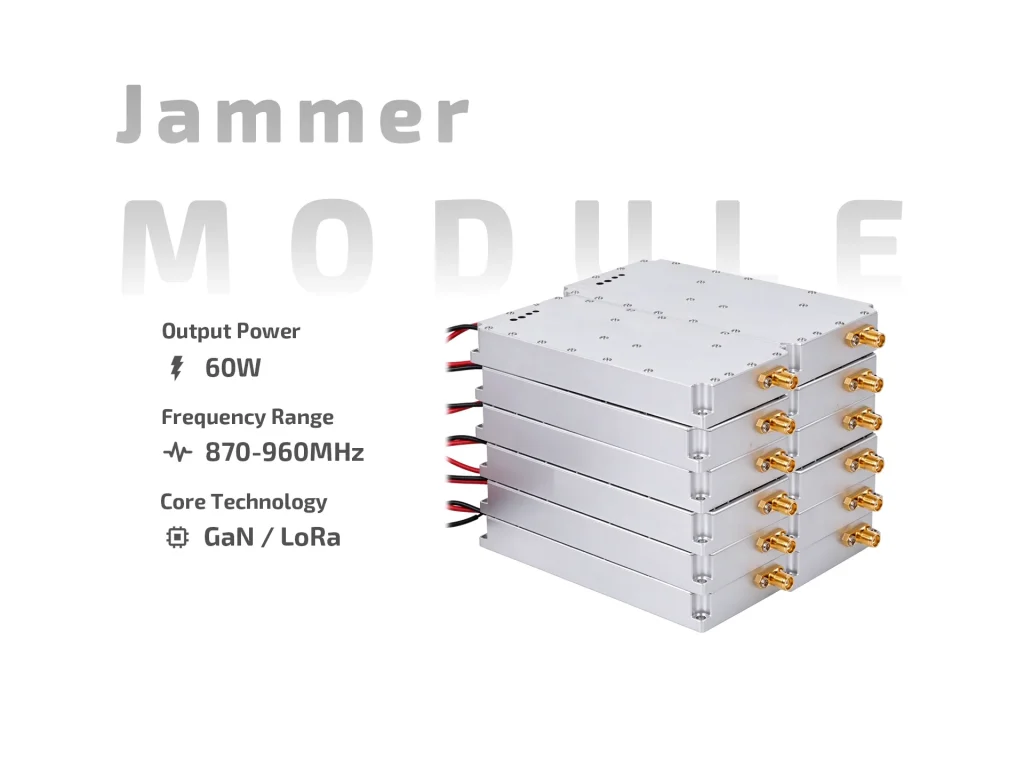
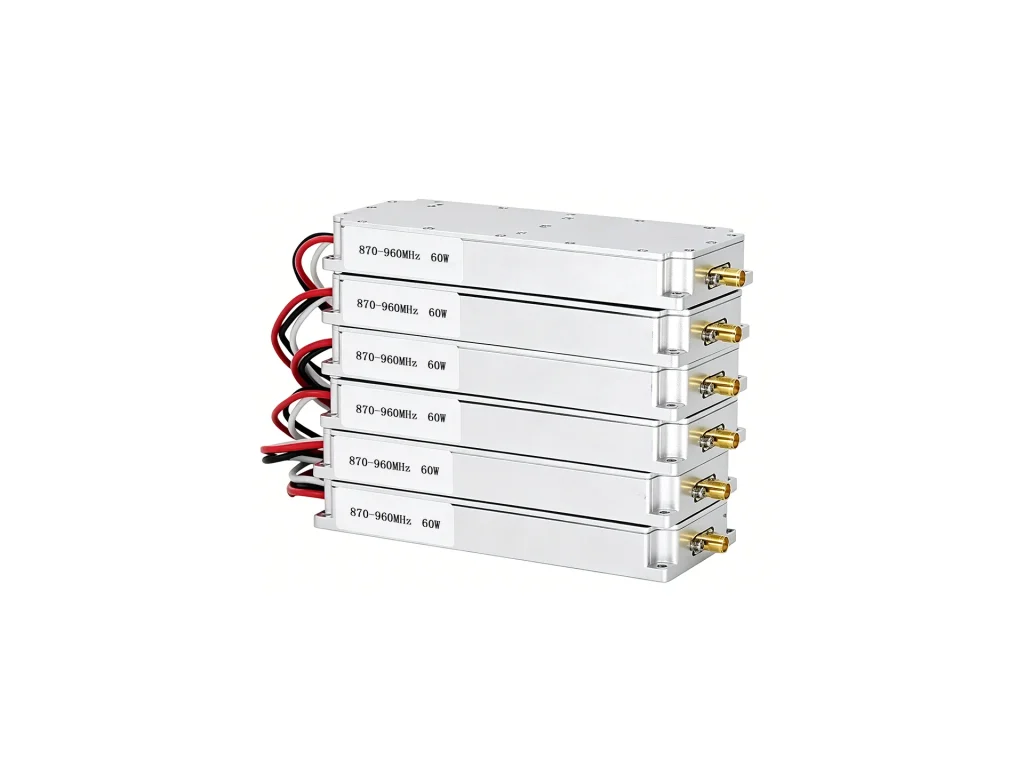
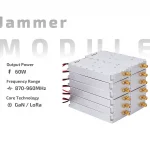
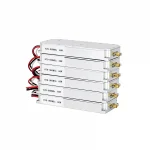
JM0809G60 60W GaN LoRa jammer module covers 870–960MHz, DC12–14V, 12A max, ≥40% efficiency, internal sweep source, SMA-F, 138×50.5×17mm.
JM0809G60 is a 60W GaN LoRa Jammer Module for the 870–960 MHz band. It packs a GaN output stage, an internal high-speed sweep source, and a simple enable pin into a 138 × 50.5 × 17 mm housing. The module is aimed at integrators building compact counter-drone or RF denial units around LoRa and nearby ISM links. It is not a finished jammer; you still need DC protection, a matched antenna, and a thermal path.

LoRa traffic in many regions sits around 868 MHz or 915 MHz. A module that stops at 870 MHz can miss part of that picture, so the 870–960 MHz coverage is useful. The band also includes other low-power links. Check local rules before transmitting, and coordinate with the site owner. The SMA female output keeps test setup simple; use a coupler and attenuator when you first measure power.
GaN devices hold up well under high power density. In a small module, that can mean less derating than a silicon part, but it does not remove heat. The 60W output and ≥40% efficiency still leave a meaningful thermal load. Mount the base to metal with thermal paste or a pad. Do not depend on still air inside a sealed box. If the enclosure is plastic, add an internal metal plate and an external heatsink.
The built-in high-speed sweep source saves an external generator and a cable. Treat it as a fixed interference engine, not a lab signal generator. It is best for repeatable wideband coverage. Keep the RF path short and use good coax. If you place the module next to a high-power transmitter, add filtering and shielding. The VSWR limit is ≤2.0; a better antenna match will help stability and long-term reliability.
Feed the unit from a regulated DC12V–14V supply rated for at least 12A continuous. The switch control is +5V or floating for on, ground for off. That floating-on behavior is convenient for remote control but can surprise a technician during wiring. Label the harness and pull the enable line to ground for a safe default. Use a current-limited supply for first power-up. Keep control wires away from the RF output.
The 0.22 kg drone jammer module fits small turret mounts and portable housings. Leave room for SMA torque and cable bend radius. Do not let mounting screws distort the lid. For multi-module racks, use separate DC feeds and sequence power to limit inrush. A shared supply can sag during startup. Check current at 13.8V, which is a realistic vehicle test point. Lower supply voltage can increase current draw.
Start on a dummy load. Measure current, output power, and temperature rise. Sweep the band and look for dropouts. After transport, inspect connectors. Use short duty cycles when airflow is poor. The 870–960 MHz range is busy, so confirm frequency use and legal limits. A clean installation is not just about RF; loose DC wiring and poor grounding can cause faults that look like module problems.
JM0809G60 suits fixed sites, vehicle mounts, and portable units where space is tight. Pair it with a suitable antenna, DC protection, and a real thermal design. For volume builds, ask for a test report and confirm connector and control wiring before production. Do not treat the 60W rating as a continuous guarantee in a sealed box; derate or add airflow.
JM0809G60 is a compact 60W GaN LoRa Jammer Module for 870–960 MHz. It offers simple switching, an internal sweep source, and an SMA female output. Good results come from a matched antenna, clean DC, and a metal thermal path.
| Parameter | Specification | Notes |
| Operating Frequency | 870–960 MHz | Covers LoRa 868/915 and nearby ISM links |
| Output Power | 60 W | Typical output at rated supply |
| Output VSWR | ≤2.0 | Keep antenna match within this limit |
| Operating Voltage | DC 12–14 V | Regulated supply recommended |
| Max Operating Current | 12 A | Size wiring and protection for continuous draw |
| Efficiency | ≥40% | Heat still needs a metal path |
| Switch Control | +5 V or floating = ON | Ground = OFF |
| Output Connector | SMA female | Use quality coax and correct torque |
| Internal Sweep Source | High-speed sweep | No external generator required |
| Dimensions | 138 × 50.5 × 17 mm | Allow clearance for SMA and cables |
| Weight | 0.22 kg | Compact housing support |
A procurement-focused look at 1.2GHz 60W anti-drone modules: band planning, thermal limits, interfaces, test data, and authorized deployment.
Sizing a 60W jammer module heatsink depends on efficiency, duty cycle, airflow, ambient, and enclosure. Use a thermal budget, not a wattage rule.

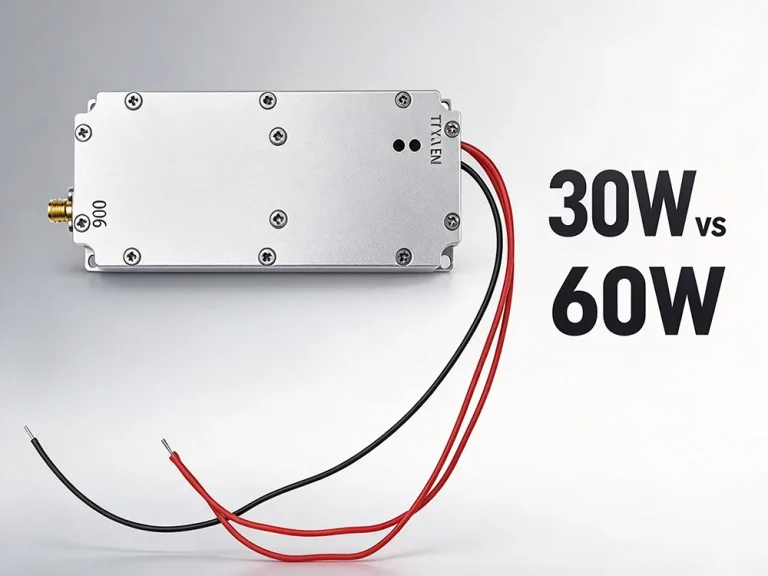
Compare 30W vs 60W drone jammer module by deployment scenario, thermal load, power budget and lifecycle cost. Choose the right tier.