October 22, 2026
Multi-Band 30W Drone Jammer Modules Explained
Understand multi-band 30W drone jammer modules: band combinations, total vs per-band power, thermal trade-offs, filtering and antenna design.


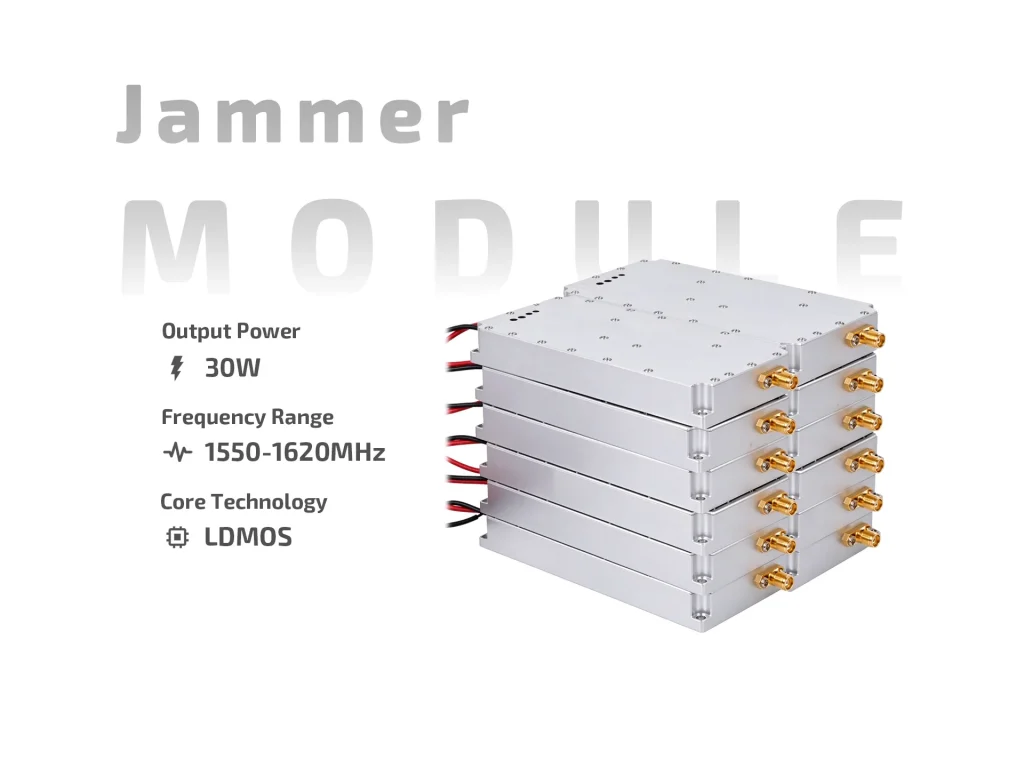
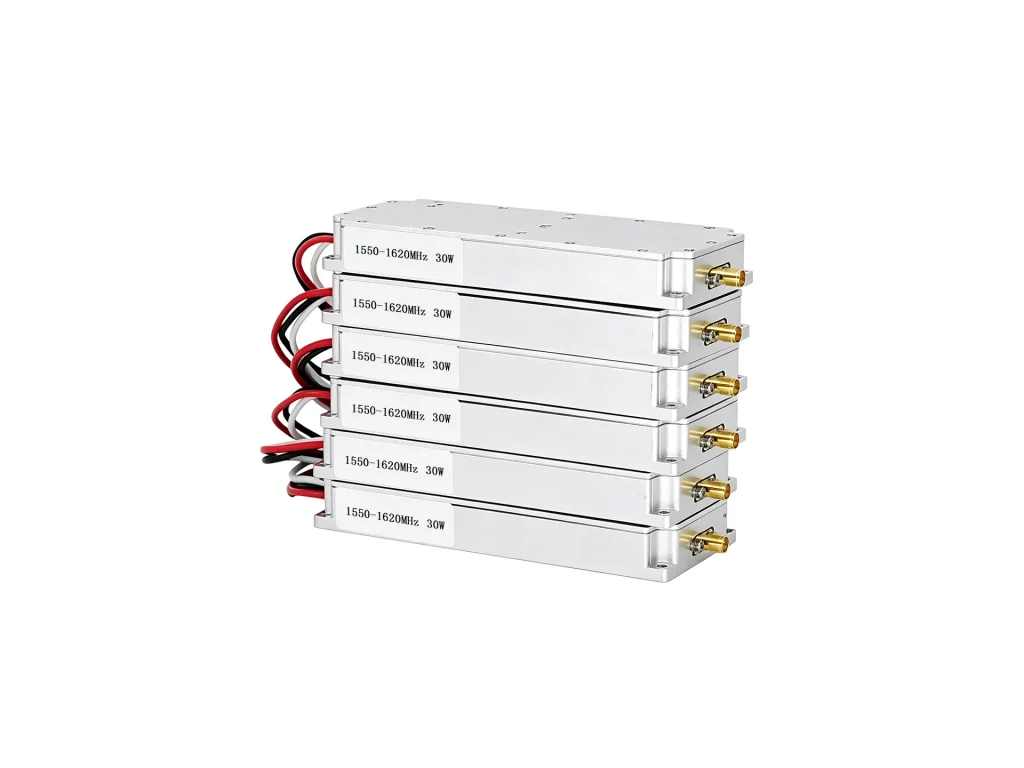
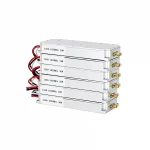
This 30W LDMOS jammer module ETLD-JM1516L30 covers 1550-1620MHz. 30W output, DC24-29V, 3.2A max, SMA female, built-in sweep source.
The 30W LDMOS jammer module ETLD-JM1516L30 is a compact analog jamming unit for the 1550–1620MHz band. It pairs an LDMOS amplifier with a built-in high-speed sweep source. No external signal generator is required. You feed it DC power, connect a suitable antenna, and the module produces the jamming waveform.

This module is built for 1550–1620MHz. That slice is used by GNSS links and some drone navigation or telemetry systems. Output is 30W typical. VSWR is ≤2.0. With a matched antenna, it can disrupt those signals while keeping the amplifier safe.
The module includes its own high-speed sweep source. That saves rack space and wiring. It also cuts setup time. For portable or vehicle-based systems, fewer parts means fewer failure points.
The unit runs on DC24–29V and draws up to 3.2A. Efficiency is ≥40%. RF output is SMA female. It weighs 0.21kg and measures 115.5*46.5*21mm. These numbers suit mobile and fixed installations.
Use a regulated DC supply. A 24V battery works if it holds voltage under load and can deliver 3.2A. Avoid voltage spikes. They can damage the amplifier. For RF safety basics, see the FCC RF Safety Guidelines.
LDMOS is a mature technology for 1.5GHz work. It is known for ruggedness and stable performance. In this 30W LDMOS jammer module, it provides solid output with ≥40% efficiency. Less waste heat helps in tight enclosures. Still, mount the module to metal. Add airflow for long runs.
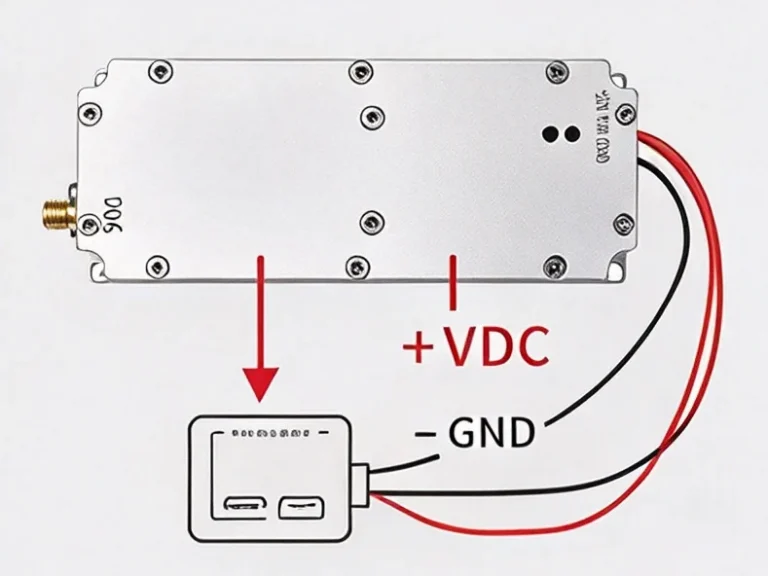
Switch control is simple. +5V or floating turns it on. Ground turns it off. That works with microcontrollers, relays, or manual switches. The SMA female output is standard for 1550–1620MHz antennas. Keep coax short. A poor match raises VSWR and reduces range.
The metal case has a small footprint. Use four screws or a clamp. Keep the antenna away from metal surfaces. If you mount it on a drone, watch payload weight. At 0.21kg, it is light, but cables add up. For long runs, use a heatsink.
This module suits teams that need a ready 1550–1620MHz jamming path. Common uses include:
Counter-UAV systems in authorized settings
GNSS interference testing in shielded rooms
RF research and training
Custom anti-drone platforms
Pair it with a detector. The detector finds the drone. The module blocks the link. Need another band? Compare our drone jammer module.
Many jammers need an external signal source. This one does not. The built-in high-speed sweep source saves space and wiring. The DC24–29V input and 3.2A max current are common in vehicle and battery systems. For counter-drone design context, see ITU unmanned aircraft resources. The small housing also helps where rack amplifiers will not fit.
The ETLD-JM1516L30 is a practical building block for 1550–1620MHz work. It offers 30W output, LDMOS ruggedness, and a built-in sweep source in a small metal case. Confirm your frequency and power needs first. If 1550–1620MHz is right, this model is ready. Proper grounding, cooling, and antenna choice will get the best results.
| Parameter | Specification | Notes |
| Frequency Band | 1550~1620MHz | L-band / GNSS range |
| Output Power | 30W | Typical |
| Output VSWR | ≤2.0 | Use matched antenna |
| Working Voltage | DC24V~29V | Regulated DC |
| Max Working Current | 3.2A | At 29V |
| Efficiency | ≥40% | LDMOS design |
| Switch Control | +5V or floating ON / ground OFF | TTL-friendly |
| Output Connector | SMA female | 50-ohm system |
| Jammer Source | Built-in high-speed sweep source | No external source |
| Dimensions | 115.5*46.5*21mm | Compact housing |
| Weight | 0.21kg | Lightweight |
Understand multi-band 30W drone jammer modules: band combinations, total vs per-band power, thermal trade-offs, filtering and antenna design.
Powering a 30W drone jammer module: current draw, PSU sizing, cabling, battery runtime, inrush and thermal derating tips.
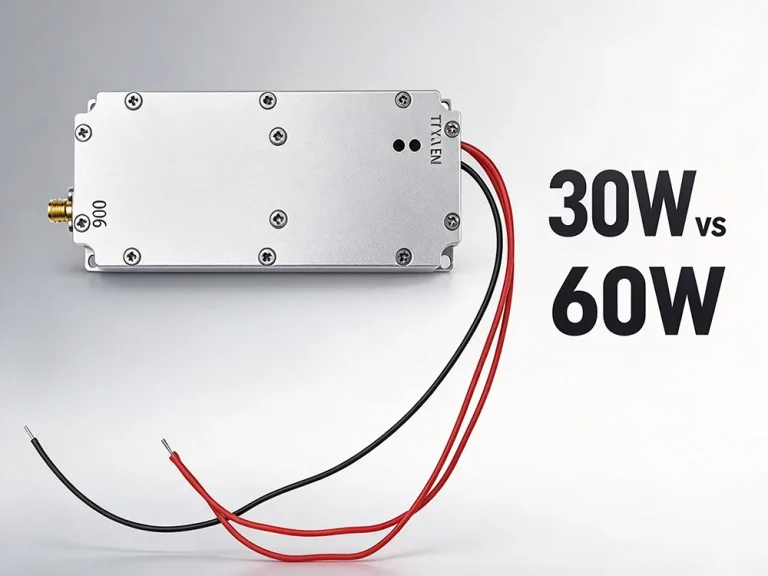
Compare 30W vs 60W drone jammer module by deployment scenario, thermal load, power budget and lifecycle cost. Choose the right tier.