October 22, 2026
Multi-Band 30W Drone Jammer Modules Explained
Understand multi-band 30W drone jammer modules: band combinations, total vs per-band power, thermal trade-offs, filtering and antenna design.


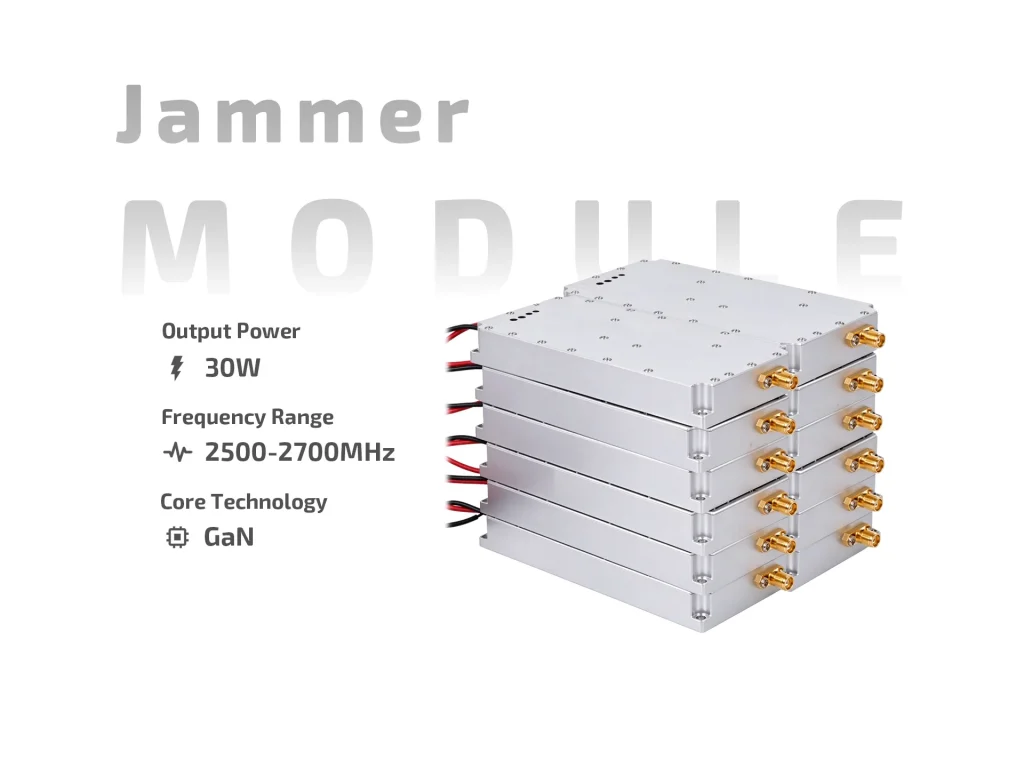
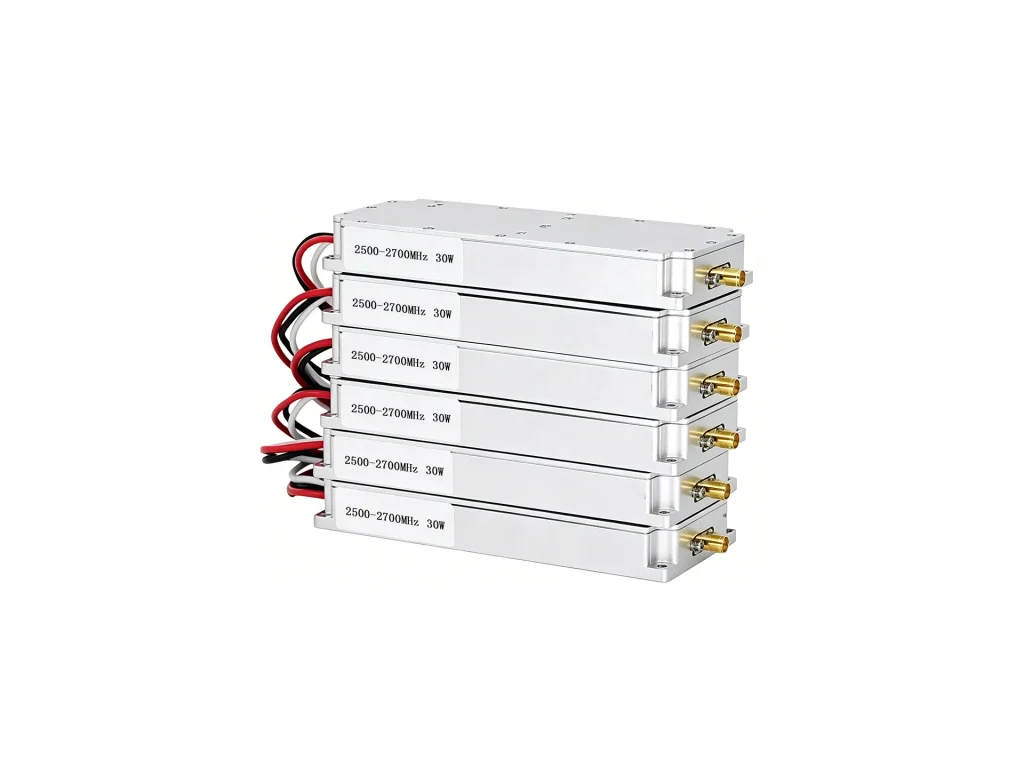

JM2527G30 30W GaN UAV jammer module: 2500–2700MHz, DC24–29V, 3.2A max, ≥40% efficiency, SMA female, built-in sweep source. Authorized use.
The JM2527G30 is a GaN analog jamming module built for the 2500–2700MHz band. It delivers 30W typical output in a housing small enough for crowded racks. The module combines a high-speed sweep source with GaN amplification, so you do not need to add a separate sweep board. That saves space and wiring. It also makes the RF chain shorter, which usually helps repeatability. The unit is aimed at authorized counter-UAV and RF test work, not general use.

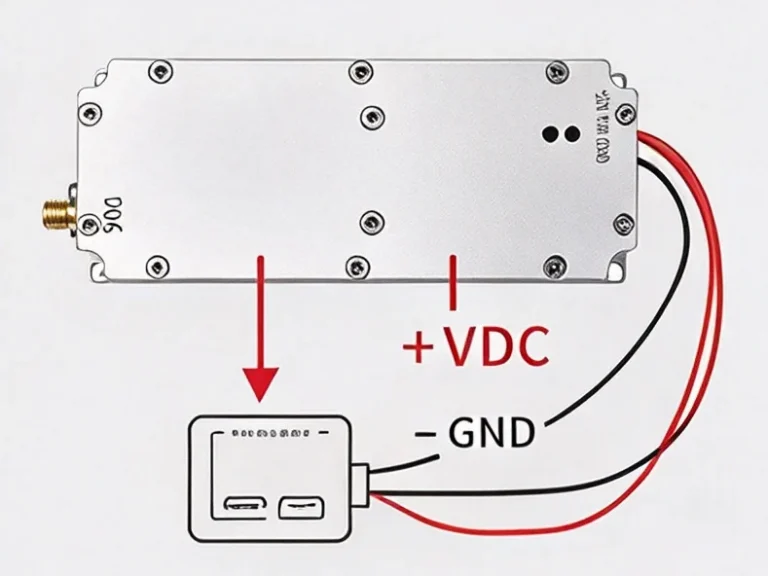
Input is DC24–29V. Maximum current is 3.2A. Check your supply can hold that current at the connector, not just at the bench supply display. Use short, thick leads and a common ground. Add a fuse and reverse-polarity protection. The switch line is simple: +5V or floating turns it on, grounding turns it off. Label that line. In a rack with several modules, a miswired control line is easy to miss.
At 30W RF and ≥40% efficiency, the module still makes heat. The 115.5*46.5*21mm case and 0.21kg weight give you a compact block, but they do not remove heat by themselves. Mount it flat on a clean surface. Use a thin thermal pad or a properly applied paste layer. A cold plate or heatsink is better than still air. Do not cover the case with foam or tape. If you run long tests, watch current and case temperature. A slow rise in current can be a sign that the load or cooling is not right.
Short bench tests can hide a weak thermal path. Run the module long enough for the case temperature to settle. If current creeps up or the case gets hot to the touch, stop and fix the cooling. A 30W block in a small case needs a real heat path. Do not rely on a fan that only moves air around the rack. Use a thermal probe, not your hand, for repeatable checks.
The output is SMA female. Output VSWR is specified at ≤2.0. That is a limit, not a target. A poor antenna match sends power back into the amplifier. Use a matched antenna, a short low-loss cable, and a clean connector. Check the load before a long run. In multi-band systems, keep this output away from sensitive receivers unless you have the shielding and filtering worked out. Do not overtighten the SMA nut. A damaged connector can cost more than the test time you saved.
The control interface is deliberately simple. That suits relay boards, remote control panels, and small MCUs. It also means there is less to configure at first power-up. Start with a known good load. Confirm the band with a power meter or spectrum analyzer. The built-in sweep source covers the stated band, but external filters and combiners will change the load. Test the full chain, not just the module. Keep RF and DC paths apart where possible. Use screened cable for the control line if the rack is noisy.
This module suits OEMs that need a compact 30W source in 2500–2700MHz. It is also a candidate for replacing a module in an existing rack when the interface and cooling plan match. It is not a drop-in answer for higher power or a different band. Buyers should confirm duty cycle, antenna, cable loss, and enclosure airflow. If your design sits close to the VSWR or thermal limit, ask for test data before you commit. Use only where authorized. Follow local radio and safety rules, and keep RF exposure away from people.
| Parameter | Specification | Notes |
| Working frequency | 2500–2700MHz | Continuous coverage; match antenna and verify band before use |
| Output power | 30W | Typical; use suitable load and watch heat |
| Output VSWR | ≤2.0 | Specified; poor load raises heat, check before long runs |
| Working voltage | DC24–29V | Range; observe polarity and add fuse |
| Max working current | 3.2A | Maximum; size supply and wiring, check inrush |
| Efficiency | ≥40% | Typical; thermal design matters, use heatsink |
| Switch control | +5V or floating = ON; ground = OFF | Keep control line clean and label wiring |
| Output connector | SMA female | Standard; torque correctly and keep clean |
| Interference source | Built-in high-speed sweep source | Integrated; no external sweep needed, test full chain |
| Dimensions | 115.546.521mm | Nominal; allow airflow and mount flat |
| Weight | 0.21kg | Nominal; check bracket load and secure mounting |
Understand multi-band 30W drone jammer modules: band combinations, total vs per-band power, thermal trade-offs, filtering and antenna design.
Powering a 30W drone jammer module: current draw, PSU sizing, cabling, battery runtime, inrush and thermal derating tips.
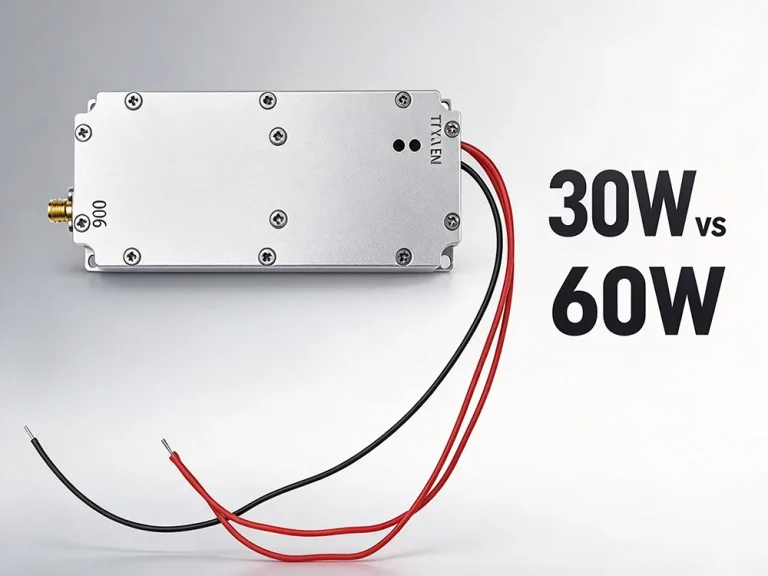
Compare 30W vs 60W drone jammer module by deployment scenario, thermal load, power budget and lifecycle cost. Choose the right tier.