October 22, 2026
50W LoRa Drone Jammer Module: Design & Compliance
A practical industry overview of 50W LoRa drone jammer modules: RF design, thermal management, EMC, compliance, and authorized deployment.

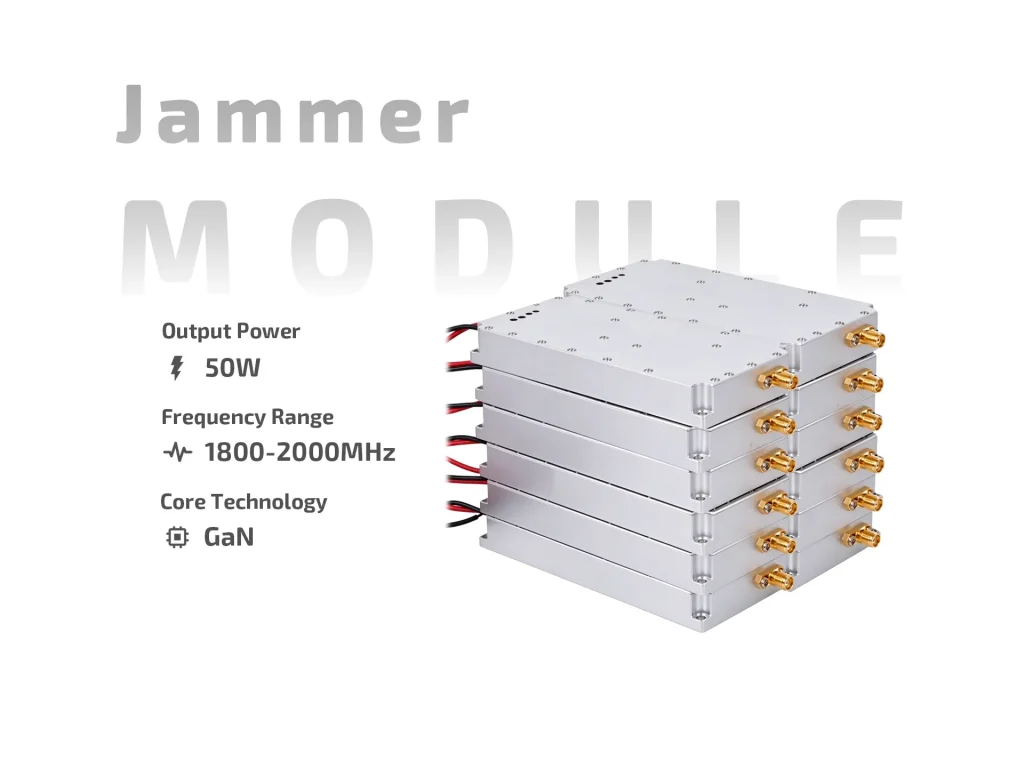
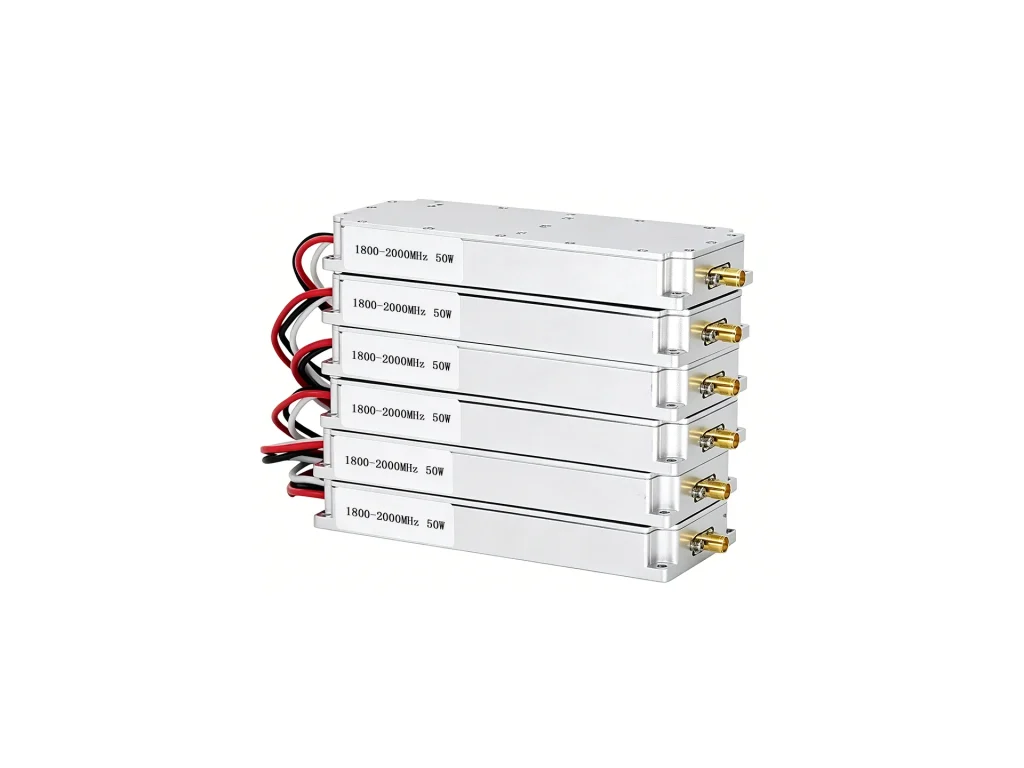
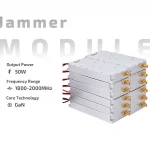
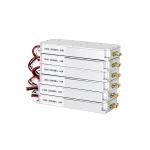
JM1820G50 50W GaN drone jammer module covers 1800–2000MHz, 28V, 47±1dBm, 270kHz scan, built-in noise source, SMA, 117×58×18mm, customizable.
JM1820G50 is a compact 50W GaN Drone Jammer Module built for 1800–2000MHz counter-drone and signal-shielding tasks. It combines a GaN power stage with a high-speed noise modulation source in a metal housing measuring 117×58×18mm. The module is intended for integrators who need a ready RF block rather than a full enclosure. With 28V DC input and SMA female output, it can be fitted into portable units, fixed posts, or OEM racks after thermal and filtering checks.

The 1800–2000MHz range covers common video and control links in this band. Output is 47±1dBm, equal to about 50W, and the GaN amplifier is specified for 28V operation with current draw of ≤3.2–4.5A. Actual current depends on supply quality, SWR, and duty cycle. Keep output loading close to 50Ω and avoid long operation into an open or mismatched antenna. The module supports band customization, so buyers should confirm the final sub-band and any channel plan before production.
An internal high-speed noise modulation source is standard. It gives a broad noise-like signal without an external exciter. Analog scan speed is 270kHz, with 100–500kHz available on request. For users who need tighter waveform control, the input source can be customized as VCO, DDS, or SDR. This flexibility suits different counter-drone architectures: simple noise jamming, swept coverage, or software-defined patterns. The source and PA should be tested together, because drive level, cable loss, and modulation shape affect final spectrum and heat.
At 50W RF, heat is the main integration limit. The 117×58×18mm, 300g package leaves little room for internal margin, so mount it on a metal plate or heatsink with good contact. Use short, low-resistance 28V leads and add bulk capacitance near the module. The unit includes LED indicators for power, overvoltage, and overtemperature. It is rated for -20 to +65°C normal operation, but a derated duty cycle is wise above 50°C ambient. Do not rely on the LEDs as the only protection; use a current-limited supply and over-temperature shutdown in the host system.
The SMA female connector makes bench testing straightforward, but final installations need strain relief and weather protection. Keep the antenna VSWR low and place the module away from sensitive receivers. Shielding, grounding, and filter placement matter in multi-band systems. The 50W GaN Drone Jammer Module can be customized in dimensions, connector layout, and signal source. Provide your enclosure drawing, airflow path, and antenna type early so the factory can confirm clearance and test setup. For fixed sites, a monitored power supply and remote status readout are recommended.
JM1820G50 is not a one-size-fits-all product. Buyers can request 100–500kHz scan speed, alternative modulation sources, and mechanical changes. Because the 1800–2000MHz band is used by many services, the final frequency plan, output power, and antenna gain must be checked against local rules. This 50W GaN Drone Jammer Module should be used only for lawful counter-drone or signal-shielding purposes by authorized operators. Request a sample test report with spectrum plots, current draw at 28V, and warm-up data before volume deployment.
Before deployment, run a short burn-in at 28V with the intended antenna and cable. Record RF power, current, case temperature, and spectrum shape every few minutes. Check that the over-temperature LED trips before the heatsink becomes unsafe. In portable packs, confirm battery sag under 4.5A draw; low voltage can reduce output and stress the amplifier. Keep test logs with each serial number so field faults can be traced.
The main value is the combination of GaN output, compact size, and an internal noise source. Integrators do not need to design a 50W RF chain from scratch, yet they still get customization options for scan speed and source type. The SMA interface and 28V input match common portable power designs. For teams building 1800–2000MHz counter-drone modules, JM1820G50 offers a practical starting point with clear parameters and room for project-specific changes.
| Parameter | Specification | Notes |
| Frequency Range | 1800–2000 MHz, customizable | Confirm final sub-band; check local rules |
| Output Power | 47 ± 1 dBm, 50 W | GaN PA; test into 50Ω |
| Working Voltage | 28V, 24–28V range | Short leads recommended; stable supply |
| Working Current | ≤3.2–4.5A at 50W output | Depends on SWR, duty cycle, supply |
| Input Signal Source | Built-in high-speed noise modulation, customizable VCO / DDS / SDR | External source optional; drive level to be confirmed |
| Analog Scan Speed | 270 kHz, 100–500 kHz customizable | Factory setting; pattern dependent |
| Operating Temperature | -20 to +65°C, normal operation | Derate above 50°C ambient; use heatsink |
| Connector | SMA female, 50Ω system | Strain relief; weather protection |
| LED Indicators | Power switch, overvoltage, overtemperature | Host-side protection still required |
| Dimensions | 117×58×18 mm, customizable | Metal housing; mounting contact matters |
| Weight | 300 g, approximate | Excludes cable and heatsink |
A practical industry overview of 50W LoRa drone jammer modules: RF design, thermal management, EMC, compliance, and authorized deployment.
Explore 5.8GHz 50W drone jammer module design: band physics, EIRP, thermal challenges, antenna matching and integration checkpoints.
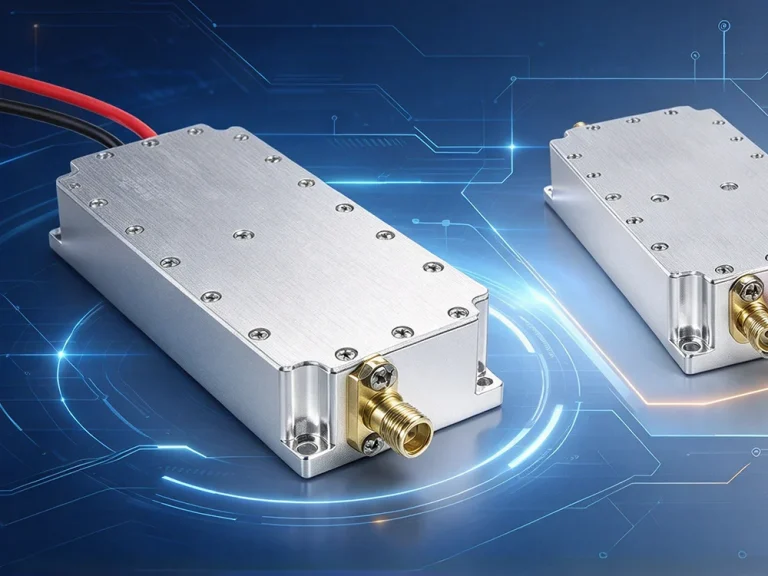
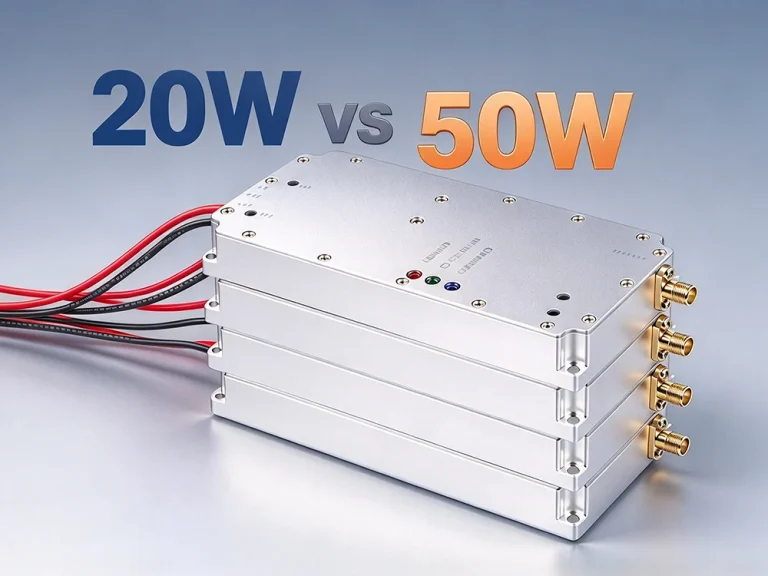
Compare 20W vs 50W drone jammer modules by range, heat, power and deployment. Choose the right counter-drone module with practical tips.