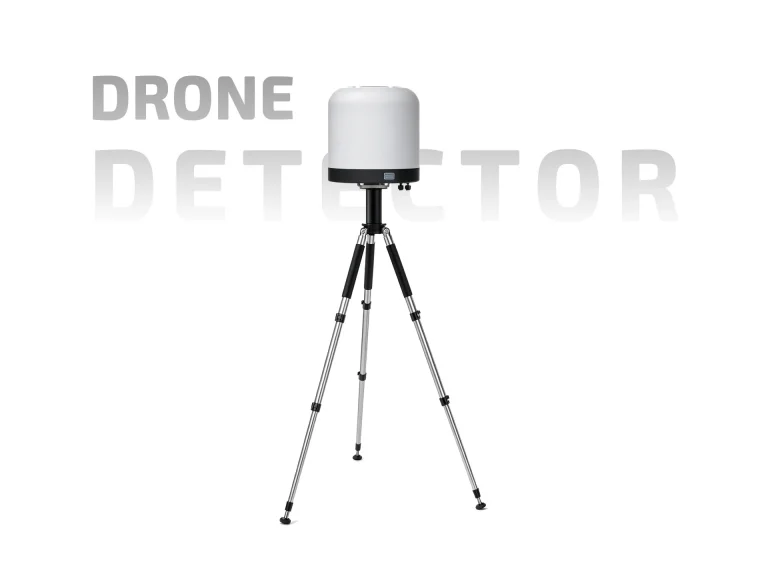
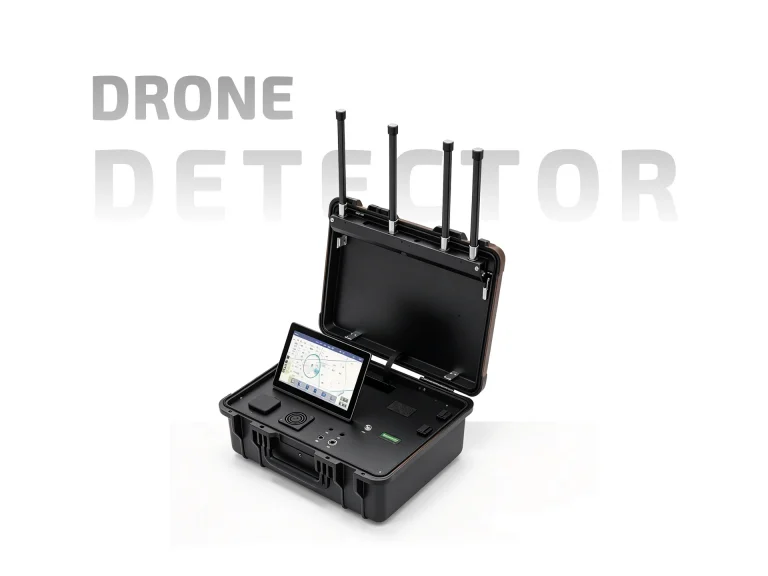
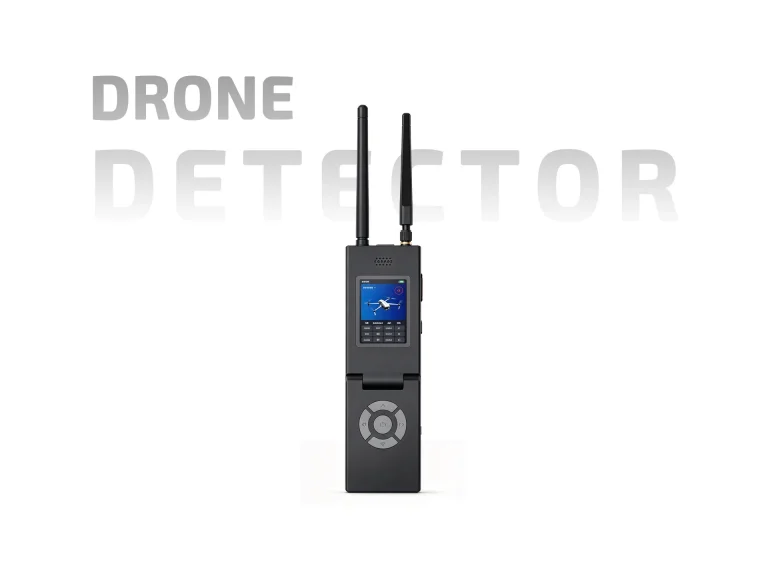
People often use “drone detector” and “drone jammer” as if they describe the same category of equipment. They do not. One is a listening and awareness tool. The other is an active interference device. Confusing the two can lead to bad purchasing decisions, failed security plans, and serious legal trouble.
This article breaks down the real differences between a drone detector and a drone jammer, explains how each works, and helps you decide which one—or which combination—makes sense for your situation.

The Short Answer
A drone detector tells you that something is there. It may also identify the drone type, direction, altitude, and operator location. A drone jammer tries to stop or disrupt the drone by transmitting interfering signals.
Detection is passive. Jamming is active. Detection gathers information. Jamming changes the RF environment. In most countries, detection is far easier to deploy legally than jamming.
| Question | Drone Detector | Drone Jammer |
|---|---|---|
| Primary purpose | Detect, identify, track | Disrupt, block, degrade |
| Operating mode | Passive or low-emission | Active transmission |
| Legal availability | Broadly usable with privacy rules | Heavily restricted |
| Output | Alerts and data | RF interference |
| Effect on drone | None | May disrupt control, video, or navigation |
| Best first step? | Usually yes | Only for authorized users |
How a Drone Detector Works
A detector is essentially an alarm system for the airspace. It uses one or more sensors to notice a drone and then passes that information to an operator or security platform.
Common detection methods include:
-
RF detection: Listens for radio signals used by drone controllers, video links, or telemetry.
-
Radar: Detects moving objects and can estimate range, speed, and direction.
-
Electro-optical and infrared cameras: Visually confirm and track the drone.
-
Acoustic sensors: Pick up propeller noise, though performance drops in noisy environments.
-
Data fusion: Combines multiple sensors to reduce false alarms and improve tracking.
| Detector Type | What It Senses | Strength | Weakness |
|---|---|---|---|
| RF detection | Control, video, telemetry signals | Can identify protocol and direction | Blind to autonomous drones with no RF link |
| Radar | Movement and position | Wide-area coverage | May struggle with small, slow drones |
| EO/IR camera | Visual and thermal image | Strong confirmation | Limited by weather and line of sight |
| Acoustic | Sound signature | Useful in quiet areas | Easily masked by urban noise |
| Multi-sensor fusion | Combined data | Higher accuracy | Higher cost and complexity |
A good detector does not just say “drone nearby.” It provides enough detail to support a decision: Is it a hobbyist? Is it approaching a restricted zone? Is the operator nearby? Without that context, security teams are guessing.
How a Drone Jammer Works
A jammer transmits energy on the same frequencies a drone uses. If the interference is strong enough at the drone’s receiver, the drone can no longer decode the original signal.
Jammers may target:
-
Command and control links: Often 2.4 GHz or 5.8 GHz.
-
Video and telemetry links: Similar bands, sometimes cellular or custom frequencies.
-
GNSS signals: GPS, GLONASS, Galileo, BeiDou.
-
WiFi links: Common on consumer drones.
| Jammer Target | Intended Effect | Possible Drone Reaction | Important Caveat |
|---|---|---|---|
| Control RF | Break the operator link | Hover, land, or return-to-home | Failsafe behavior varies by model |
| Video link | Remove live footage | Operator loses awareness | Drone may continue flying |
| GNSS | Block navigation | Drift or lose return-to-home | Inertial sensors may keep it stable briefly |
| WiFi | Disrupt data and control | Latency, packet loss, link drop | Can affect nearby WiFi devices |
Jamming is not a clean, surgical action. It can spill over into other systems, including WiFi networks, cellular service, GPS timing, and public safety communications. That is why regulators treat jammers as high-risk devices.
Side-by-Side Comparison
The table below puts the two technologies next to each other across the factors that matter most in real deployments.
| Criteria | Drone Detector | Drone Jammer |
|---|---|---|
| Role in counter-drone chain | Find and identify | Mitigate and disrupt |
| Passive or active | Mostly passive | Active |
| Legal status for private users | Generally allowed with limits | Generally prohibited |
| Impact on RF environment | Minimal | Significant |
| Need for skilled operator | Moderate | High |
| Integration with security systems | Strong | Possible but sensitive |
| Risk of collateral interference | Low | High |
| Value without the other | Useful for awareness | Risky and often ineffective |
| Typical users | Security teams, airports, prisons, event planners | Military, law enforcement, authorized agencies |
Why Detection Usually Comes First
You cannot jam what you cannot find. Detection gives you the location, direction, and often the model of the drone. That information determines whether any response is needed at all.
Imagine a prison that installs jammers but no detectors. The system may run continuously, interfering with nearby communications, while still missing a drone that approaches from an unexpected direction. Now imagine the opposite: a detector alerts the team, identifies the drone, and tracks it. The team can then decide whether to investigate, contact authorities, or use an authorized mitigation tool.
Detection also creates a record. That record can support investigations, legal action, and post-incident reviews. Jamming alone produces no evidence—only interference.
Common Misconceptions
“A jammer can also detect drones.”
No. A jammer transmits. It does not listen, classify, or track. Some integrated systems include both functions, but they are separate subsystems.
“Jamming always forces a drone to land.”
No. Many drones enter a failsafe mode. Some hover. Some return home. Some continue on inertial navigation. The outcome depends on the drone’s design and which link is disrupted.
“Detection alone stops a drone.”
No. Detection does not stop anything. It enables a response. But without detection, any response is blind.
“More power is always better.”
No. Higher power increases collateral interference, legal risk, and the chance of disrupting friendly systems. Precision matters more than raw output.
Which One Do You Need?
The answer depends on your mission, legal authority, and risk profile.
| Scenario | Recommended Approach | Why |
|---|---|---|
| Prison or critical site | Detection first, authorized mitigation second | Persistent awareness; jamming only if legally approved |
| Airport | Multi-sensor detection | Safety-critical; jamming can affect aviation systems |
| Temporary event | Portable detection | Flexible, low legal risk, rapid setup |
| VIP protection | Detection plus local mitigation if authorized | Early warning is essential; jamming is highly restricted |
| Military base | Integrated detection and mitigation | Layered defense under strict rules |
| Data center | Detection and RF monitoring | Protect operations without disrupting networks |
| Private home or small business | Detection only | Jamming is illegal in most jurisdictions |
For most organizations, the practical path is: detect first, decide second, mitigate only if authorized and necessary.
Legal Reality
In many countries, operating a drone jammer is illegal for private citizens and most businesses. Jamming can interfere with aviation, emergency services, cellular networks, and GPS timing. Even a short transmission can cause harm far beyond the intended target.
Drone detection is generally more accessible, but it still raises privacy and data protection questions. RF detection may intercept communications. Cameras may record people. Radar may track vehicles. Any deployment should be reviewed against local laws and internal policies.
Final Word
A drone detector and a drone jammer are not competitors. They are different layers of a counter-drone strategy. The detector is the eyes. The jammer is a controlled response tool for authorized users.
If you are building a security plan, start with detection. It gives you the information you need to act safely, legally, and proportionately. Add jamming only if you have the legal authority, the operational training, and a clear understanding of the risks.