October 22, 2026
20W Anti-Drone Module Price: What Drives Cost?
Understand 20W anti-drone module price factors, from RF bands and cooling to enclosure, compliance and order volume. Compare quotes wisely.
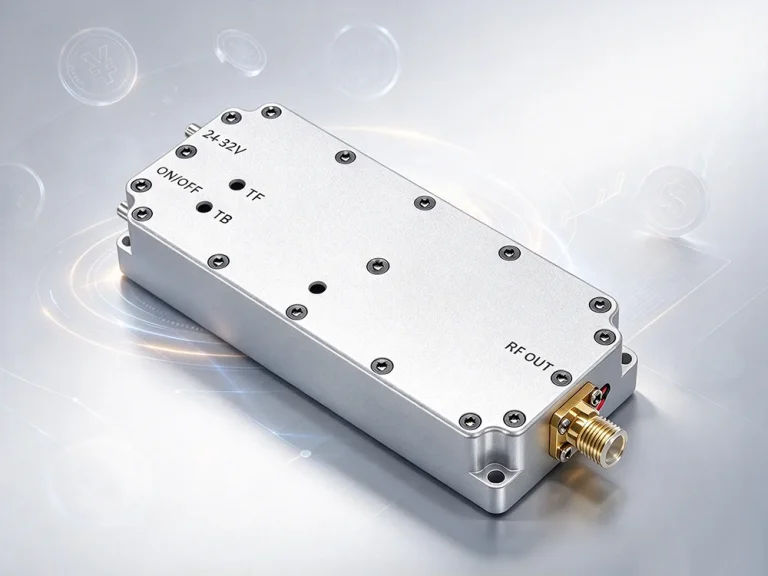

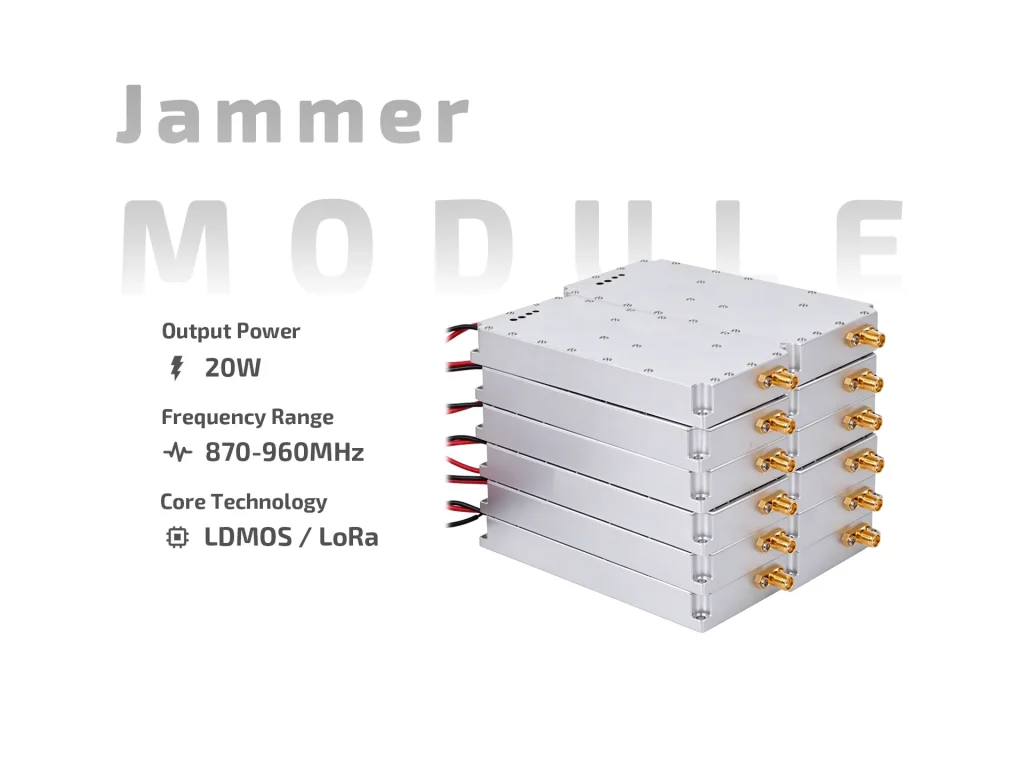
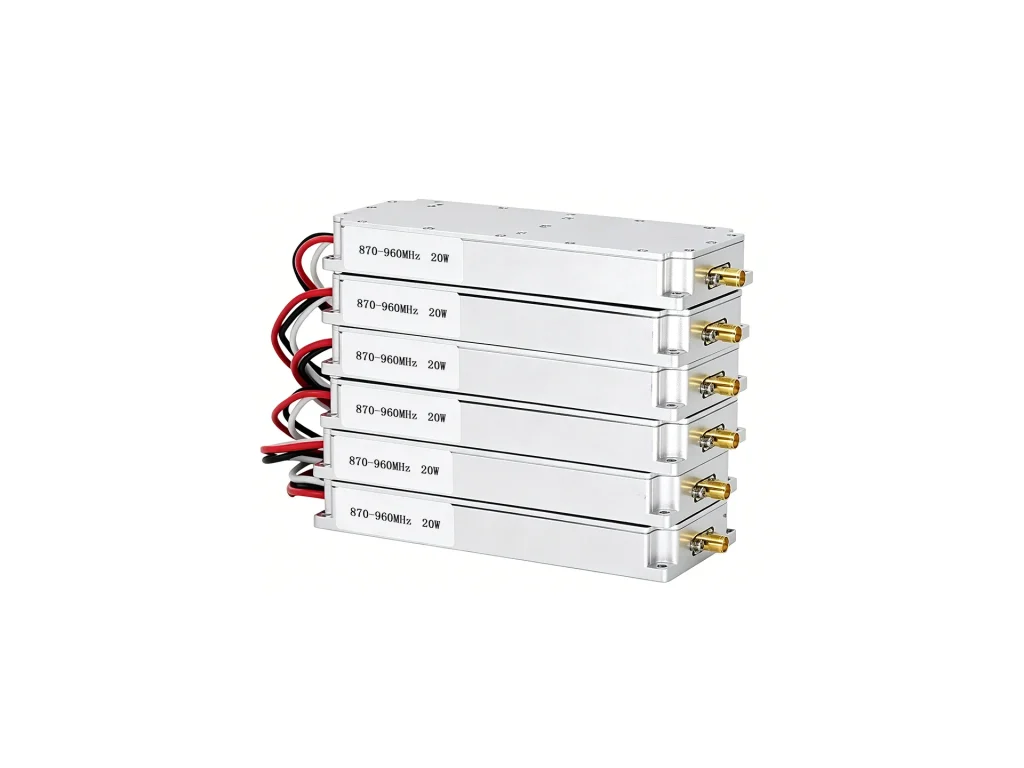
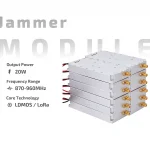
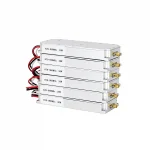
ETLD-JM0809L20 20W LoRa drone jammer module covers 870-960MHz, DC24-29V, 2.5A max, ≥40% efficiency, built-in sweep source and SMA female.
The ETLD-JM0809L20 is a compact RF module for counter-drone and LoRa-band interference work. It combines a 20W LDMOS amplifier, a high-speed sweep source and a shielded metal case in one unit. It is made for integrators who want a ready RF block instead of a bare board. The module runs from 870 to 960MHz and accepts a simple +5V on/off control.

The operating band is 870–960MHz. Output power is 20W, and output VSWR is ≤2.0. That VSWR limit matters in real installations because antennas are rarely perfect across the whole band. The built-in sweep source removes the need for an external signal generator and extra cabling. Many LoRa remote controls and telemetry links sit in this part of the spectrum, so the band overlap is useful for link denial tests. Local radio rules still apply, and the user is responsible for legal operation.
The module takes DC24V to 29V. Maximum current is 2.5A, and efficiency is at least 40%. The switch-control pin turns the unit on when it is at +5V or left floating; grounding the pin turns it off. This makes the interface easy to drive from a relay, an MCU GPIO or a panel switch. Keep the control wire short and away from the RF output. The switch input is for on/off only, not for power adjustment.
The RF output uses an SMA female connector. The body is 115.5 × 46.5 × 21mm and weighs 0.21kg. This size fits portable cases, fixed posts and multi-module frames. Even with a metal housing, 20W operation needs a heat path. Mount the unit on a metal plate or heatsink and allow airflow. Do not cover the mounting surface with thick paint or insulating tape.
Use a well-matched antenna for 870–960MHz. A poor match increases reflected power and heat, and it can shorten the life of the amplifier. Check that the DC supply can deliver 2.5A with some margin. Thin cables cause voltage drop and can make the module reset or behave badly. Route the antenna away from the DC feed and control lines. On the bench, start with short transmissions and watch the temperature. Add current limiting and thermal cutoff in the final system.
Common uses include LoRa link denial, drone telemetry disruption, RF site testing and counter-UAV training. The 20W drone jammer module is not a finished jammer product. It needs an antenna, power source, enclosure and safety controls. Integrators should add warning labels and restrict access. Do not run it near sensitive receivers or in places where interference is not allowed. Check spectrum rules before deployment.
Before full power, test the LoRa drone jammer module with a dummy load or a known good antenna. Listen for fan noise if active cooling is used, and check that the supply voltage stays within range under load. Avoid hot-plugging the RF connector while the module is on. Store the unit in a dry place and protect the SMA interface from dust and impact.
The ETLD-JM0809L20 gives integrators a 20W, 870–960MHz RF block with a built-in sweep source and simple switching. The LDMOS output stage, SMA female connector and compact case make it easy to fit into counter-drone systems. Antenna match, DC supply and heat removal are the main points to get right.
| Parameter | Specification | Notes |
| Operating Frequency | 870–960MHz | Typical |
| Output Power | 20W | Typical |
| Operating Voltage | DC24V–29V | Typical |
| Maximum Operating Current | 2.5A | Typical |
| Efficiency | ≥40% | Typical |
| Jammer Source | Built-in high-speed sweep source | Typical |
| Output VSWR | ≤2.0 | Typical |
| Switch Control | +5V or floating = ON; ground = OFF | — |
| Output Connector | SMA female | — |
| Dimensions | 115.5×46.5×21mm | — |
| Weight | 0.21kg | — |
Understand 20W anti-drone module price factors, from RF bands and cooling to enclosure, compliance and order volume. Compare quotes wisely.
Learn what is a 20W jammer module is used for, including portable counter-drone nodes, authorized RF testing, and multi-band deployments.
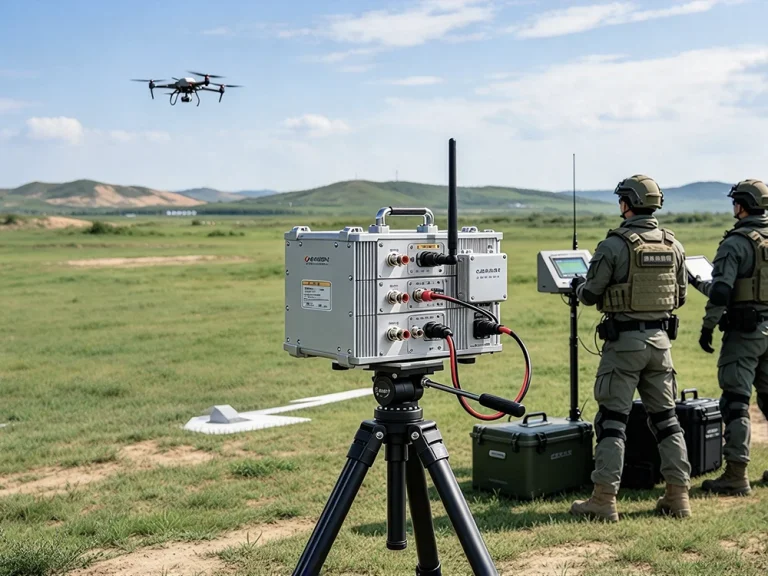
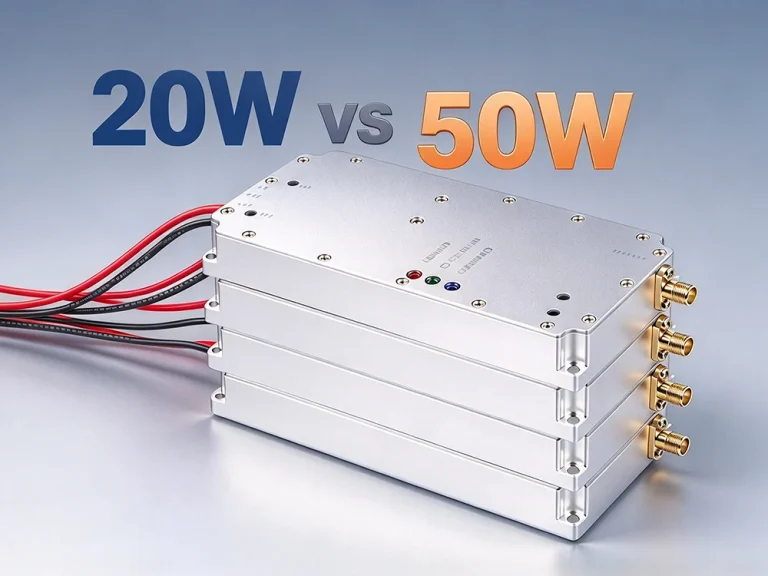
Compare 20W vs 50W drone jammer modules by range, heat, power and deployment. Choose the right counter-drone module with practical tips.