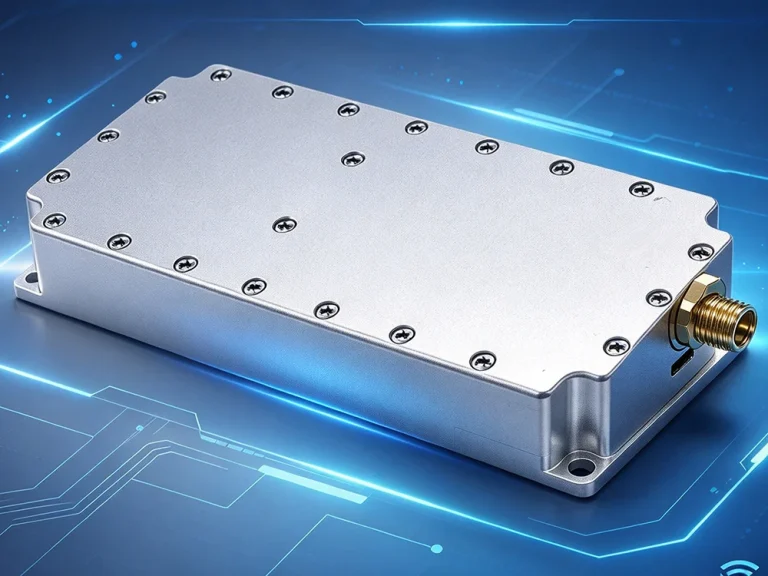
October 22, 2026
What Is an 80W Jammer Module Used For?
An 80W jammer module is used in authorized counter-drone systems to disrupt specific RF links. Here is where it fits, and how to scope one.


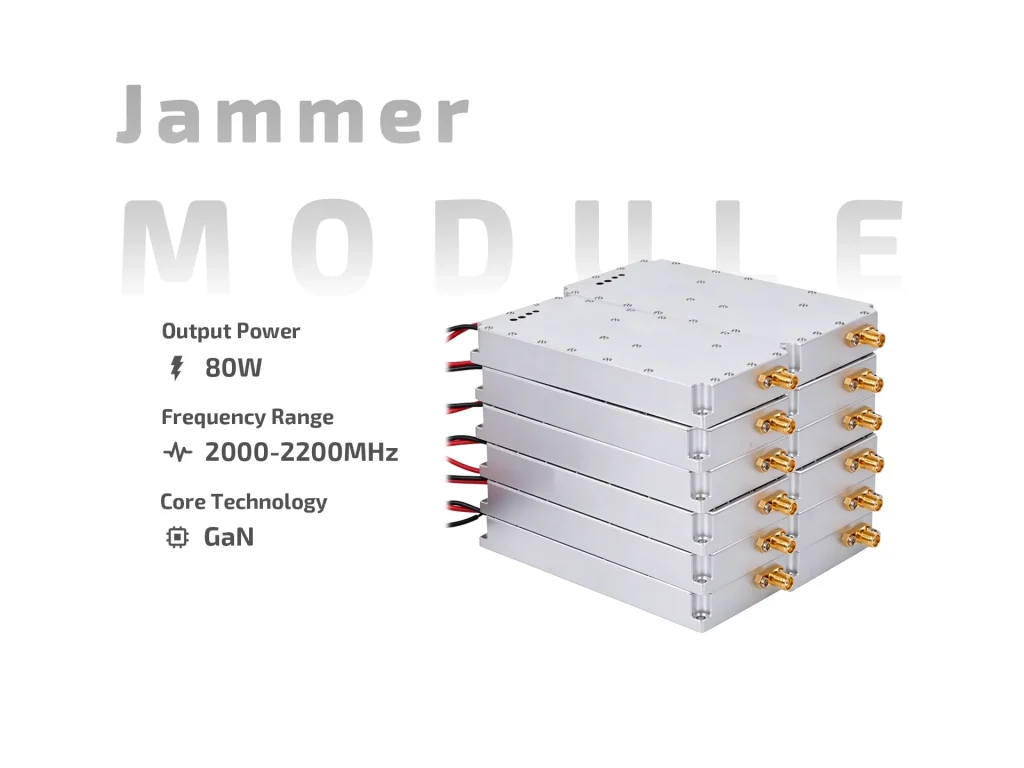
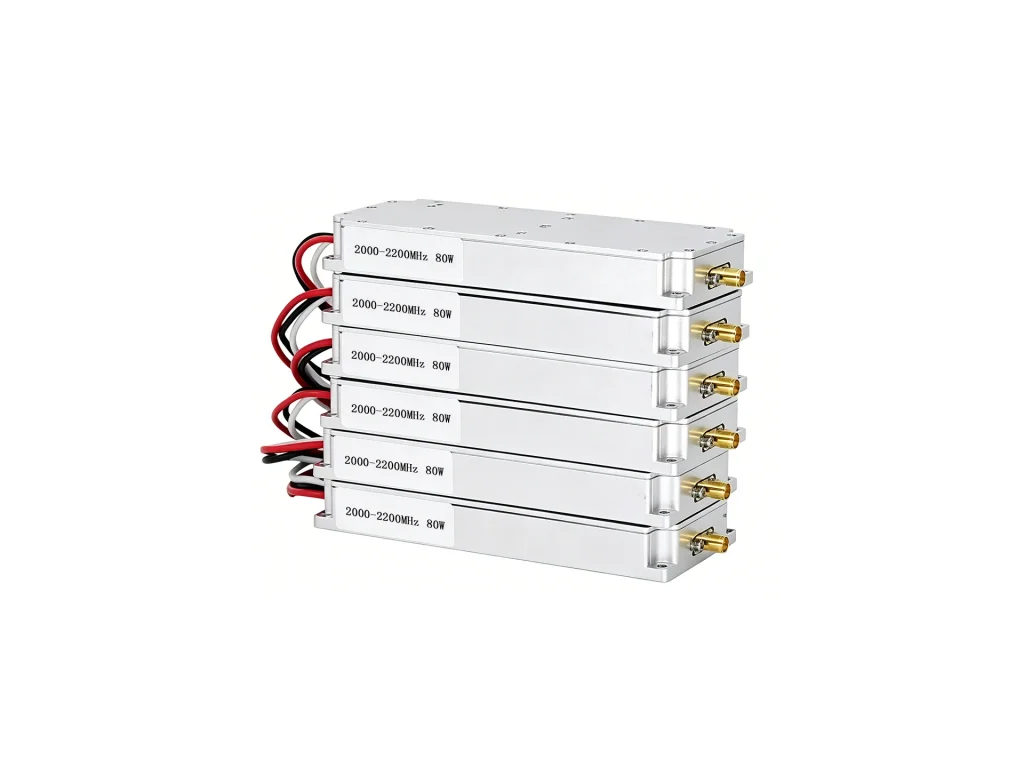
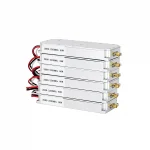
JM2022G80 is an 80W GaN Anti-Drone Module for the 2000–2200 MHz band. It is a single RF block: GaN output stage, internal high-speed sweep source, and absorption-type VSWR protection in a 168.5 × 84.5 × 23 mm case. Integrators still supply DC, control, antenna, and a thermal path. That distinction matters. The module is not … Read more
JM2022G80 is an 80W GaN Anti-Drone Module for the 2000–2200 MHz band. It is a single RF block: GaN output stage, internal high-speed sweep source, and absorption-type VSWR protection in a 168.5 × 84.5 × 23 mm case. Integrators still supply DC, control, antenna, and a thermal path. That distinction matters. The module is not a finished countermeasure system, and treating it as one usually leads to poor grounding, poor cooling, or both. Mounting and wiring decisions often matter more than the datasheet headline.

The unit runs from DC24–29V and draws up to 10.0A. Compared with 12V designs, the higher bus keeps current lower for the same 80W class output, which helps connector and cable selection. Use a regulated supply with headroom. Check current at 28V, then repeat at the low end of the range. A supply that sags on sweep peaks can cause intermittent behavior that looks like an RF fault.
GaN suits this power level in a compact housing, but it does not make heat disappear. Efficiency is ≥40%, so the case must couple to metal. The 2000–2200 MHz range covers common broadband links and some telemetry. Before transmitting, confirm local frequency rules and site coordination. The SMA female output is standard for test loads and couplers; keep the coax short and tight. A poor match shows up as heat and current change, not always as a power drop.
The built-in high-speed sweep source removes an external generator and cable. Treat it as a repeatable interference engine, not a lab instrument. The absorption-type VSWR protection is useful when an antenna is damaged or a connector is left loose. It is not a license to run an open port. Use a dummy load for first power-up and for any maintenance check.
Switch control is simple: +5V or floating means on; ground means off. Floating-on is handy for remote control but can surprise a technician during wiring. Label the harness and pull the enable line to ground for a safe default. Keep control wires away from the RF output. Use a current-limited supply for initial tests and confirm the ground return before applying 28V.
At 0.55 kg, the anti-drone module fits small racks and vehicle mounts. The larger footprint compared with smaller modules gives more base area for heat spreading, but only if the mounting surface is flat. Use thermal paste or a pad. Do not rely on still air in a sealed box. Leave room for SMA torque and cable bend radius. For multi-module racks, use separate DC feeds and sequence power to limit inrush.
Start on a dummy load. Measure current, output power, and temperature rise. Sweep the band and watch for dropouts or sudden current jumps. After transport, inspect connectors and mounting screws. If the case runs hot, reduce duty cycle or add airflow before increasing output expectations. A clean 28V supply, short RF path, and matched antenna solve more problems than extra filtering added late. Record the baseline so later checks have a reference.
JM2022G80 suits fixed sites, vehicle mounts, and portable housings where 2–2.2 GHz coverage is needed and space is limited. Pair it with DC protection, a matched antenna, and a real thermal design. For production, request a test report and confirm connector and control wiring. Do not treat 80W as a continuous guarantee in a sealed enclosure; derate or cool it.
JM2022G80 is a practical 80W GaN Anti-Drone Module with a 24–29V bus, internal sweep source, and absorption VSWR protection. Good results come from clean DC, a matched antenna, and metal thermal mounting.
| Parameter | Specification | Notes |
| Operating Frequency | 2000–2200 MHz | Covers common broadband and telemetry links |
| Output Power | 80 W | Typical at rated supply |
| Output VSWR | ≤2.0 | Antenna match should stay within this limit |
| Operating Voltage | DC 24–29 V | Regulated supply with headroom recommended |
| Max Operating Current | 10.0 A | Size wiring and protection for continuous draw |
| Efficiency | ≥40% | Metal thermal path still required |
| Switch Control | +5 V or floating = ON | Ground = OFF |
| Output Connector | SMA female | Use quality coax and correct torque |
| Internal Sweep Source | High-speed sweep | No external generator required |
| VSWR Protection | Absorption-type device | Helps with damaged antenna or loose connector |
| Dimensions | 168.5 × 84.5 × 23 mm | Allow clearance for SMA and cables |
| Weight | 0.55 kg | Flat metal mounting surface recommended |
An 80W jammer module is used in authorized counter-drone systems to disrupt specific RF links. Here is where it fits, and how to scope one.
Comparing 80W vs 100W drone jammer module: real thermal gaps, efficiency trade-offs, bandwidth costs, and when the extra 20W is worth it.
An integration-focused review of 80W FPV jammer modules: band coverage, thermal load, power claims, field testing, and authorized use.