Protecting a military-related base from unauthorized drones requires a layered defense, not a single piece of equipment. This project case describes a counter-drone deployment for a base in Hebei, China. The project combined a fixed drone detector with a fixed drone jammer to build a three-dimensional airspace security system covering planning, early warning, identification, positioning, tracking, and response.

Project Background
Civilian drones equipped with high-definition imaging payloads can now perform some reconnaissance tasks that were once limited to military aircraft. Compared with traditional manned aircraft, civilian UAVs fly lower, move more slowly, and have smaller airframes. These characteristics make them harder to detect and easier to misuse for unauthorized surveillance. For military bases and troop stations, the risk of drone-enabled espionage and image collection is a serious concern. The Hebei project was therefore designed to strengthen early warning and response against low-slow-small UAV threats.
Legal and Regulatory Context
The deployment also reflects China’s updated legal framework for protecting military facilities. Presidential Order No. 87 announced the revised Military Facilities Protection Law, which took effect on August 1, 2021. Article 17 prohibits aircraft from conducting low-altitude flights over land and water military restricted zones and from entering air military restricted zones. Article 51 requires duty personnel at military facility management units to stop illegal entry, low-altitude flight over restricted zones, unauthorized photography, video recording, surveying, positioning, and other activities that damage or endanger military facilities. If offenders refuse to stop, the unit may take measures under relevant regulations, including forcibly removing or controlling persons, detaining serious offenders, and transferring them to public security or national security authorities.
For the Hebei base, this meant the counter-drone system needed to provide reliable early warning, accurate location data, and a lawful, non-destructive response.
Recommended Solution
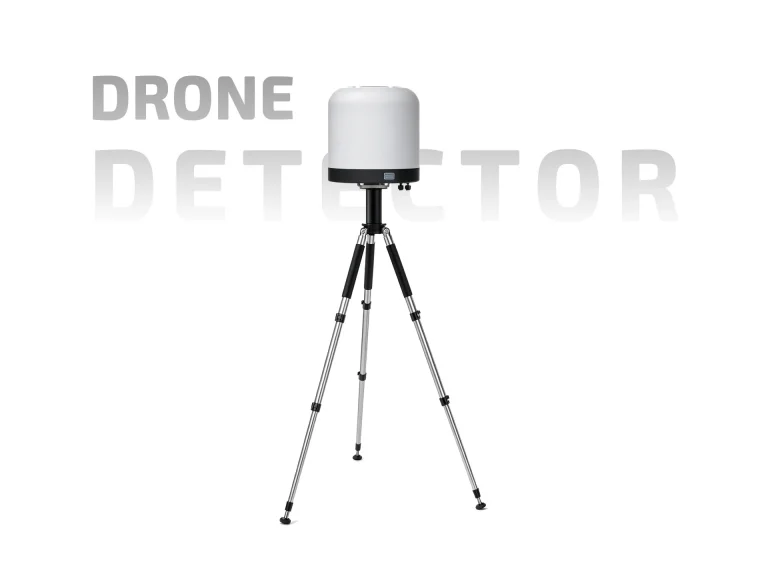
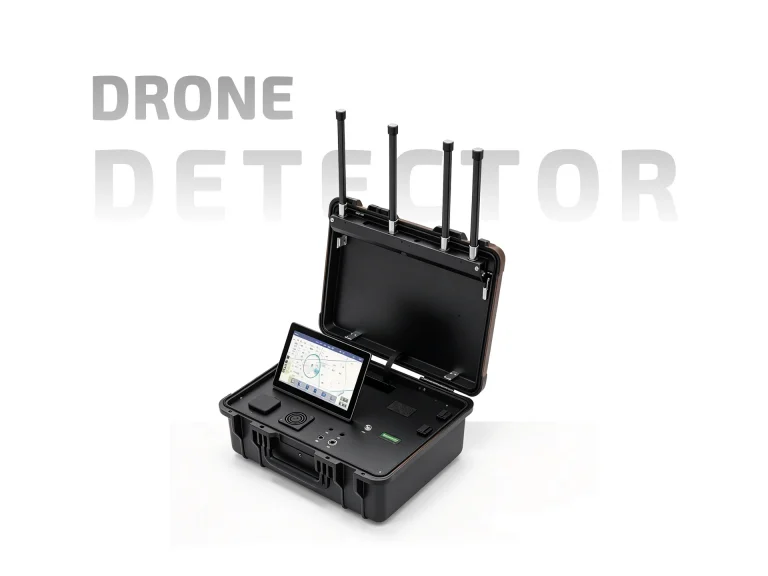
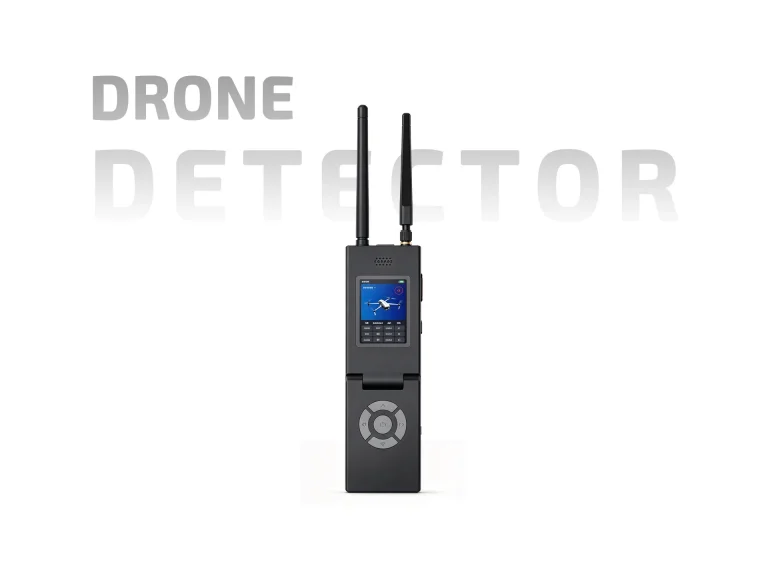
The project deployed one ETLD02FDA Fixed Drone Detector and one ETLD01FO Fixed Drone Jammer.
The ETLD02FDA provides 360-degree detection coverage with a range of 5 to 10 kilometers. Its standard model covers 2.4GHz, 5.8GHz, 800MHz, and 900MHz, with optional bands including 433MHz, 1.4GHz, and 5.2GHz. This wide spectrum capability helps detect both standard consumer drones and custom-built FPV models. The detector supports direction finding with accuracy of ≤15 degrees and parses DJI Drone ID and standard Remote ID protocols. Security teams can obtain the drone model, real-time coordinates, and pilot location. A black-and-white list function allows authorized drones to be ignored while real threats receive attention. Multiple units can be connected through a cloud server to cover large industrial complexes and extended perimeters. The device measures 371mm x 338mm, weighs 12 kilograms, and is built for harsh industrial environments.
The ETLD01FO adds the response layer. It creates a 360-degree electromagnetic shield with a 2 km interference distance and a response time of less than one second. Its frequency coverage includes 403–440MHz, 840–935MHz, 1.2GHz, 1.5GHz, 2.4GHz, 5.2GHz, and 5.8GHz. By disrupting control, positioning, and video transmission signals, it triggers the drone’s failsafe mechanism and forces it to land or return to its origin. The jammer is designed for continuous 24/7 operation, connects directly to the main power grid, and uses a slow-start circuit design to prevent sparking and support long-term stability. It can also be linked with existing radar and camera systems.
Deployment Results
The detector was installed at a high point to maximize line-of-sight coverage, while the jammer was positioned to protect the core area. In operation, the detector provides early warning and direction data, and the jammer provides a rapid, non-destructive response. The combination eliminates blind spots, reduces manual patrol pressure, and supports base security procedures with clear, actionable information.
Conclusion
This Hebei base project demonstrates how the ETLD02FDA fixed detector and ETLD01FO fixed jammer can work together as a practical counter-drone solution. By combining long-range 360-degree detection, Remote ID parsing, precise direction finding, and rapid 2 km jamming, the base gains a reliable airspace security layer while staying aligned with military facility protection requirements.